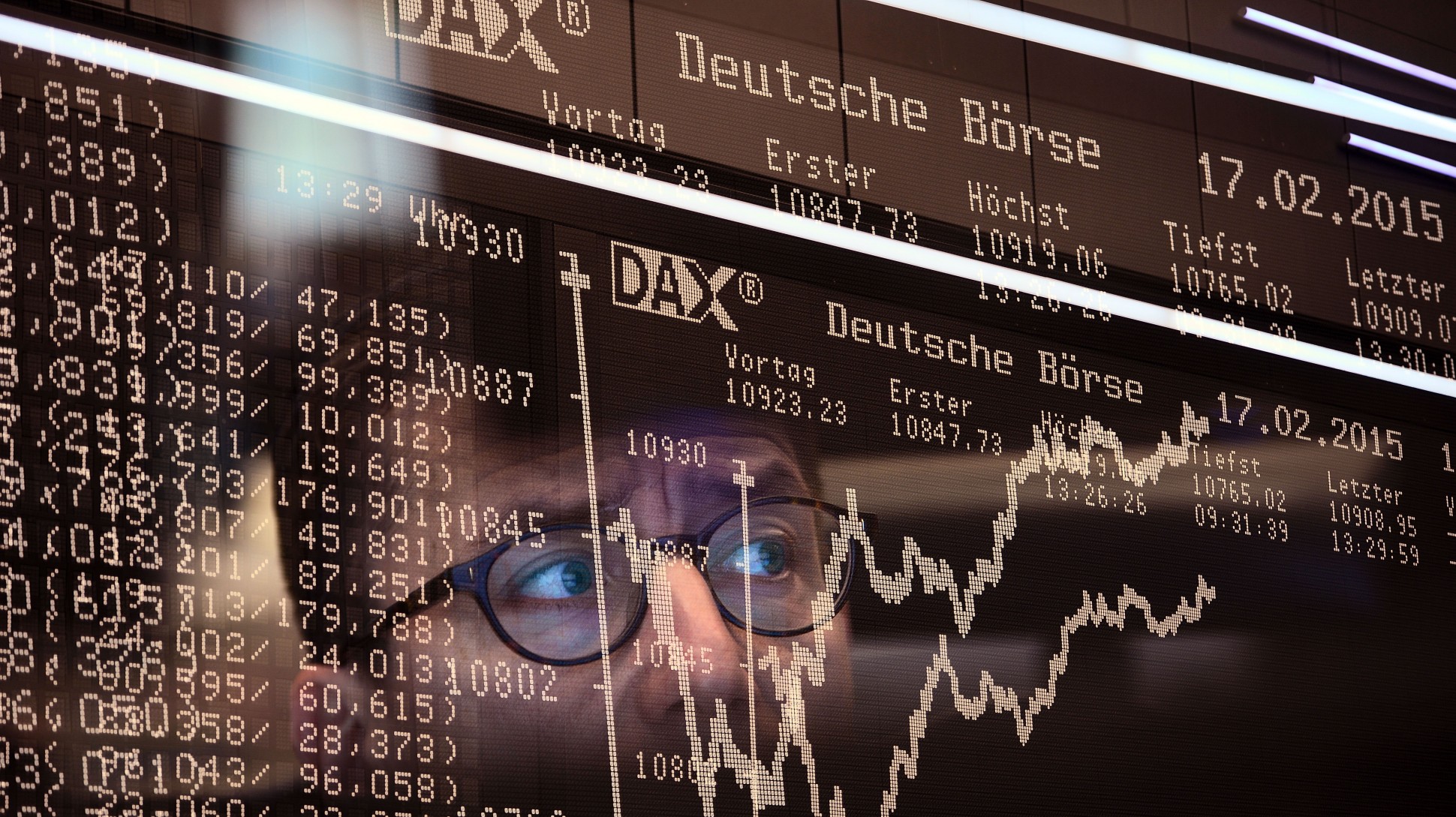
European equities posted their strongest performance in nearly two weeks on Wednesday, as markets responded enthusiastically to benign U.S. inflation data that has all but guaranteed Federal Reserve interest rate cuts next month, while geopolitical developments surrounding the Russia-Ukraine conflict provided additional momentum for defense stocks.
The pan-European STOXX 600 index climbed 0.5% to reach its highest level since July 31, as investors digested a confluence of economic data and policy expectations that have reshaped the monetary landscape on both sides of the Atlantic.
Fed Rate Cut Certainty Drives Risk Appetite
The market’s buoyant mood stems largely from overnight U.S. inflation figures that came in below expectations, cementing trader confidence in Federal Reserve policy pivots. According to the CME Group’s closely watched FedWatch tool, market participants are now pricing in a 96% probability of a rate cut in September—a dramatic shift from earlier uncertainty.
“There is a bit of growing expectation of a rate cut, maybe even a 50-basis-point cut, although that seems unlikely,” cautioned Gene Salerno, chief investment officer for UK Wealth Management at UBP. His measured assessment reflects broader sentiment among investment professionals who, while optimistic about monetary easing, remain wary of market exuberance.
Salerno’s warning about potential overenthusiasm appears prescient, as European markets have been quick to extrapolate broader implications from the U.S. data. “Those factors are giving some enthusiasm, but the market might be a bit overexuberant about what they can read into from that,” he noted.
European Inflation Picture Improves
Complementing the positive U.S. developments, domestic European data showed continued progress in the fight against inflation. German consumer prices rose just 1.8% year-over-year in July, confirming preliminary figures and marking a significant deceleration in Europe’s largest economy. This development provides additional justification for investor optimism about the European Central Bank’s policy trajectory.
Defense Sector Revival Amid Diplomatic Developments
Perhaps the most intriguing market movement came from defense stocks, which surged 1.4% as a sector, recovering from recent weakness. The rally coincided with significant diplomatic developments, as European and Ukrainian leaders prepared for discussions with former President Trump ahead of his scheduled summit with Russian President Vladimir Putin in Alaska on Friday.
Trump has characterized the Alaska meeting as a “feel-out” session in his broader effort to broker an end to the Russia-Ukraine conflict—a development that has created complex cross-currents in defense markets. While prospects for peace might typically weigh on defense contractors, the immediate market reaction suggests investors are focusing on near-term earnings strength rather than longer-term geopolitical scenarios.
German defense giant Rheinmetall exemplified this trend, gaining 2.9%, while Renk—a specialist in tank gearbox systems—soared 5.4%. Renk’s exceptional performance followed the release of better-than-expected second-quarter revenue figures, demonstrating how increased European defense spending continues to benefit specialized contractors despite evolving diplomatic landscapes.
Technology Sector Rebounds
The technology sector provided another pillar of strength, climbing 1.4% after tumbling to three-month lows in the previous session. This rebound reflects the sector’s sensitivity to interest rate expectations, as lower borrowing costs typically benefit growth-oriented companies that rely heavily on future earnings potential.
Corporate Earnings Picture Remains Steady
Beneath the macro-driven rally, corporate fundamentals continue to show resilience. With nearly half of STOXX 600 companies having reported second-quarter results, 54% have exceeded earnings estimates—a beat rate that aligns with typical quarterly performance, according to LSEG I/B/E/S data.
Individual company performances illustrated the market’s varied dynamics. Glanbia led the index with a remarkable 12.6% surge after the nutrition supplement maker reported solid first-half results and reassured investors that tariff impacts remained “manageable.”
Conversely, UK insurer Beazley tumbled 9.6% after trimming its annual premium growth forecast, while Evolution suffered the index’s worst performance, falling 10.6% following reports that the online gambling company’s casino games had been illegally accessed in banned markets.
Looking Ahead
As European markets closed at their highest levels in two weeks, the convergence of dovish monetary policy expectations, improving inflation dynamics, and evolving geopolitical landscapes has created a complex but broadly supportive environment for risk assets.
However, with the Alaska summit approaching and central bank meetings on the horizon, investors will be closely monitoring whether current optimism can withstand the inevitable volatility that accompanies major policy shifts and diplomatic developments.
The coming sessions will likely test whether Wednesday’s rally represents a sustainable shift in market sentiment or merely a temporary respite in what has been a challenging period for European equities.
WHAT YOU SHOULD KNOW
European markets surged to two-week highs on Wednesday, driven primarily by near-certain expectations of Federal Reserve rate cuts in September (96% probability) following tame U.S. inflation data. German inflation also cooled to 1.8%, reinforcing the dovish monetary policy outlook across major economies.