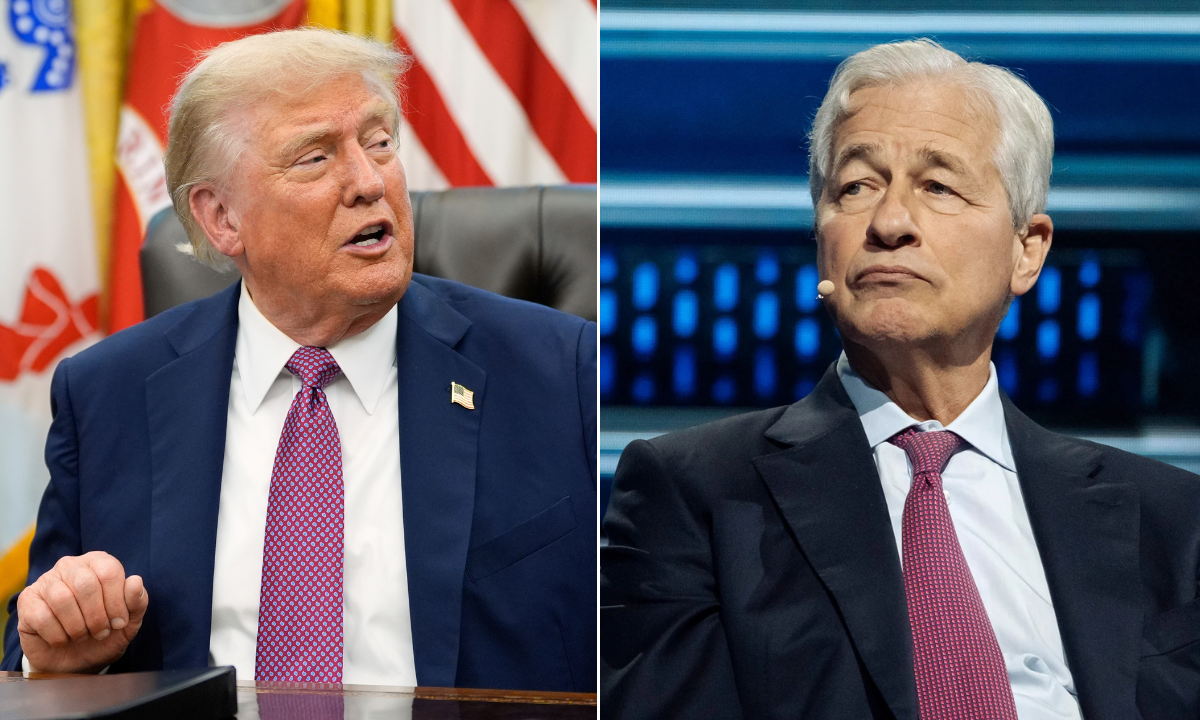
United States President Donald Trump has filed a lawsuit against JPMorgan Chase and its chief executive officer, Jamie Dimon, accusing the bank of wrongfully “debanking” him for political reasons.
Trump is seeking no less than $5 billion in damages in the civil suit, which was filed on Thursday in a Florida state court.
The lawsuit centres on actions taken by the country’s largest bank to sever ties with Trump and his business entities in the aftermath of the January 6 attack on the US Capitol, which followed Trump’s refusal to concede his defeat to Joe Biden in the 2020 presidential election.
According to the complaint, Trump was informed on February 19 that JPMorgan would be shutting down several of his accounts, a move he claims caused “considerable financial harm.” The filing argues that Trump and his businesses suffered not only from the disruption of banking services but also from reduced access to funds and the need to engage with other financial institutions under less favourable conditions.
The lawsuit states that Trump and the other plaintiffs believe JPMorgan’s decision was driven by political and social considerations, alleging that the bank acted based on unproven “woke” beliefs and a desire to distance itself from Trump and his conservative political views.

In response, JPMorgan dismissed the claims, insisting that the lawsuit “has no merit.” The bank said it does not terminate accounts for political or religious reasons, stressing that account closures are carried out when relationships pose legal or regulatory risks.
JPMorgan added that while it regretted Trump’s decision to sue, it would vigorously defend itself in court. The bank also called for reforms aimed at “prevent[ing] the weaponization of the banking sector,” arguing that clearer rules would help prevent similar disputes in the future.
What you should know
The lawsuit highlights ongoing tensions between major financial institutions and politically exposed individuals in the United States.
Trump’s case revives the debate over “debanking,” a term used to describe the withdrawal of banking services from clients deemed risky. Banks argue such actions are driven by regulatory compliance and risk management, while critics say they can be influenced by political or social pressure.
The outcome of the case could have broader implications for how banks handle politically controversial clients and may influence future regulatory reforms governing account closures.