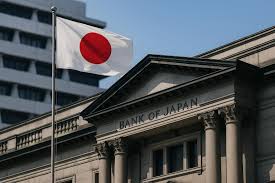
The Bank of Japan (BOJ) held interest rates unchanged on Friday while maintaining a hawkish stance on inflation, underscoring its commitment to gradually normalizing monetary policy even as political uncertainty clouds the economic outlook.
The central bank’s decision to keep its key policy rate at 0.75% came just weeks after raising borrowing costs from 0.5% in December, marking the latest step in its cautious exit from years of ultra-loose monetary policy. While the pause was widely anticipated by economists, BOJ Governor Kazuo Ueda made clear that further rate increases remain on the table if economic conditions warrant.
The move comes at a delicate moment for Japanese policymakers, who find themselves navigating multiple crosscurrents: a weakening yen that threatens to fuel imported inflation, volatile bond markets rattled by fiscal policy concerns, and fresh political uncertainty following Prime Minister Sanae Takaichi’s decision to call a snap election next month.
In unveiling the bank’s quarterly outlook report, the BOJ struck a notably optimistic tone about the economy’s trajectory. Policymakers raised growth forecasts for fiscal years 2025 and 2026, while projecting that a “positive cycle of income and expenditure” will gradually strengthen. The central bank also nudged up its core inflation forecast for fiscal 2026 to 1.9% from 1.8%, reflecting growing confidence that price pressures will remain sustained.
Governor Ueda emphasized during his post-meeting press conference that steady wage increases are encouraging more companies to pass rising labor costs on to consumers—a critical development for a central bank that spent decades battling deflation. “As prices and wages rise gradually, we are at a phase where we need to scrutinize whether this will continue and, if so, at what pace,” Ueda told reporters.
The governor made clear the bank would not wait for comprehensive hard data before acting, noting that policymakers would increasingly rely on faster-moving indicators such as corporate surveys to inform their decisions. “We will continue to raise interest rates if our economic and price forecasts materialize,” Ueda stated, though he cautioned that the precise timing and pace would depend on evolving conditions.
The yen’s erratic movements during Ueda’s press conference added drama to Friday’s proceedings. The currency initially weakened to 159.21 against the dollar as the governor spoke before abruptly strengthening to around 157.30—a sudden reversal that immediately raised questions about possible government intervention in foreign exchange markets.
When pressed on whether authorities had conducted so-called “rate checks” with financial institutions—often a precursor to direct market intervention—Finance Minister Satsuki Katayama declined to comment, fueling further speculation.
The weak yen has emerged as a persistent headache for Japanese officials. While a softer currency can benefit exporters, it also drives up import costs at a time when the BOJ is trying to cement inflation expectations. In its policy statement, the central bank specifically highlighted currency risks, noting that yen movements could prompt firms to pass on rising import costs and push up underlying consumer prices.
The BOJ’s policy deliberations have been complicated by Prime Minister Takaichi’s economic agenda, which stands in stark contrast to the central bank’s normalization efforts. The premier has pledged to pursue expansionary fiscal policies, including suspending the 8% sales tax on food, raising concerns about increased government debt issuance.
These fiscal plans have already sent tremors through Japan’s bond market, with yields rising sharply in recent weeks. Governor Ueda acknowledged the rapid pace of the increase during his press conference, warning investors against pushing yields too high while stopping short of outlining specific countermeasures.
“Long-term interest rates are rising at quite a fast pace,” Ueda observed. “We are ready to take nimble action to cope with exceptional, unusual moves.”
The central bank has been gradually reducing its bond purchases since 2024, but officials have said they could suspend this tapering or conduct emergency buying operations during periods of extreme market stress. However, analysts note that deploying such tools would represent an unwelcome reversal of Ueda’s normalization campaign.
While the decision to hold rates steady was supported by a majority of the policy board, one member—Hajime Takata—proposed raising rates for the second consecutive meeting. Though his motion found no support, the dissent highlighted growing hawkish sentiment within the central bank as policymakers grapple with the challenge of achieving sustainable inflation.
Market analysts are divided on the timing of the BOJ’s next move. A Reuters poll conducted in January found that most economists expect the central bank to wait until July before raising rates again, with more than three-quarters anticipating the policy rate will climb to 1% or higher by September.
David Chao, global market strategist for Asia-Pacific at Invesco, captured the uncertainty surrounding the BOJ’s communications strategy. “Governor Ueda is known for not being very straightforward, so it’s no surprise that markets weren’t quite sure what to do,” he said, noting that bond traders ultimately began pricing in a higher probability of an April rate hike.
The central bank now faces a challenging balancing act: maintaining hawkish rhetoric to discourage yen weakness and keep inflation expectations anchored while avoiding statements that could fuel further bond yield increases amid concerns about government spending.
With Japan’s economy showing resilience despite U.S. tariff pressures and likely to receive support from Takaichi’s stimulus measures, the BOJ has room to continue its gradual tightening campaign. But the path forward remains fraught with political and market uncertainties that could force policymakers to adjust their carefully calibrated approach at any moment.
WHAT YOU SHOULD KNOW
The Bank of Japan is caught in a high-stakes balancing act: it wants to keep raising interest rates to combat inflation and support the weakening yen, but Prime Minister Takaichi’s big-spending agenda is driving up bond yields and creating market volatility.
The central bank signaled it will continue tightening monetary policy gradually, but political pressure and unstable markets make the timing of the next rate hike highly uncertain. Japan’s monetary policy is on a collision course with its political leadership’s fiscal plans, and the yen’s stability hangs in the balance.