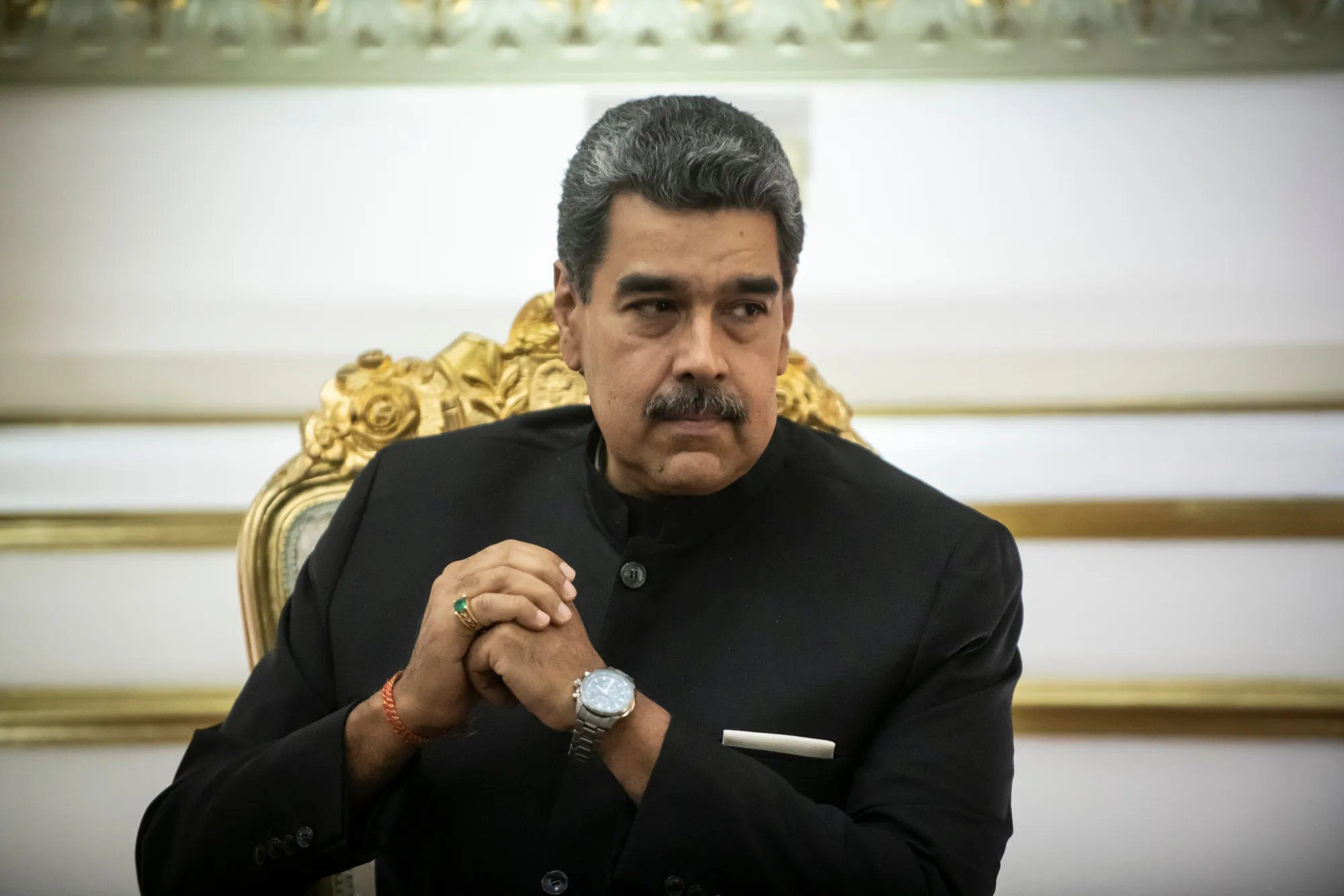
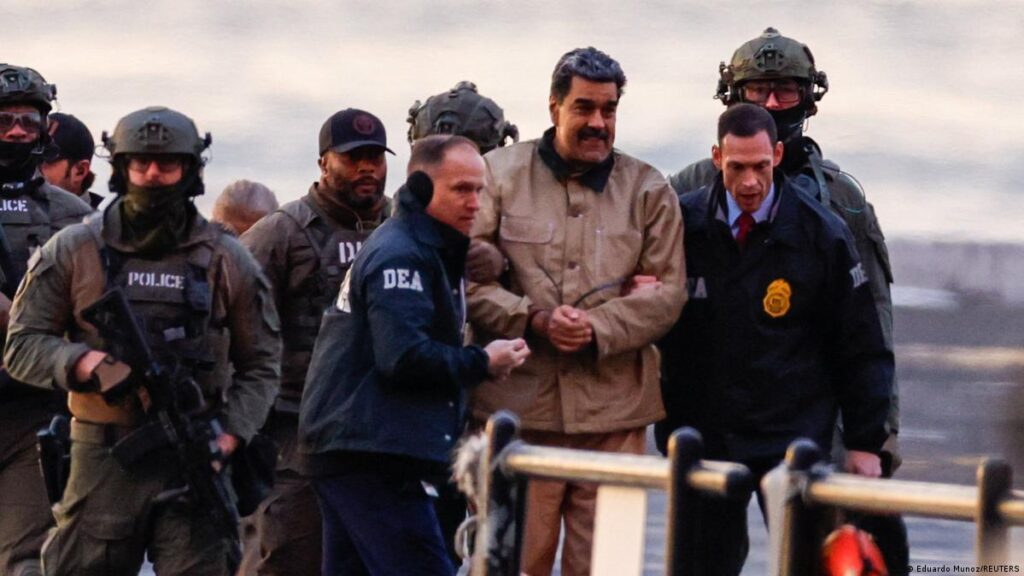
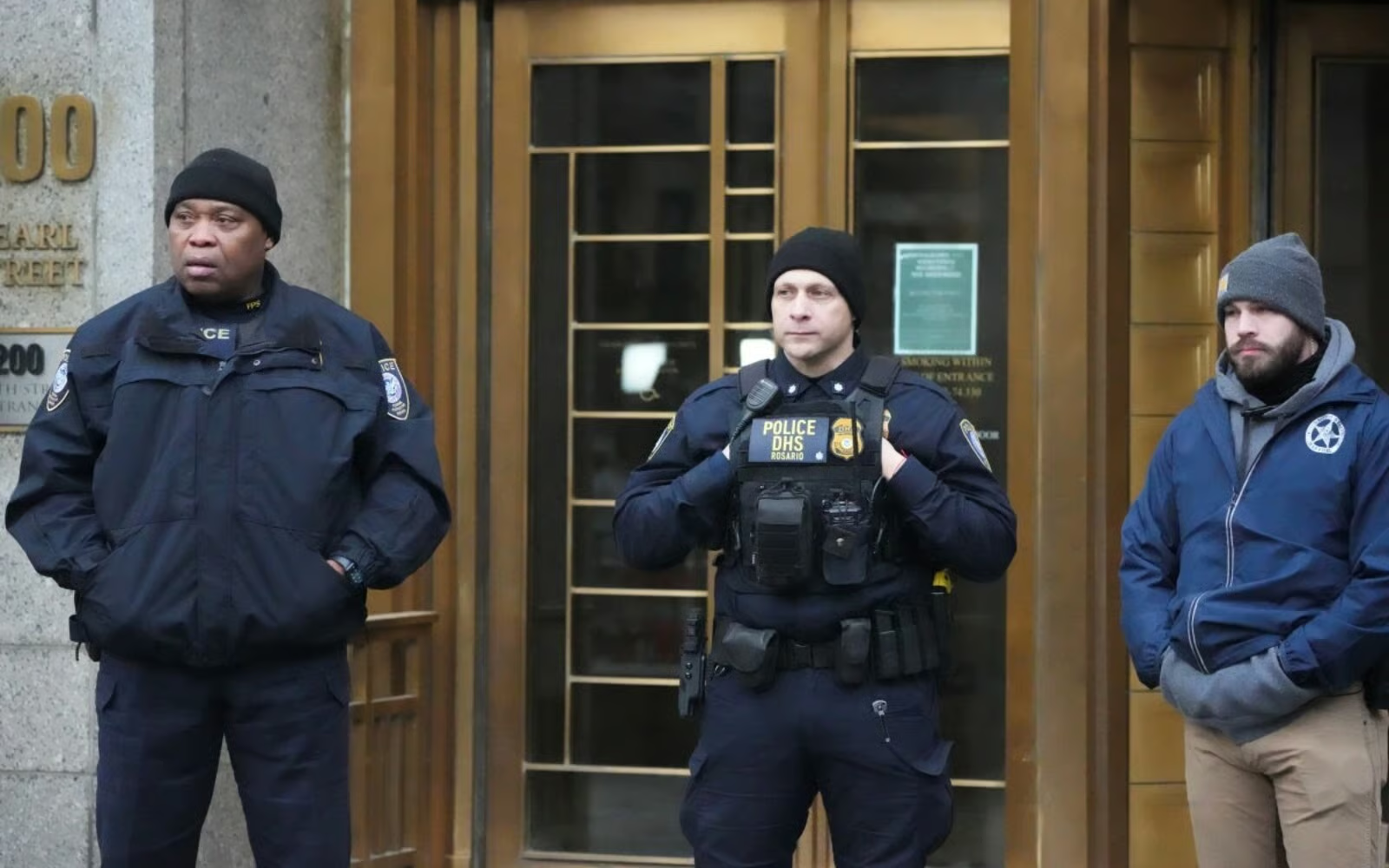
Ousted Venezuelan leader Nicolas Maduro on Monday entered a plea of not guilty to charges of narco-terrorism before a federal court in New York, just two days after United States forces carried out a dramatic operation that removed him from his residence in Caracas.
Appearing before a judge in Manhattan, the 63-year-old former president claimed he had been forcibly taken from Venezuela, telling the court he had been “kidnapped” and insisting, “I’m innocent; I’m not guilty.” He also maintained, “I’m still the president of my country,” according to reports from US media.
His wife, Cilia Flores, who was arrested alongside him, also rejected the charges and pleaded not guilty.
US commandos reportedly seized the couple in the early hours of Saturday during a coordinated assault involving warplanes and a strong naval presence. The operation was followed by a series of announcements from President Donald Trump, who declared that Washington was now overseeing Venezuela’s affairs, with plans centered on rebuilding the country and taking control of its vast but deteriorated oil sector.
The developments have triggered widespread international concern. At an emergency meeting of the United Nations Security Council, UN Secretary-General Antonio Guterres warned that there must be “respect for the principles of sovereignty, political independence, and territorial integrity.” His remarks reflected fears that the operation could destabilize the region and set a dangerous precedent.
Mexico’s President Claudia Sheinbaum sharply criticized Washington’s actions, stating that the Americas “do not belong” to any single power. In Colombia, President Gustavo Petro issued a combative response, saying that as a former guerrilla fighter he was prepared to “take up arms” against Trump’s policies.
Maduro assumed office in 2013 after the death of socialist leader Hugo Chavez. Over the years, the United States and the European Union have accused him of clinging to power through manipulated elections, jailing political opponents, and presiding over widespread corruption. His removal brings an end to roughly 25 years of leftist dominance in Venezuela, leaving the country’s nearly 30 million citizens facing an uncertain future.
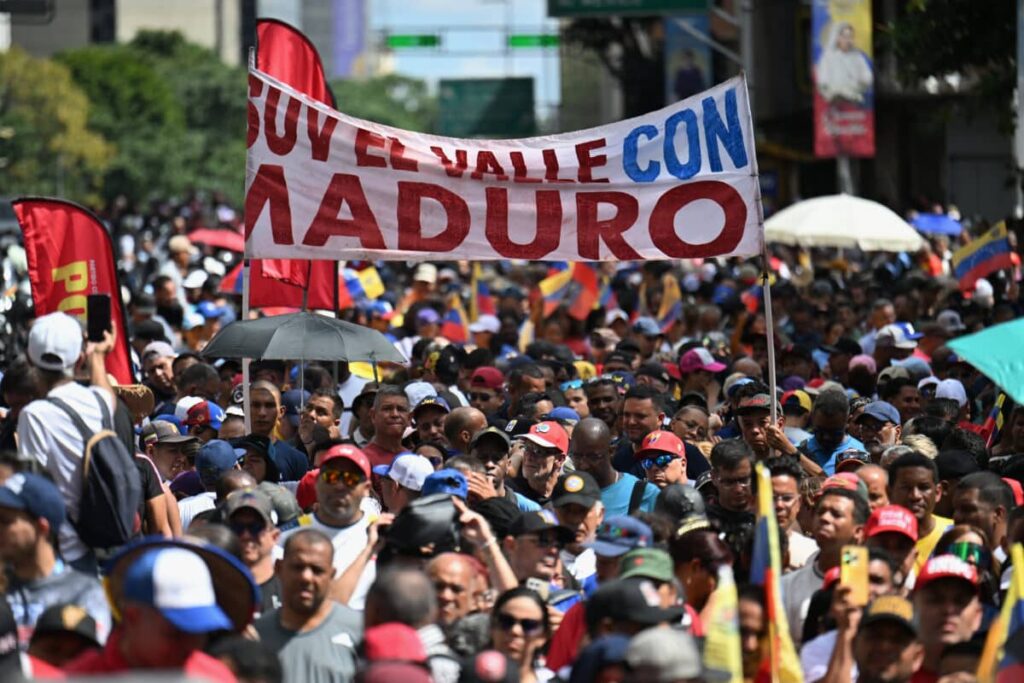
Supporters of the deposed leader have taken to the streets in defiance. On Sunday, around 2,000 loyalists, including armed men riding motorcycles, gathered in Caracas waving Venezuelan flags. Lawmakers in the National Assembly echoed that support on Monday, chanting “Let’s go, Nico!” during a parliamentary session.
Despite the public show of loyalty, the Trump administration has signaled it prefers continuity within Maduro’s inner circle, provided remaining officials align themselves with US demands. Interim president Delcy Rodriguez, who previously served as vice president, softened her initial defiant tone on Sunday, indicating a willingness for “cooperation.”
Trump has made it clear that his administration has no intention of backing opposition figures previously viewed as winners of disputed elections. Instead, he has emphasized economic priorities, particularly Venezuela’s energy resources. When asked what he expected from Rodriguez, Trump said, “We need total access. We need access to the oil and other things in their country that allow us to rebuild their country.”
Venezuela holds the world’s largest proven oil reserves, but production is costly and technically challenging. Years of sanctions, neglect, and mismanagement have left infrastructure severely degraded. Following Trump’s comments, shares of major US oil companies including Chevron, ExxonMobil, and ConocoPhillips rose sharply on Wall Street.
The episode also underscores Trump’s increasingly assertive foreign policy posture. After unsettling many Americans with sweeping domestic power moves, he has extended his rhetoric abroad, claiming that communist Cuba was “ready to fall” and reiterating his desire for the United States to control Greenland, a territory of US ally Denmark. He has also targeted Colombia’s president directly, telling Petro to “watch his ass.”
Although US officials say there are currently no American ground troops stationed in Venezuela, Washington maintains significant leverage through an oil blockade and has not ruled out further military action. A substantial US naval force, including an aircraft carrier, remains deployed in the Caribbean.
Details surrounding the Caracas operation continued to emerge on Monday. Cuba reported that 32 of its citizens were killed during the attack. US authorities confirmed that no American service members died, though some sustained injuries.
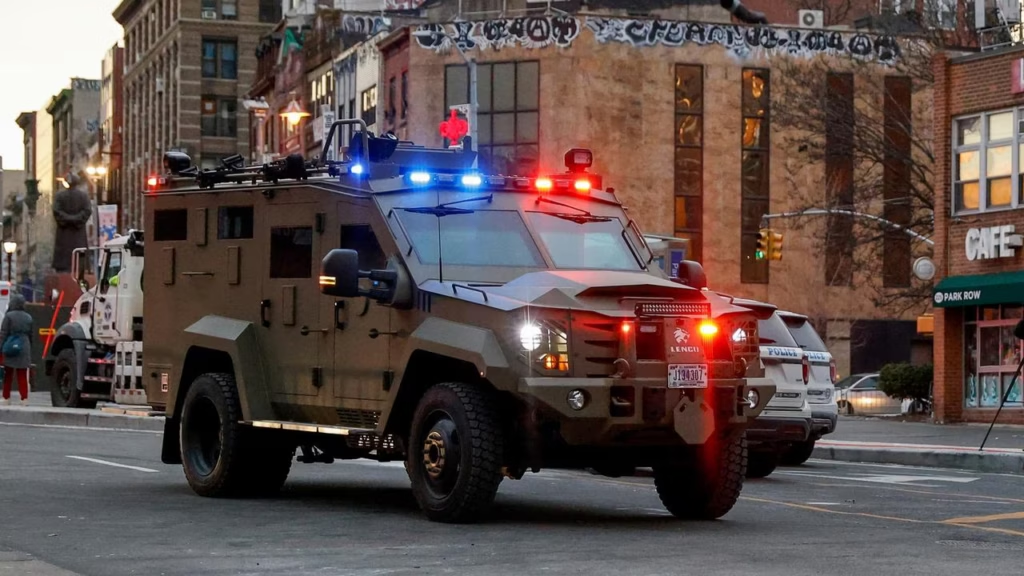
Outside the New York courthouse, demonstrators voiced opposing views. Left-wing activist Sydney Loving said she stood “with the people of Venezuela,” declaring, “We say no to US wars. We say no to US intervention.
It’s not in our benefit. It does not make the US safer; it makes the people on Wall Street richer.” In contrast, Angel Montero, a Venezuelan-born US resident, welcomed Maduro’s fall, calling it “the best gift I ever received,” and adding, “I’m going to thank Donald Trump.”
What you should know
Maduro’s arrest and court appearance mark a dramatic escalation in US involvement in Venezuela and have intensified global debate over sovereignty, intervention, and control of strategic resources.
While Washington frames its actions around security and economic rebuilding, critics warn of regional instability and long-term consequences.
The situation leaves Venezuela politically fragile, with uncertainty over governance, public order, and the future of its oil industry dominating international attention.