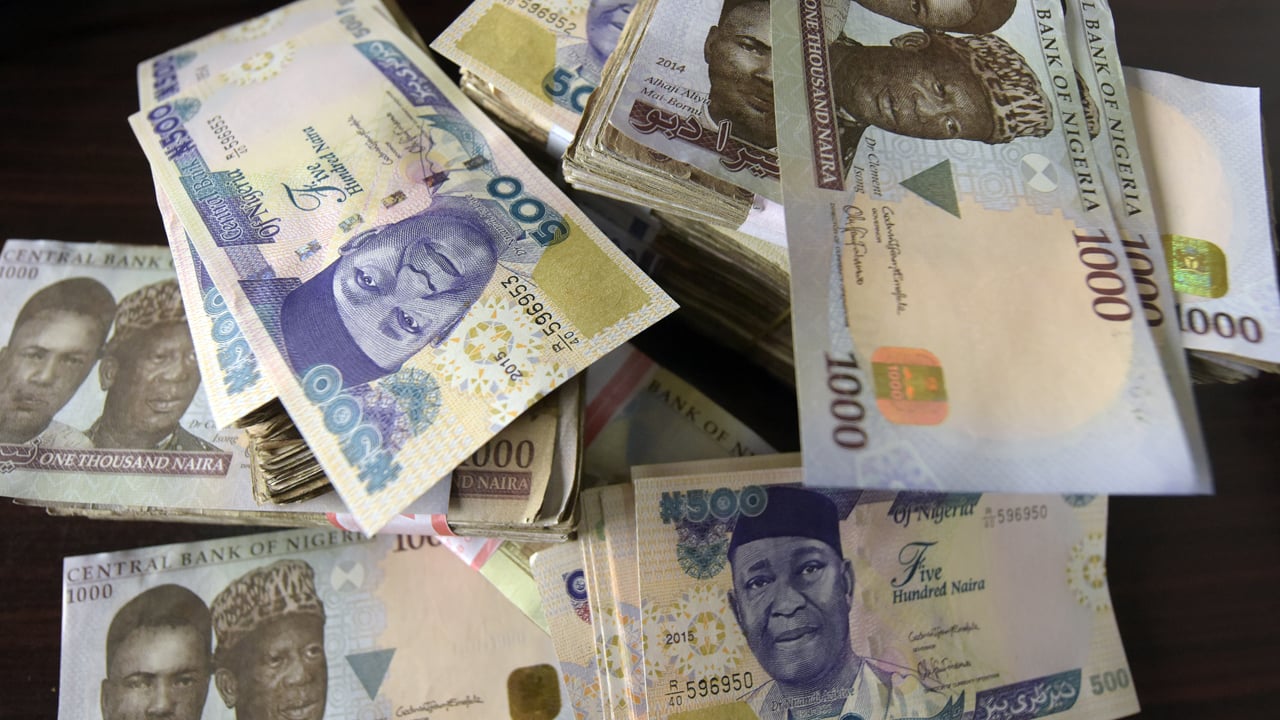
In what could signal a turning point for Africa’s largest economy, leading financial analysts are projecting significant gains for the Nigerian naira, forecasting the currency could appreciate to approximately N1,350 against the US dollar by the close of 2026—a potential strengthening of roughly 7% from current levels.
The optimistic outlook comes from Cordros Securities, one of Nigeria’s prominent investment research firms, in their comprehensive 2026 economic forecast titled “Building Momentum Beyond the Rebound.” The report suggests that after years of persistent depreciation, the naira may finally be entering a sustained recovery phase driven by improving economic fundamentals and disciplined monetary policy.
According to the Cordros analysis, the naira is expected to trade within a bandwidth of N1,450 to N1,350 throughout 2026, as longstanding distortions in Nigeria’s foreign exchange market gradually unwind. This projection is underpinned by three critical factors: a more favorable foreign exchange environment, increased external capital inflows, and continued policy discipline from monetary authorities.
The analysts believe these conditions will restore investor confidence in the naira, nudging the exchange rate closer to what they calculate as its equilibrium value of N1,230 per dollar—a level that reflects the currency’s true economic fundamentals rather than market distortions.
“The naira’s trajectory in 2026 will largely depend on whether Nigeria can maintain the positive momentum built in 2025,” explains the report, which employs sophisticated economic modeling to assess currency valuation.
Cordros has adopted the Behavioral Equilibrium Exchange Rate (BEER) methodology in their latest assessment—an analytical framework that factors in productivity levels, terms of trade, fiscal positioning, and risk premiums to determine a currency’s fair value. This model indicates the naira is currently undervalued by approximately 19.3% at its recent trading level of N1,521.60 per dollar, compared to the calculated fair value of N1,230.
This represents a notable improvement from 2024, when the currency was deemed 35.1% undervalued, suggesting that recent policy interventions are bearing fruit. The assessment aligns with International Monetary Fund calculations using the Real Effective Exchange Rate (REER) index, which estimates the naira is trading about 23.6% below its fair value of approximately N1,163 per dollar.
However, the outlook is not without significant caveats. Cordros analysts have identified several potential headwinds that could undermine the projected appreciation. Chief among these concerns is the specter of election-related spending—Nigeria faces general elections in 2027, and historically, pre-election periods have witnessed expansionary monetary policy that weakens the currency.
The report warns that if three conditions converge—surging money supply driven by political spending, sustained crude oil prices below $58 per barrel, and renewed global economic pressures—the naira could depreciate sharply to N1,550 per dollar by year-end 2026, representing a roughly 6% decline from current levels rather than the anticipated gains.
This downside scenario underscores the fragility of Nigeria’s currency stability, which remains heavily dependent on oil revenues and vulnerable to global commodity price shocks.
The cautiously optimistic 2026 forecast builds on what has been a surprisingly strong performance in 2025. Currently trading at N1,458.32 per dollar, the naira has appreciated more than 5% year-to-date—marking the first calendar year of gains since 2019, a significant psychological and economic milestone.
The currency’s journey through 2025 has been characterized by notable volatility but ultimately resilience. Opening in January at N1,537 per dollar, the naira initially strengthened to N1,480 by month’s end, delivering a 4% appreciation. However, bearish sentiment returned in February and March, pushing the currency above N1,500, with April seeing particularly acute pressure as it approached N1,600 before settling at N1,596.
The turning point came in May, when a confluence of factors—including weakness in the US dollar amid global trade tensions—triggered a recovery. By June, the naira had strengthened to N1,530, delivering a modest first-half gain of 0.4%.
The second half of 2025 proved even more favorable. September witnessed significant appreciation to N1,476.62 per dollar, with further gains in October and November bringing the rate to N1,445. While mid-December has seen a slight pullback of approximately 1%, with trading above N1,450, the currency has largely maintained its position within the N1,400 range—a level that would have seemed improbable just twelve months ago.
The naira’s stabilization reflects broader efforts by Nigeria’s Central Bank to unify the country’s multiple exchange rate windows and allow more market-determined pricing. These reforms, while initially painful, appear to be establishing a more transparent and sustainable foreign exchange regime.
For Nigerian businesses and consumers, a stronger naira would translate to reduced import costs, lower inflation pressures, and improved purchasing power—welcome relief after years of currency depreciation that eroded living standards and complicated business planning.
However, analysts caution that the projected gains are contingent on continued policy discipline and favorable external conditions. As Nigeria navigates the complex interplay of domestic politics, global oil markets, and international capital flows, the naira’s ultimate trajectory remains subject to considerable uncertainty.
The coming months will reveal whether 2025’s gains represent a genuine turning point or merely a reprieve in the naira’s longer-term challenges.
WHAT YOU SHOULD KNOW
Nigeria’s naira could strengthen to N1,350 per dollar by end-2026, marking its first sustained recovery since 2019. The currency is currently undervalued by about 20% and has already gained over 5% in 2025.