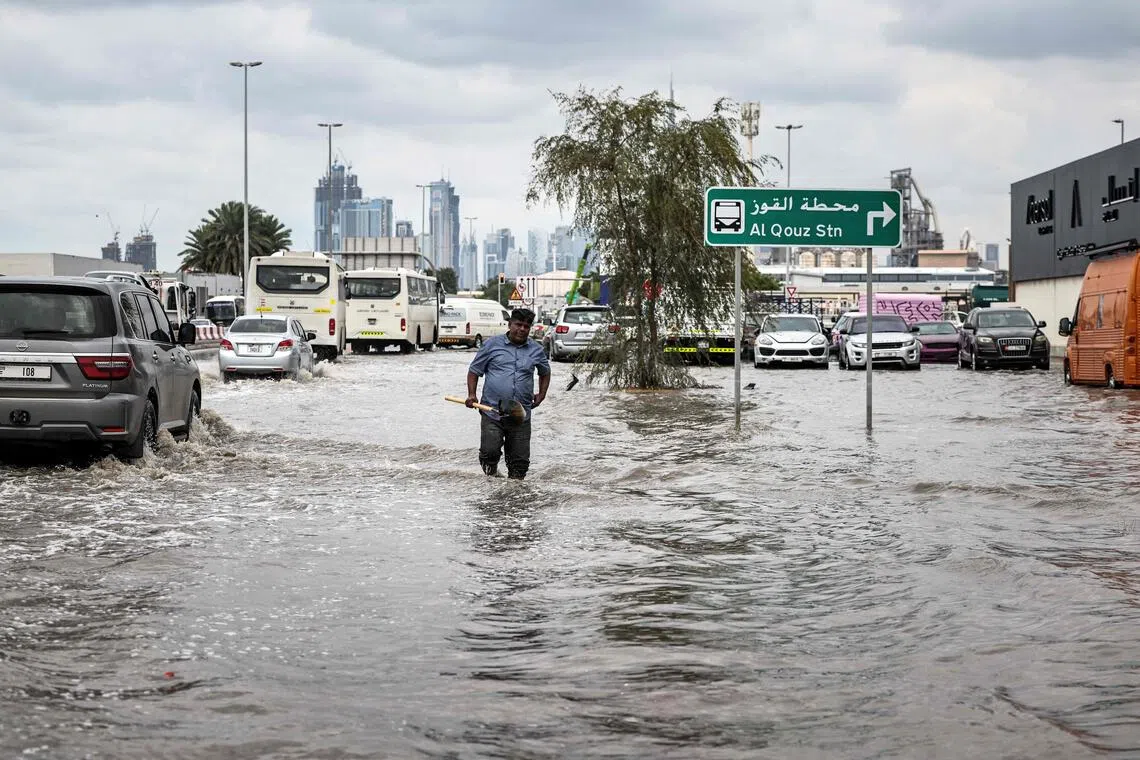
Airport operations across the United Arab Emirates were disrupted on Friday after the country experienced its most intense rainfall in months, leading to widespread flight cancellations, delays, and severe flooding in several major cities.
Dubai’s flagship carrier, Emirates Airline, cancelled 13 flights, while neighbouring Sharjah International Airport recorded multiple delays and cancellations following the overnight storm. The heavy rain, accompanied by lightning and loud thunderclaps, jolted residents awake in the early hours.
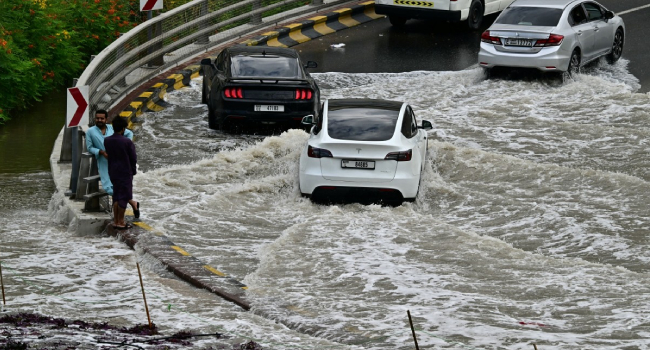
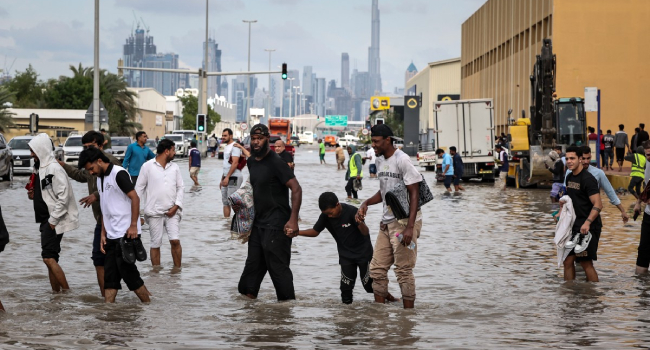
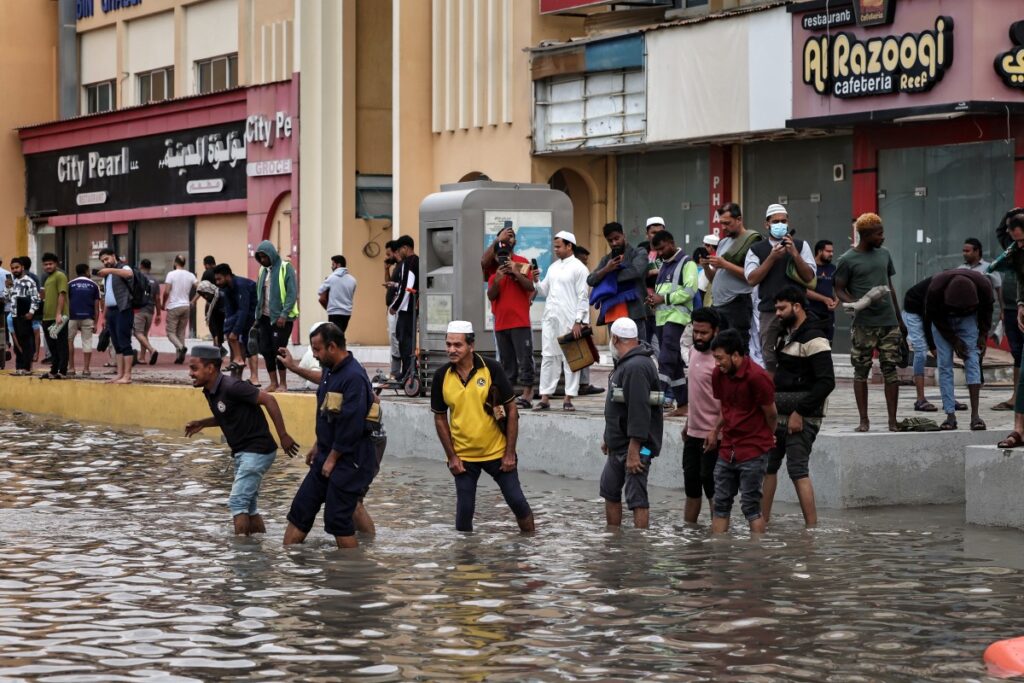
In Sharjah, flooding submerged major roads, including the city’s main street, where residents were seen wading barefoot through floodwaters. In some areas, the water level rose high enough to reach the wheels of bicycles as people attempted to move through the streets.
The scenes revived memories of April 2024, when unprecedented rainfall caused massive flooding across the UAE and led to the cancellation of more than 2,000 flights at Dubai International Airport, one of the world’s busiest aviation hubs.
Ahead of the storm, Dubai police advised residents on Thursday to remain indoors unless travel was “absolutely necessary.” By early Friday morning, water-pumping trucks were deployed across the city to clear blocked roads and drain large pools of standing water.
Information displayed on the Dubai Airports website showed dozens of delayed flights and several cancellations. Confirming the disruption, a spokesperson said, “Some flights… are cancelled or delayed due to adverse weather.”
The National Center of Meteorology had earlier warned of widespread rainfall from Thursday through Friday, affecting Dubai, Abu Dhabi, and other parts of the country.
The impact was felt beyond the UAE, as other Gulf nations also recorded heavy rainfall. In Qatar, the Arab Cup third-place football match between Saudi Arabia and the UAE was cancelled on Thursday due to the weather.
Last year’s historic rainfall in the UAE—the heaviest recorded in 76 years—claimed at least four lives and left Dubai paralysed for days. A subsequent study by the World Weather Attribution group concluded that climate change driven by fossil fuel emissions “most likely” intensified the extreme rainfall that hit the UAE and Oman.
What you should know
The renewed flooding in the UAE highlights the growing vulnerability of desert nations to extreme weather events.
Aviation, road transport, and daily life were significantly disrupted, echoing the record-breaking floods of 2024. Authorities issued early warnings and deployed emergency response measures, but climate researchers continue to link the increasing intensity of such storms to global warming.
As extreme rainfall becomes more frequent, experts warn that infrastructure resilience and climate adaptation will be critical for the region’s future stability.