Summary
Military officials in Guinea-Bissau have declared complete control over the West African nation, closing borders and suspending the electoral process, just three days after the country held its general elections.
The announcement on Wednesday followed intense gunfire near the presidential palace, with armed soldiers taking command of the main road leading to the building.
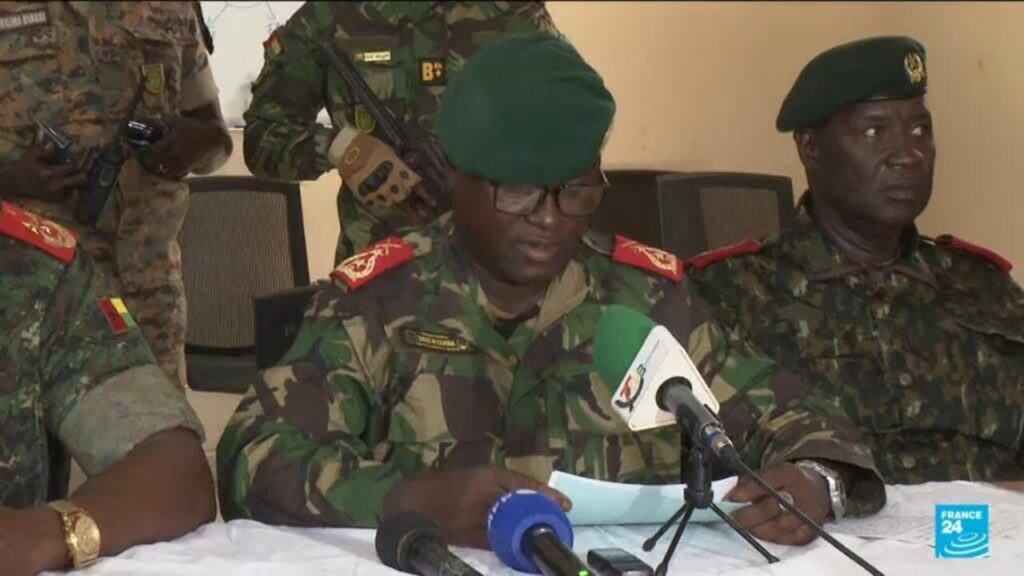
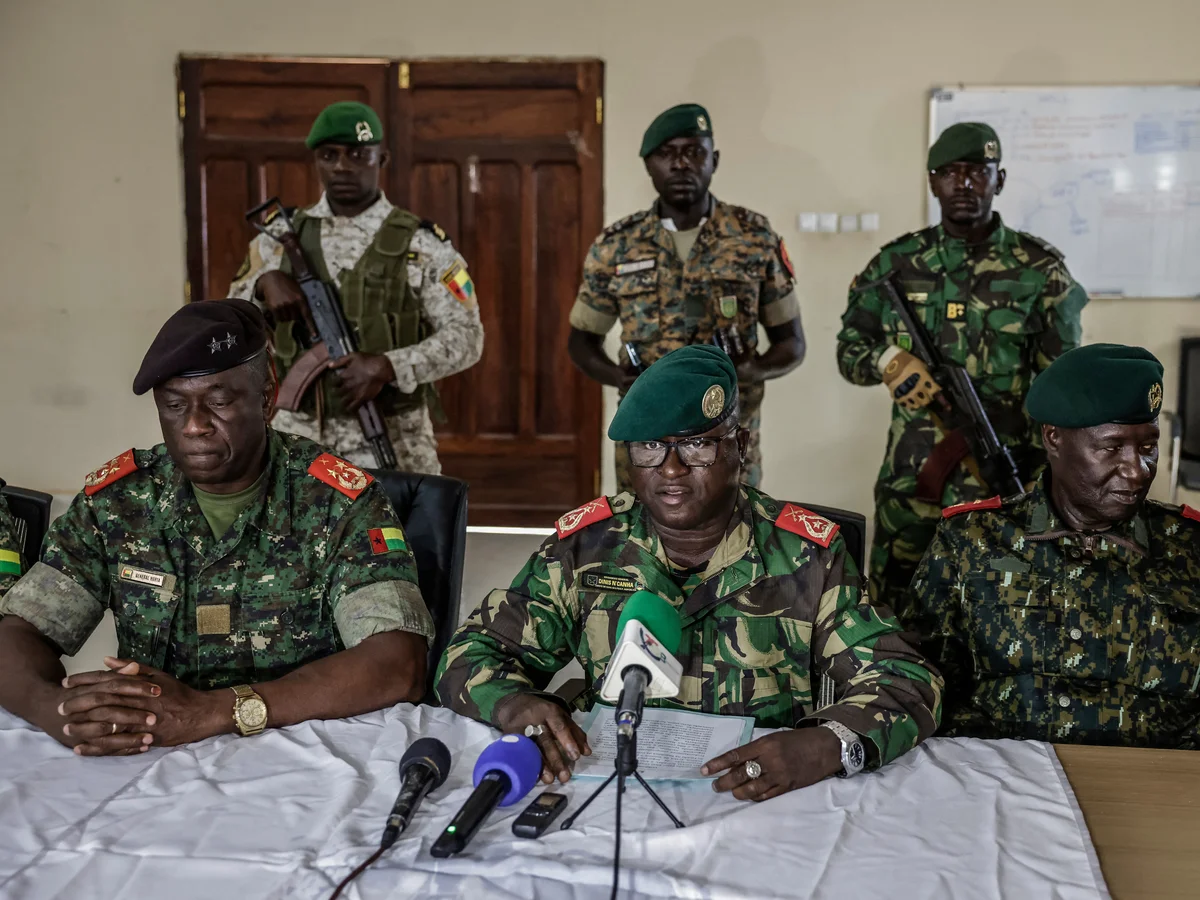
In a press briefing, General Denis N’Canha, head of the presidential military office, stated that a command composed of all branches of the armed forces had assumed leadership of the country “until further notice.” He delivered the announcement while seated at a table surrounded by armed troops.
President Umaro Sissoco Embalo, who was widely favoured to win Sunday’s election, remained inside a building near military headquarters alongside the chief of staff and the interior minister, according to a senior officer who spoke to AFP on condition of anonymity. At the time of the announcement, it was unclear whether Embalo had been detained.
Both Embalo and opposition candidate Fernando Dias had already claimed victory in the presidential race, while official provisional results were expected on Thursday. Guinea-Bissau has a history of political instability, experiencing four coups since independence and multiple attempted overthrows.
General N’Canha justified the takeover by citing a discovered plan to destabilize the nation, allegedly involving national drug lords and the introduction of weapons intended to alter the constitutional order. As part of the takeover, the military suspended the entire electoral process, halted all media programming, and imposed a mandatory curfew.
Guinea-Bissau, one of the world’s poorest countries, has long been a transit hub for drug trafficking between Latin America and Europe—a problem exacerbated by chronic political instability. On Wednesday, unidentified armed men also attacked the National Electoral Commission (CNE), according to commission official Abdourahmane Djalo.
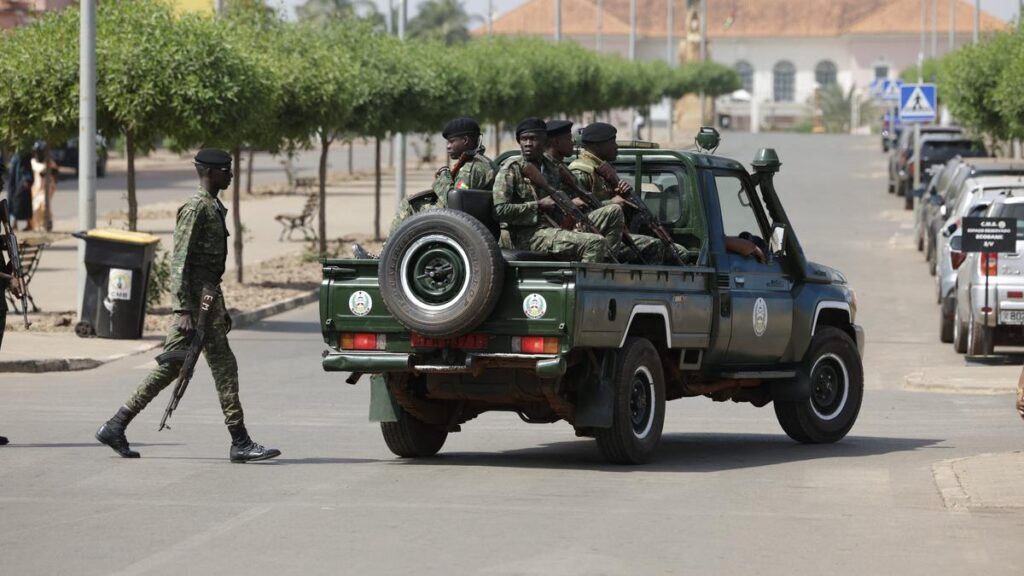
The country had deployed over 6,780 security personnel, including members of the Economic Community of West African States (ECOWAS) Stabilisation Force, to manage the elections and maintain order afterward. The previous presidential election in 2019 ended in a four-month post-vote crisis, as both main candidates claimed victory.
The 2025 election notably excluded the main opposition party, PAIGC, and its candidate Domingos Simoes Pereira. The Supreme Court barred them from contesting, citing late submission of official applications. Critics argue that PAIGC’s exclusion amounted to political manipulation. Embalo, who dissolved the opposition-controlled legislature in 2023, has since governed by decree, while the opposition contends that his term expired on February 27, five years after his inauguration.
What you should know
The military in Guinea-Bissau has taken control of the country three days after general elections, citing a plot to destabilize the government involving drug lords.
They suspended the electoral process, imposed a curfew, and halted media broadcasts.
The move intensifies political instability in one of the world’s poorest nations, already plagued by a history of coups and drug trafficking, while opposition parties have decried electoral manipulation.