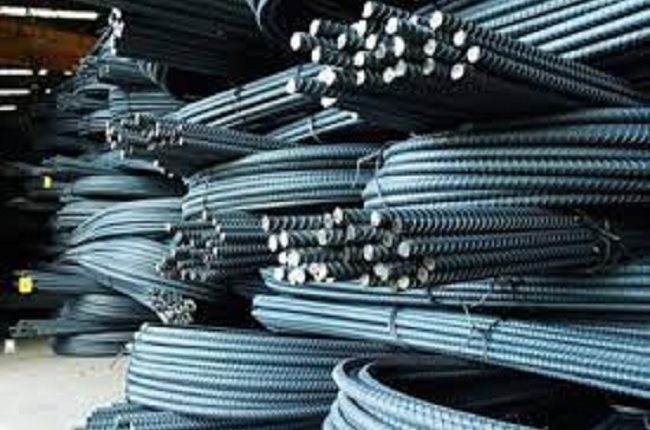
The Nigerian construction industry is reeling from an unprecedented surge in steel rod prices, with some sizes experiencing increases of up to 210% between 2023 and 2025, forcing developers and contractors to rethink project timelines and building designs.
Market data reveals a staggering transformation in the reinforcement steel market. Smaller steel rods, measuring 10–16 mm in diameter, have jumped from approximately N335,000 per tonne in 2023 to N1.04 million in 2025. Larger 32 mm rods have seen similarly dramatic increases of around 175%, fundamentally altering the economics of construction projects across the country.
Exchange Rate Volatility Drives Price Surge
The sharp price escalation can be traced directly to Nigeria’s currency crisis. Gboyega Adewale, a steel rod dealer at Maya Junction in Ikorodu, Lagos, described how the market transformed as the naira weakened against the US dollar.
“The relatively low prices in 2023 reflected a period when the naira was being exchanged for around N500 to the US dollar,” Adewale explained. The situation deteriorated rapidly in 2024, with prices for 10–16 mm rods skyrocketing to N1.3 million per tonne, while 32 mm rods reached N1.5 million.
The crisis stems from Nigeria’s heavy reliance on imported steel products. With a significant portion of steel rods entering the country from abroad, exchange rate fluctuations translate directly into local price volatility, leaving the construction sector vulnerable to currency market instability.
Market Disruption and Cautious Recovery
The 2024 price spike sent shockwaves through the construction industry, effectively freezing many projects as developers adopted a wait-and-see approach. Many stakeholders paused procurement activities, hoping for currency stabilization before committing to major purchases.
As 2025 has brought relative stability to the naira, the market has begun to thaw. Bisi, a Surulere-based building materials supplier, reports that demand has recovered to near-optimal levels as contractors resume procurement activities. However, despite the slight price moderation, current rates remain substantially higher than 2023 levels.
Engineering Response: Efficiency Over Compromise
Civil engineer Babatunji Adegoke emphasized that the industry is navigating the crisis without compromising structural integrity. “Even with the increasing cost, engineers do not drastically change their usage of steel rods because efficiency is built into our design approach,” he said.
Steel rods remain irreplaceable in Nigerian construction, serving as the backbone of columns, beams, slabs, and foundations. While alternatives such as bamboo, fiber composites, and even shells exist in theory, Adegoke notes that steel rods remain the global standard for reinforcement.
However, the financial pressure has prompted creative responses. Architect Uko Akpan reports fielding numerous requests from clients seeking cost-saving redesigns. “Clients often seek advice on redesigning plans during periods of material price surges,” he explained, noting that designers can optimize costs by reducing unnecessary structural features, cantilevers, and extrusions while maintaining building safety.
Macroeconomic Context
The steel rod crisis sits within a broader story of economic turbulence. Nigeria’s inflation rate peaked at 21.82% in January 2023, driving up costs across all construction inputs. While headline inflation has since moderated to 18.02% as of September 2025, the construction sector continues to feel the squeeze.
The relative stabilization of the naira in 2025 offers a glimmer of hope. Industry observers suggest that sustained currency stability could drive further price reductions, potentially offering relief to an industry that has seen project costs balloon over the past two years.
For now, Nigeria’s construction sector remains in adaptation mode—adjusting designs, timing purchases strategically, and maximizing material efficiency as it navigates one of the most challenging pricing environments in recent memory. The coming months will reveal whether the current currency stability can translate into lasting relief for an industry critical to Nigeria’s infrastructure development and economic growth.
WHAT YOU SHOULD KNOW
Nigeria’s steel rod prices have skyrocketed by up to 210% since 2023—driven primarily by naira depreciation and import dependency. What cost N335,000 per tonne in 2023 now sells for over N1 million in 2025. While recent currency stability has brought slight relief, construction costs remain severely elevated, forcing developers to delay projects and redesign buildings to cut costs.
Nigeria’s heavy reliance on imported steel means currency instability directly translates to unaffordable construction, making the exchange rate the single most critical factor determining whether building projects can proceed or must be shelved.