The Trump administration announced Wednesday that it had dismissed the head of the nation’s leading public health agency following a tense standoff with Health Secretary Robert F. Kennedy Jr., a vocal vaccine skeptic.
The conflict, centered on Kennedy’s wide-ranging overhaul of U.S. vaccine policy, has already triggered a wave of resignations at the Centers for Disease Control and Prevention (CDC). According to a union representing agency employees, five senior officials have stepped down in protest.
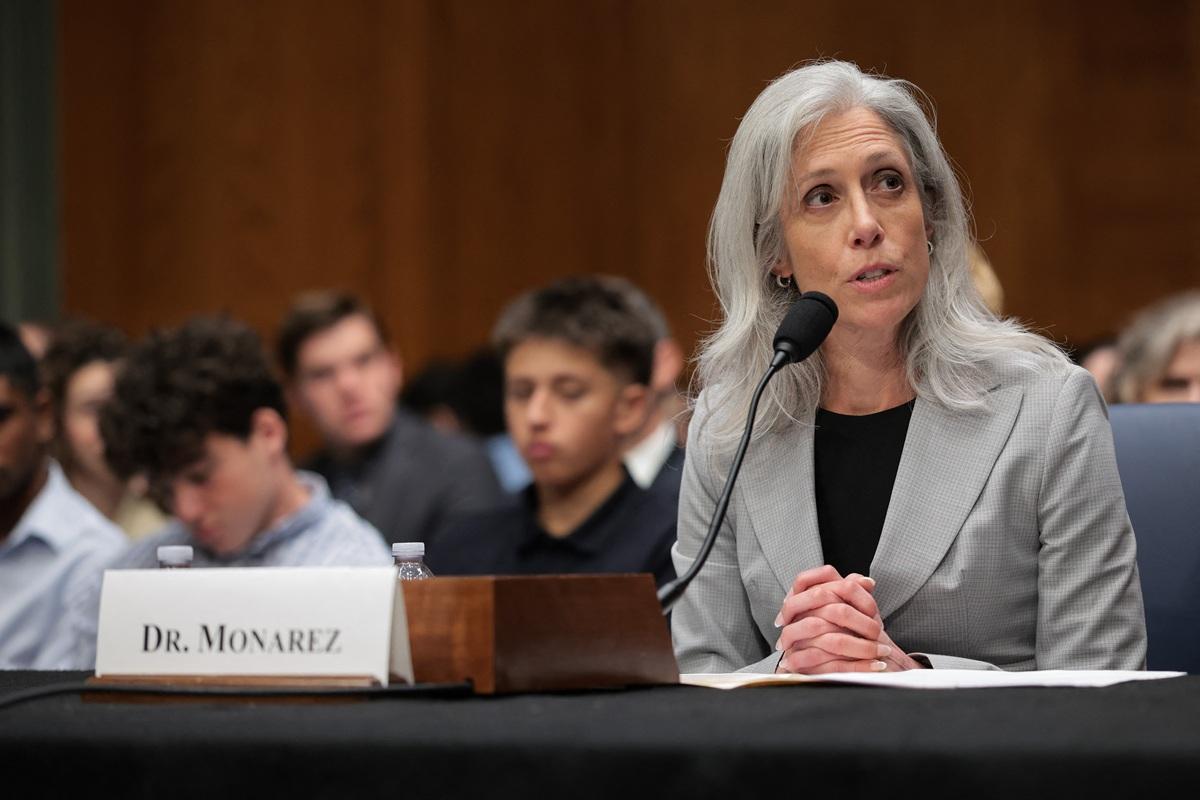
Susan Monarez, a career health scientist and veteran civil servant, had served as CDC director for less than a month before Kennedy’s Department of Health and Human Services (HHS) declared on X that she “is no longer director.”
Monarez’s attorneys, however, argued that she never resigned and had not received any official notification from the White House regarding her dismissal, insisting she intended to continue in her position. Hours later, the White House confirmed that Monarez had been removed.
White House spokesman Kush Desai stated in an email to AFP: “As her attorney’s statement makes abundantly clear, Susan Monarez is not aligned with the President’s agenda of Making America Healthy Again. Since Susan Monarez refused to resign despite informing HHS leadership of her intent to do so, the White House has terminated Monarez from her position with the CDC.”
Her legal team countered, saying Monarez had been told by a staff member in the White House personnel office that she was fired, but stressed that “as a presidential appointee, senate confirmed officer, only the president himself can fire her.” They described the notification as “legally deficient” and insisted she still held her role.
In an earlier statement, Monarez’s lawyers accused Kennedy of “weaponizing public health for political gain and putting millions of American lives at risk.”
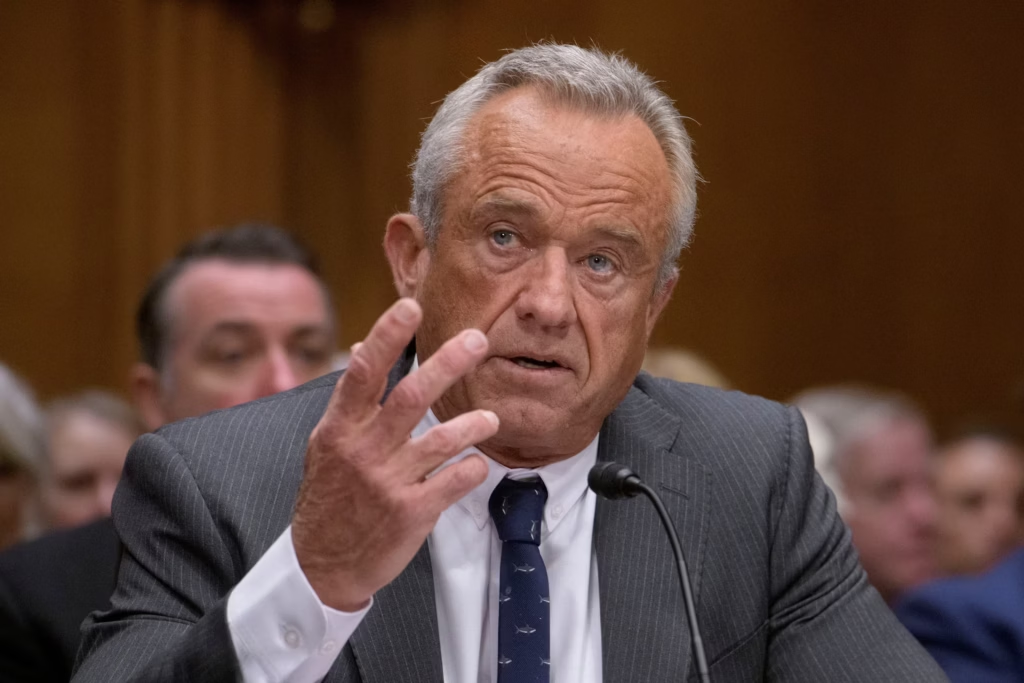
The Washington Post, which first reported the dismissal, said Kennedy had pressured Monarez to resign after she declined to support his changes to national vaccination policy.
In response to the turmoil, five top CDC officials submitted their resignations. The union AFGE Local 2883, representing more than 2,000 CDC workers, said many felt compelled to leave their roles due to the political interference. “Many felt forced to walk away from the jobs they loved because politics left them no choice,” the union noted in a statement, emphasizing: “Vaccines save lives.”
Among the high-profile departures was Demetre Daskalakis, director of the CDC’s National Center for Immunization and Respiratory Diseases. In his resignation message on X, he wrote: “Enough is enough. I am unable to serve in an environment that treats CDC as a tool to generate policies and materials that do not reflect scientific reality and are designed to hurt rather than to improve the public’s health.”
Other resignations included Debra Houry, the CDC’s chief medical officer, and Daniel Jernigan, head of the National Center for Emerging and Zoonotic Infectious Diseases, according to U.S. media reports citing internal staff notes.
Kennedy, since assuming office, has restructured U.S. vaccine policy by removing leading immunization experts, limiting access to Covid-19 vaccines, and cutting funding for new vaccine research. These moves, which run counter to mainstream scientific consensus, have drawn sharp criticism from health experts outside the administration.
Monarez, who was confirmed by the Senate and officially sworn in by Kennedy on July 31, was meant to usher in a new era of leadership at the CDC. Instead, her short tenure ended abruptly amid mounting tensions.
Her departure comes as the CDC faces a turbulent period. Earlier in August, the agency’s Atlanta headquarters was attacked by an armed man who allegedly blamed a Covid vaccine for an illness. Following the incident, hundreds of current and former CDC staff signed an open letter condemning Kennedy’s leadership and warning that his stance on vaccines was putting the public at greater risk.
What you should know
Susan Monarez, a seasoned health scientist, was forced out of her role as CDC director less than a month into her tenure after refusing to back Robert F. Kennedy Jr.’s controversial vaccine policies.
Her dismissal, coupled with the resignations of several top officials, underscores a growing crisis at the CDC, as political pressure clashes with scientific consensus on vaccines.