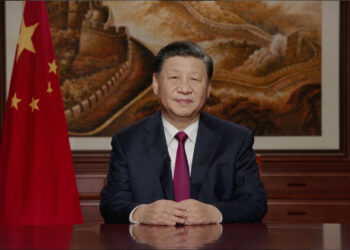
Russian President Vladimir Putin has signed a new decree that allows the country to increase its greenhouse gas emissions by approximately 20 percent by 2035 compared to 2021 levels, raising concerns among climate experts and environmental activists.
According to the decree issued on Wednesday, the Russian government is now tasked with capping national emissions at 65 to 67 percent of 1990 levels by the year 2035. This target takes into account the carbon absorption potential of Russia’s expansive forests, which act as natural carbon sinks.
However, while this might sound like a reduction, the plan would allow emissions to rise to around two billion tonnes of carbon dioxide equivalent by 2035. In comparison, Russia emitted 1.7 billion tonnes in 2021.
This decision reflects a controversial trajectory for Russia, the world’s fourth-largest emitter of carbon dioxide. Although Moscow has previously pledged to reach net-zero emissions by 2060, many climate advocates argue that its current approach lacks urgency and ambition. Analysts also highlight that the use of 1990 as a baseline is misleading.
Russia’s emissions in that year were at a record high of 3.1 billion tonnes, a figure that plummeted in the 1990s due to the collapse of heavy industry following the dissolution of the Soviet Union.
The latest decree reinforces Russia’s resistance to aggressive climate reforms. At past global climate summits, Moscow has repeatedly opposed calls for a complete transition away from fossil fuels.
This stance is largely driven by the structure of the Russian economy, which is heavily reliant on oil and gas exports. As a result, while other nations strive for stricter emission caps, Russia has often pushed for more lenient goals that prioritize energy security and economic stability.
Climate experts warn that the newly announced target offers little hope for meaningful progress. By permitting emissions to rise above current levels, Russia risks undermining global efforts to contain climate change.
The Paris Agreement, which Moscow has ratified, calls for limiting global temperature increases to 1.5 degrees Celsius above pre-industrial levels, a threshold that scientists say could be crossed as early as the 2030s if bold action is not taken.
Adding to the urgency, Russia itself is experiencing the effects of climate change more rapidly than many other nations. The head of the Russian state meteorological agency recently revealed that the country is warming at a pace 2.5 times faster than the global average. This trend poses significant risks for Russia’s ecosystems, infrastructure, and public health.
Despite these warnings, the government’s current roadmap suggests that it remains hesitant to make substantial policy shifts. Critics argue that Russia’s targets are deliberately vague and that the emphasis on forest absorption masks the need for deeper industrial reforms. With the world edging closer to climate tipping points, observers say that any delay from major emitters like Russia could have irreversible consequences.
While the Kremlin insists that its approach balances environmental concerns with economic realities, environmental groups have expressed disappointment, viewing the latest move as a step backward in the global climate fight.
What You Should Know
President Vladimir Putin’s new decree sets a climate target that would allow Russia to emit up to two billion tonnes of greenhouse gases by 2035, an increase of roughly 22 percent from 2021 levels.
Although framed as a reduction from 1990 benchmarks, experts argue that using the 1990 baseline is misleading, and that the move contradicts the urgent global push to drastically cut emissions to keep warming below 1.5°C.