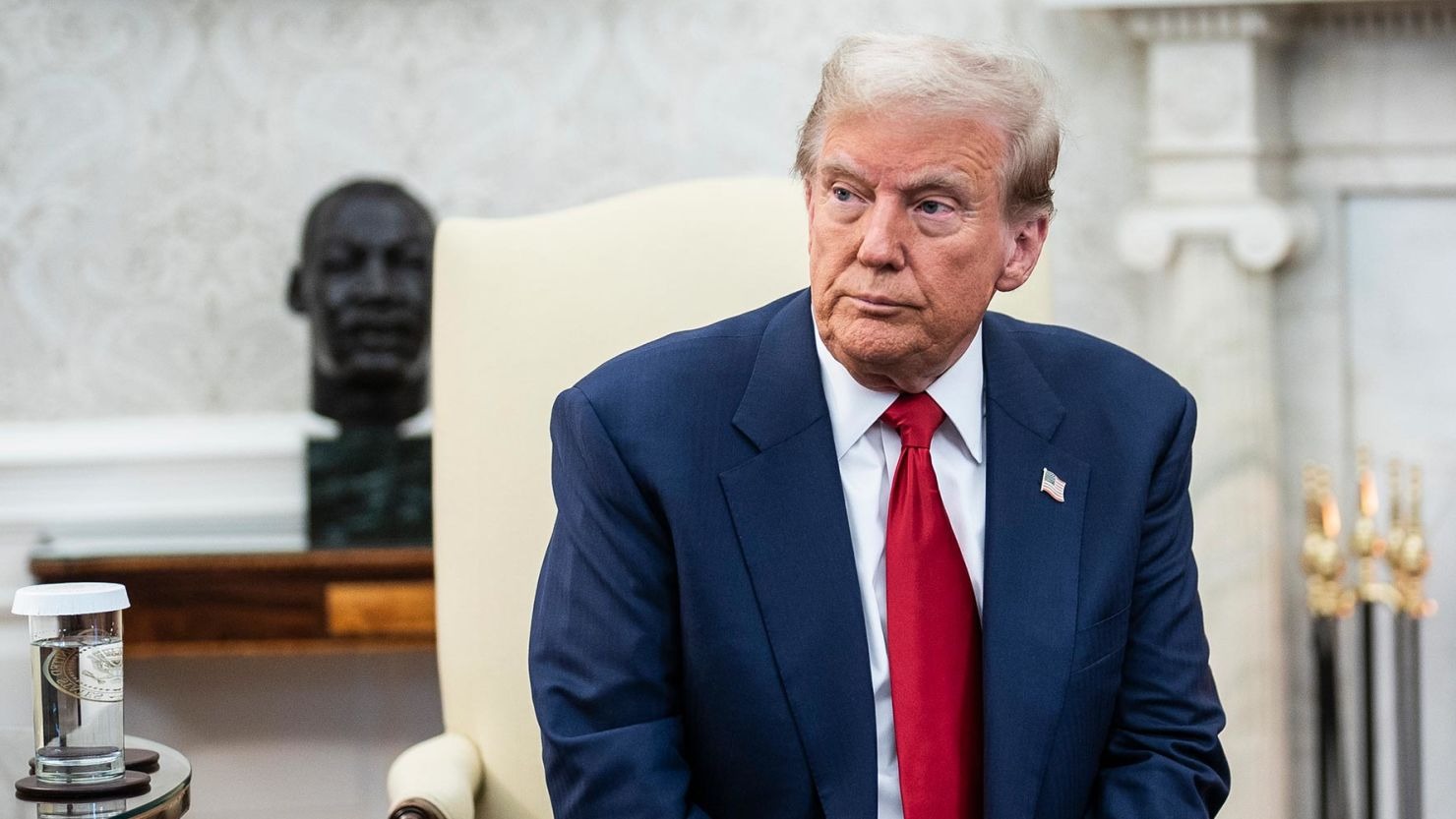
The White House has officially disclosed that President Donald Trump is dealing with a long-standing, non-threatening vein condition, putting to rest widespread conjecture surrounding visible swelling in his legs and the bruised appearance of his right hand.
Speaking to reporters on Thursday, Press Secretary Karoline Leavitt revealed that the 79-year-old president had been diagnosed with “chronic venous insufficiency,” a circulatory condition, after recently noting minor swelling in his lower limbs.
According to Leavitt, the noticeable bruising on Trump’s right hand was the result of “frequent handshaking” and the regular use of aspirin as part of a “standard cardiovascular prevention regimen.”
Trump, who became the oldest individual to take office as president of the United States at the start of his second term this January, succeeded Democrat Joe Biden, who was 82 years old when he concluded his presidency. Known for highlighting his stamina, the Republican leader often boasts about his energy levels and maintains an active lifestyle, including regular rounds of golf. Not long ago, the administration even circulated an image of the president styled as Superman, emphasizing his vigorous image.
In April, Trump underwent a routine medical evaluation and declared afterward that he was in “very good shape.” However, Thursday’s health update follows a surge of online speculation concerning his health, sparked by images showing his swollen ankles at the FIFA Club World Cup final in New Jersey and the discoloration on his right hand.
Leavitt explained that Trump personally requested she disclose the physician’s note to promote openness with the public. She noted that the president had gone through a “comprehensive examination,” including ultrasound imaging, which confirmed the presence of chronic venous insufficiency—a common and typically harmless condition, especially prevalent in individuals over the age of 70. The disorder is marked by weakened veins in the legs that do not efficiently circulate blood back to the heart.
“There was no indication of deep vein thrombosis or arterial disease,” Leavitt added.
Further medical assessments revealed that Trump’s heart structure and function were within normal limits, and there was no evidence of heart failure, kidney dysfunction, or broader systemic illness. Regarding the discoloration on his hand, Leavitt reiterated, “This is a well-known and benign side effect of aspirin therapy. And the president remains in excellent health.”
Despite earlier dismissals from the White House regarding the condition of Trump’s hand, attributing the marks solely to frequent handshaking, Thursday’s briefing marked the first time the administration acknowledged an underlying vascular issue.
The physical condition of U.S. presidents has long been a matter of intense public scrutiny. That focus has only intensified in recent years as the presidency has been held by the two oldest individuals in American history—first Biden and now Trump.
Trump’s administration has also amplified claims that the previous White House covered up aspects of Biden’s physical and mental decline. Biden’s health had become a central topic during the 2024 election season. Following a poor performance during a head-to-head debate with Trump, Biden eventually withdrew from his re-election campaign.
In response to mounting concerns, Republicans in the House of Representatives have issued subpoenas to Biden’s aides, including his doctor, in pursuit of an inquiry into the former president’s mental health. Trump has gone as far as accusing Biden, without presenting any evidence, of not being mentally fit to govern, citing his frequent use of an “autopen”—a device that mechanically replicates a person’s signature—as supposed proof. The autopen has, however, been a longstanding tool used by U.S. presidents and top officials.
Earlier this year, Biden revealed he had been diagnosed with an aggressive form of prostate cancer in May. While acknowledging his health challenges, he dismissed suggestions of cognitive decline, maintaining that he was still capable of winning a second term had he chosen to continue his campaign.
Trump’s diagnosis of a chronic vein condition comes at a time of heightened attention to presidential health, but his administration insists he remains physically sound and capable of carrying out his duties effectively.
What you should know
Donald Trump, at 79, is now managing chronic venous insufficiency, a benign yet common circulatory condition in older adults, marked by difficulty in blood flow from the legs.
Despite public concerns about his appearance, the White House affirms he remains in “excellent health” and continues to perform his presidential responsibilities without impairment.