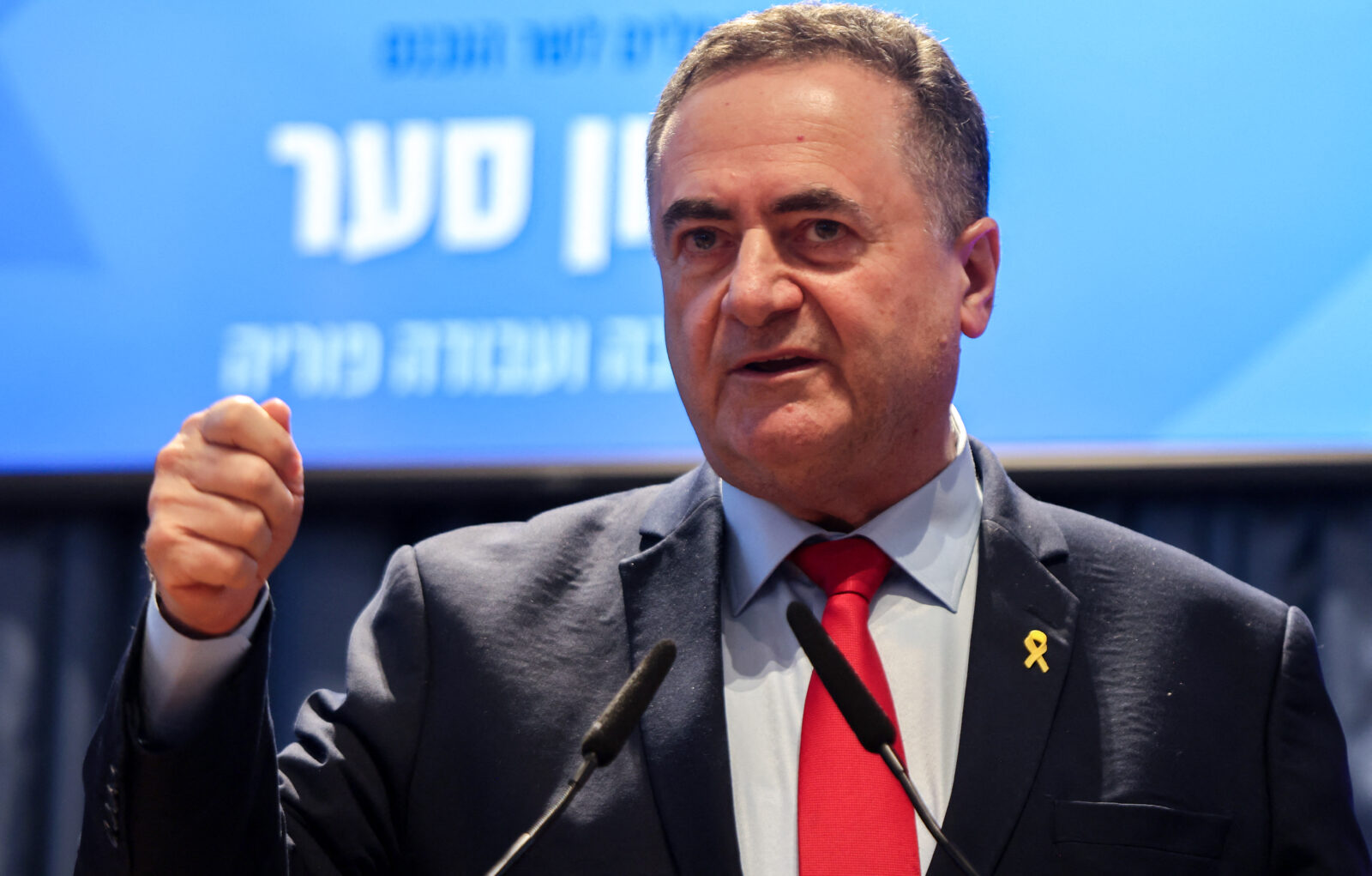
Israel’s Defence Minister, Israel Katz, has disclosed that the Israeli military would have targeted and killed Iran’s Supreme Leader, Ayatollah Ali Khamenei, during the recent 12-day war between the two countries if it had the opportunity.
Speaking in separate interviews with Israeli media on Thursday, Katz said that while the Israeli military actively searched for Khamenei, he managed to evade detection by going into deep hiding.
“If he had been in our sights, we would have taken him out,” Katz told Kan, Israel’s public radio. He explained that Israeli forces had conducted extensive operations in hopes of locating the Iranian leader but were ultimately unsuccessful.
According to Katz, Khamenei appeared to understand the gravity of the threat and responded by cutting off communications with his top commanders and moving deep underground, making the possibility of a targeted strike “unrealistic.”
Katz, who has previously taken a hardline stance against Iran’s leadership, reiterated his position during the conflict, stating at the time that Khamenei “can no longer be allowed to exist.” These comments came shortly after reports surfaced suggesting that the United States had vetoed Israeli plans to assassinate the Iranian leader.
In Thursday’s interviews, Katz added that now that a ceasefire was in place, assassination operations would be halted. “There is a difference between before the ceasefire and after the ceasefire,” he told Channel 13.
Nonetheless, he issued a stark warning to the Iranian supreme leader, advising him to stay hidden. “He should learn from the late Nasrallah, who sat for a long time deep in the bunker,” Katz said, referencing Hezbollah’s former leader, Hassan Nasrallah, who was killed in a targeted Israeli airstrike in Beirut in September 2024.
Khamenei, who has not left Iran since assuming leadership in 1989, is known to maintain highly secretive and tightly guarded movements, especially during heightened tensions.
Despite the ceasefire, Katz emphasized that Israel retains its aerial superiority over Iran and remains fully prepared to strike again if necessary. “We won’t let Iran develop nuclear weapons and threaten (Israel) with long-range missiles,” he declared.
In a separate interview with Israel’s Channel 12, Katz acknowledged that Israel does not have complete knowledge of the locations of Iran’s enriched uranium stockpiles. However, he maintained that recent Israeli and U.S. airstrikes had succeeded in dismantling Iran’s uranium enrichment infrastructure.
“The material itself was not something that was supposed to be neutralised,” he clarified, referring to the enriched uranium already produced. Katz’s statement adds to the ongoing debate surrounding the effectiveness of recent airstrikes on Iran’s nuclear program. While a leaked U.S. intelligence report assessed that the strikes had delayed Iran’s program by only a few months, Katz and several other Western officials have insisted that it would take Iran years to rebuild the destroyed facilities.
The 12-day conflict between Israel and Iran, which ended in a ceasefire on June 24, has left both sides claiming victory. The war erupted on June 13 after Israel launched a wave of airstrikes, declaring it aimed to prevent Iran from developing nuclear weapons—an allegation Tehran has consistently denied.
The intensity of the brief but explosive conflict has shifted regional dynamics and raised fresh questions about the future of nuclear diplomacy and military confrontation in the Middle East. While the guns have temporarily gone silent, the rhetoric remains sharp, and the underlying tensions unresolved.
What You Should Know
Israeli Defence Minister Israel Katz revealed that Israel had planned to assassinate Iran’s Supreme Leader Ayatollah Khamenei during the recent war but failed as he went into hiding. Although a ceasefire has been reached, Katz warned that Israel remains ready to act again to prevent Iran from acquiring nuclear weapons.