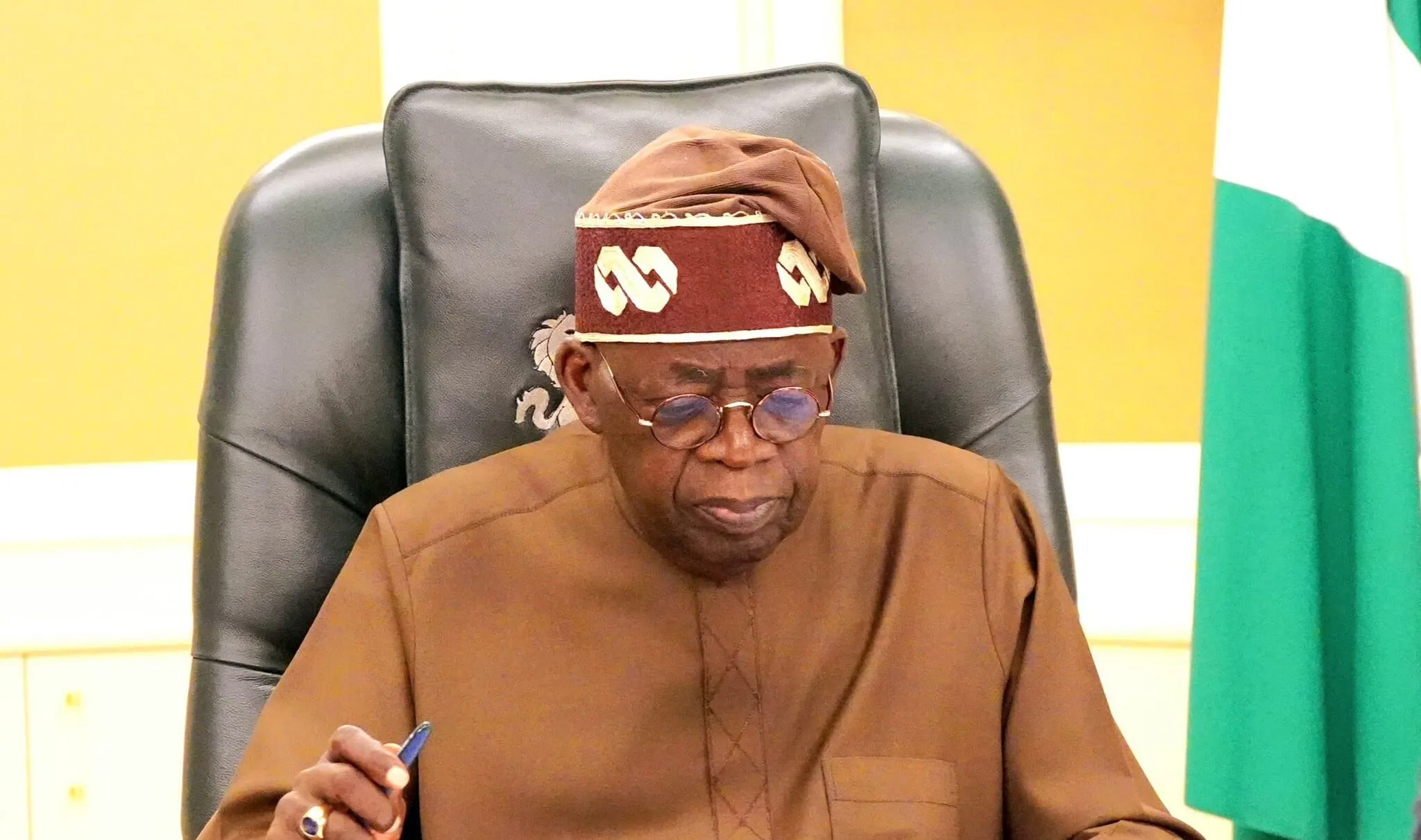
A years-long fight over records tied to President Tinubu’s alleged links to a 1990s Chicago heroin case hit a turning point this week, with Tinubu’s lawyers joining the FBI, DEA, and DOJ in seeking to keep the investigative files sealed.
A federal judge in Washington gave the FBI, DEA, DOJ, and President Tinubu until August 28, 2026, to file their final opposition to releasing the disputed records, with the order described as allowing “no later” extensions.
The strict cutoff, issued by U.S. District Judge Beryl Howell of the District of Columbia, was widely read by observers as a signal that the court, after more than three years of litigation, intended to force a resolution.
The filings cap a legal saga that began quietly in 2022, when American transparency activist Aaron Greenspan, founder of the legal-records platform PlainSite, submitted twelve separate Freedom of Information Act requests to six federal agencies, seeking records connected to a Chicago heroin ring that had operated in the early 1990s.
One of those requests explicitly sought the complete FBI file on “Bola Ahmed Tinubu, DOB 3/29/1952, President-Elect of Nigeria as of February 2023. “Nigerian journalist David Hundeyin later joined the case as a co-claimant.
For years, the agencies involved relied on what U.S. law calls a “Glomar response,” refusing to confirm or deny whether responsive records existed.
The position collapsed in April 2025, when Judge Howell found that the FBI and DEA had already officially confirmed the existence of investigations into Tinubu related to the drug ring and that whatever privacy interests were at stake were outweighed by the public interest in disclosure.
The ruling ordered the FBI and DEA to search for and turn over any records not covered by specific FOIA exemptions.
The agencies first sought a 90-day extension in May 2025. More recently, in mid-August 2026, U.S. Attorney Jeanine Pirro, a Trump appointee representing the government defendants, asked for a further ten-day extension; Judge Howell granted only four additional days, reportedly noting that the case had already been pending for more than three years and signaling the court’s unwillingness to tolerate further delay.
It was at this point that Tinubu’s legal team formally entered the fray as an intervenor. His lawyers filed a notice of joinder asking to be placed on the same schedule as the government defendants, requesting that Tinubu’s response to the summary-judgment motion be granted the same ten-day extension sought by the Justice Department. Howell denied the longer extension, according to multiple accounts of the filings.
Around the same time, the FBI took the additional step of asking the court for permission to explain, in secret, why some material should never see daylight at all.
The Bureau had already released some material while withholding the rest under five FOIA exemptions, 6 and 7 (C), covering personal privacy; 7 (D), protecting confidential sources; 7 (E), protecting investigative techniques; and 7 (F), protecting the safety of individuals.
The FBI told the court it could not publicly disclose the full reasoning behind invoking Exemptions 7(E) and 7(F) without undermining the very secrecy it was trying to protect and asked to submit sealed declarations for the judge’s eyes only. Greenspan formally opposed that request.
The underlying allegations trace back to a civil forfeiture case rather than a criminal conviction. In 1993, a U.S. District Court ordered the forfeiture of $460,000 held in an account bearing Tinubu’s name because the funds represented proceeds of narcotics trafficking or were tied to transactions violating money-laundering laws.
Tinubu was never criminally charged, arrested, or indicted in connection with the matter, and his office has long characterized the forfeiture as a civil settlement rather than an admission of guilt.
His administration has downplayed the significance of the pending disclosure. Presidential aide Bayo Onanuga said government lawyers were reviewing the court’s order but did not expect the documents to contain new revelations, while the ruling All Progressives Congress has dismissed political rivals anticipating damaging material from the files.
The case has become entangled with Nigeria’s domestic politics ahead of the 2027 election.
Filings and updates have been publicized in near real-time by Von Batten-Montague-York, a Washington lobbying firm retained in March 2026 by former Vice President Atiku Abubakar, a prominent Tinubu rival, to protect and strengthen his reputational standing in the United States.
The firm has framed each procedural development from the FBI’s request for private review to the looming deadline as evidence that disclosure is imminent, claims that have not been independently verified against the public court docket in every instance.
With oppositions now due, Judge Howell is expected to rule on both the FBI’s request for in-camera review of its withheld material and on the broader question of what, if anything, must ultimately be made public.
Legal observers caution that a decision to allow sealed declarations is a routine step in FOIA litigation touching on law-enforcement sensitivities and does not, by itself, indicate what the underlying records contain or how the case will ultimately be resolved.
WHAT YOU SHOULD KNOW
This isn’t a new lawsuit by Tinubu; it’s a three-year-old FOIA fight where his lawyers have joined the FBI, DEA, and DOJ in trying to delay or narrow the release of decades-old investigative records tied to a 1993 civil forfeiture (not a criminal conviction) in a Chicago heroin case.
The FBI now wants to explain its withholdings to the judge in secret; a court deadline of August 28, 2026, has been set for final opposition briefs, and much of the running commentary on the case comes from a lobbying firm hired by a Tinubu political rival so the “imminent bombshell” framing should be read with caution until the court actually rules.