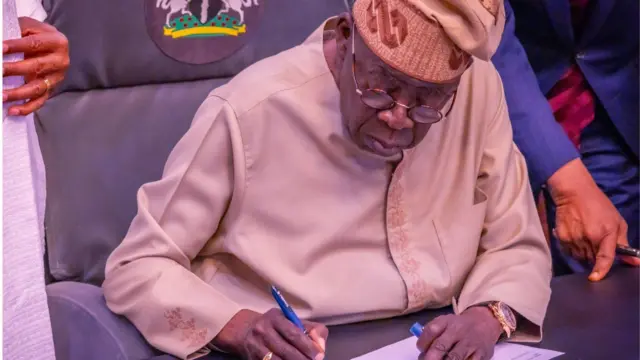
President Bola Tinubu has requested the Senate’s approval for a new external borrowing of $516,333,070 to finance key segments of the proposed Sokoto–Badagry Super Highway, a major infrastructure project under his administration.
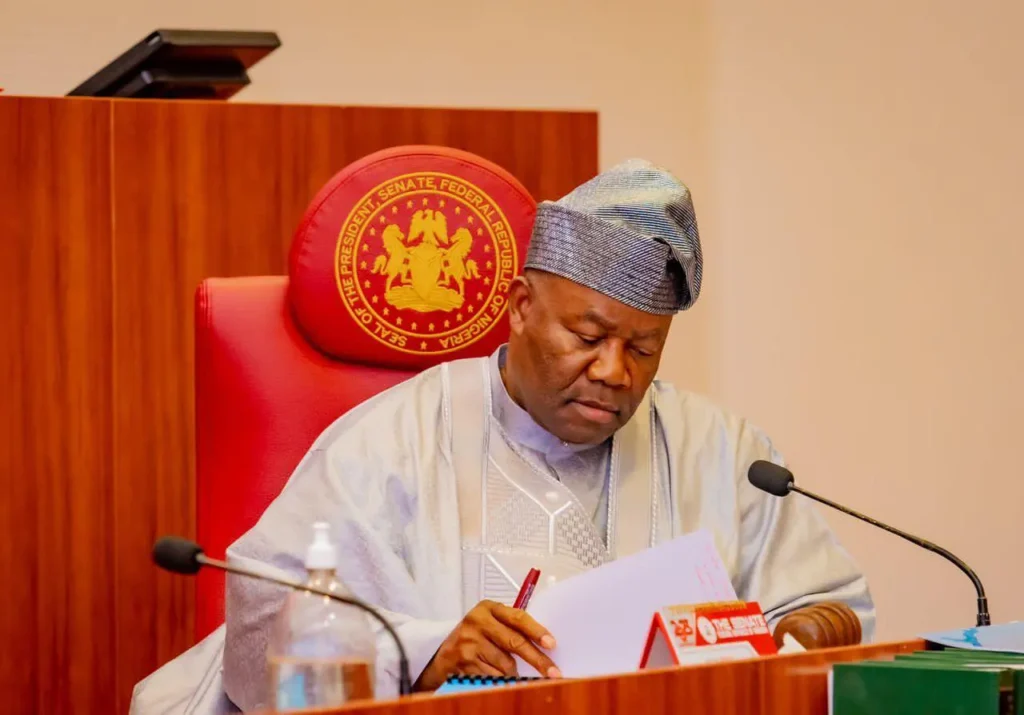
The request was conveyed in a letter addressed to the Senate President, Godswill Akpabio, and presented during plenary on Thursday, paving the way for legislative deliberation on the funding plan.
According to the president, the loan, expected to be secured from Deutsche Bank, will be used for the construction of Sections 1, 1A, and 1B of the proposed 1,000-kilometre highway aimed at connecting Nigeria’s North-West region to the South-West corridor.
The letter partly read, “Specifically, approval is sought for the syndicated financing facility from Deutsche Bank in the total sum of US$516,333,007 for the execution of Sections 1, 1A, and 1B of the Sokoto–Badagry Superhighway Project.
“The inclusion of the said financing in the Federal Government’s borrowing plan, as earlier approved by the National Assembly. The Senate is invited to note that the Sokoto–Badagry Superhighway is a flagship infrastructure initiative under the Renewed Hope Agenda.”
Providing further insight, the president stated that the highway will pass through Sokoto, Kebbi, Niger, Kwara, Oyo, Ogun, and Lagos states, extending from Illela to Badagry, and is expected to significantly improve connectivity and economic integration across regions.
“The project is designed to open up Nigeria’s northwest–southwest economic corridor through the construction of an approximately 1,000-kilometre high-capacity carriageway, linking Sokoto, Kebbi, Niger, Kwara, Oyo, Ogun, and Lagos States, stretching from Illela to Badagry.
“It is also expected to enhance north–south connectivity and road safety, improve network performance along the corridor, reduce logistics costs and travel time, facilitate trade and strengthen food security and promote national integration by linking production zones to markets and ports,” he stated.
Tinubu further explained that the financing arrangement includes a syndicated loan supported by a partial risk guarantee from the Islamic Corporation for the Insurance of Investment and Export Credit, while the Federal Government will contribute ₦265.5 billion as counterpart funding for land acquisition, compensation, and associated infrastructure.
He noted that the loan tenure is set at nine years, including a grace period of up to three years, with interest pegged at the SOFR plus 5.3 per cent annually.
The president added that the Federal Executive Council had already approved the financing structure and urged the Senate to expedite consideration of the request.
“I look forward to the expeditious consideration and approval of this request by the Senate. Please accept, Distinguished Senate President and Distinguished Senators, the assurances of my highest regards,” the statement added.
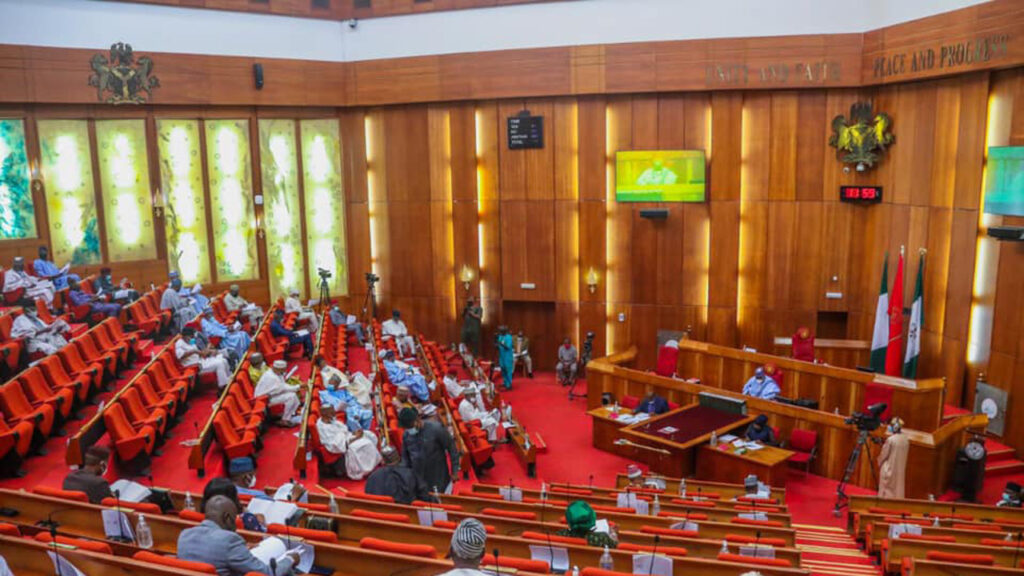
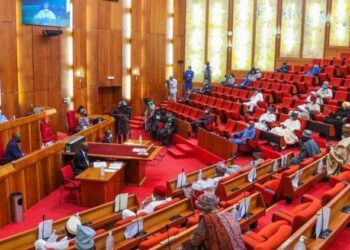
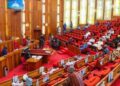
During plenary, lawmakers underscored the economic importance of the project, noting that the highway spans multiple states and is expected to cut travel time between Sokoto and Lagos from about 13 hours to approximately six hours.
In his remarks, Akpabio supported the initiative, describing it as a transformative economic project capable of enhancing productivity and saving lives through improved road infrastructure.
He stressed that borrowing for critical infrastructure is justified, particularly when such investments deliver long-term economic returns and can support repayment through generated value.
The Senate President subsequently referred the proposal to the Senate Committee on Local and Foreign Debts, instructing it to submit its report within one week.
Akpabio also urged the committee to fast-track its review process to enable prompt legislative action on the loan request.
What you should know
President Tinubu’s request for a $516 million loan highlights ongoing efforts to boost Nigeria’s infrastructure through the Sokoto–Badagry Super Highway project.
The proposed road is expected to significantly improve connectivity between the North-West and South-West, reduce travel time, and enhance trade and economic integration. Backed by international financing and government counterpart funding, the project reflects a broader strategy to drive development under the Renewed Hope Agenda.
However, it also raises questions about debt sustainability and the importance of ensuring that borrowed funds deliver measurable long-term economic benefits for the country.