Senate Minority Whip, Senator Tony Nwoye, has formally defected from the African Democratic Congress (ADC) to the Nigeria Democratic Congress (NDC), citing internal divisions and multiple legal disputes affecting the stability of his former party.
The defection was officially announced on Wednesday during plenary at the National Assembly in Abuja.
Senate President Godswill Akpabio read Nwoye’s resignation letter before lawmakers and directed the Clerk of the Senate to immediately update official Senate records to reflect the change in party affiliation.
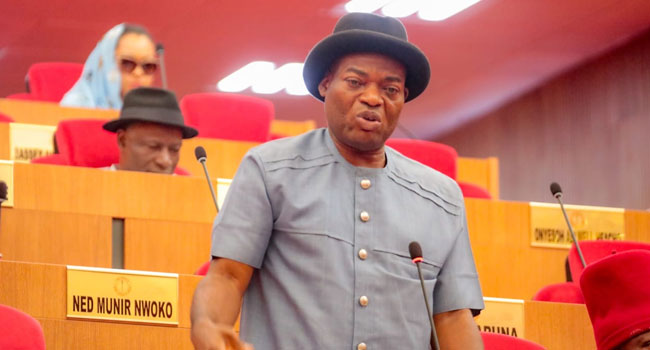
In his letter, Nwoye, who represents Anambra South Senatorial District, said his decision to leave the ADC became inevitable due to unresolved internal conflicts and ongoing litigations involving the party at the Federal High Court.
He explained that the legal disputes and court judgments have significantly undermined the cohesion and operational stability of the party.
“I write to formally notify you of my resignation from the African Democratic Congress (ADC) and my intention to defect to the Nigeria Democratic Congress (NDC),” Nwoye stated in the letter.
He further explained the rationale behind his decision.
“The decision has become necessary due to internal divisions and the ongoing multiple litigations at the Federal High Court and court judgments affecting the party, which unfortunately affected the creation and stability of the party,” he said.
Following the announcement, Senate President Akpabio wished the lawmaker success in his new political platform.
Nwoye’s defection adds to the growing wave of political realignments currently reshaping Nigeria’s opposition landscape ahead of the 2027 general elections.
The move comes barely a day after a major shake-up in the National Assembly, where 18 federal lawmakers formally exited the ADC.
The group included 17 members of the House of Representatives and one senator, all of whom cited internal instability as the primary reason for their departure.
The latest development further deepens the crisis within the ADC and strengthens the Nigeria Democratic Congress, which has rapidly emerged as a key opposition platform following the recent entry of major political figures.
The NDC has gained significant momentum since the high-profile defection of former Labour Party presidential candidate Peter Obi and former Kano State Governor Rabiu Musa Kwankwaso.
Their arrival triggered a wave of defections across multiple political structures and significantly altered opposition calculations ahead of the next election cycle.
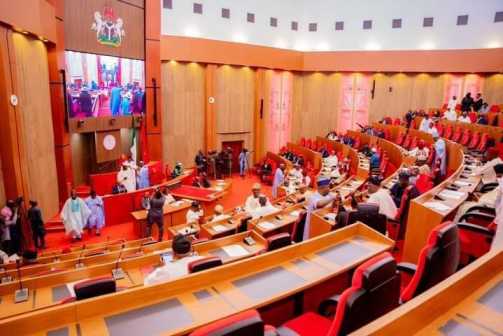
Political observers say Nwoye’s defection is particularly significant because of his strategic position as Senate Minority Whip.
His departure could further weaken the ADC’s influence within the upper chamber while consolidating the NDC’s legislative presence.
The development also signals the continuing erosion of the opposition coalition previously built around the ADC.
With key figures and lawmakers steadily exiting the party, questions are growing over its ability to remain a viable political force heading into the 2027 elections.
For the NDC, however, the latest defection is another major boost as it continues efforts to establish itself as a formidable national platform.
What You Should Know
Tony Nwoye’s defection is significant because he occupies one of the most influential opposition positions in the Senate as Minority Whip.
His move reflects the growing instability within the ADC, which has faced internal legal battles and leadership disputes in recent months.
The shift also strengthens the NDC’s expanding political base following the earlier defections of Peter Obi and Rabiu Kwankwaso. As more lawmakers align with the NDC, Nigeria’s opposition structure is being rapidly reshaped ahead of 2027.
The realignment could alter legislative power dynamics and redefine coalition-building strategies across both chambers of the National Assembly.