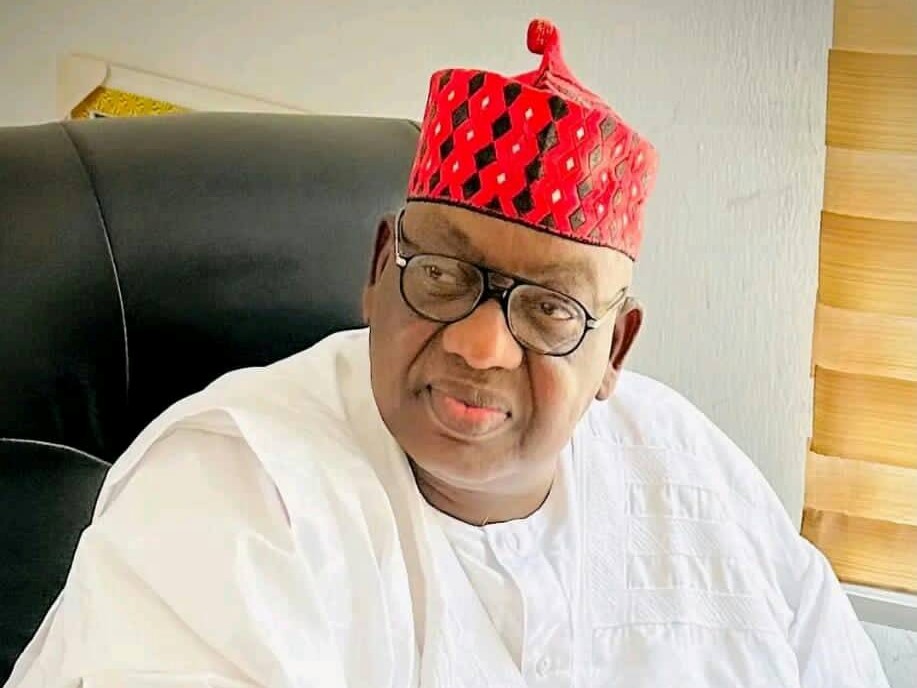
The New Nigeria Peoples Party (NNPP) has been effectively wiped off the Nigerian Senate map following the defection of its last remaining senator, Senator Rufai Hanga, representing Kano Central, to the Nigeria Democratic Congress (NDC).
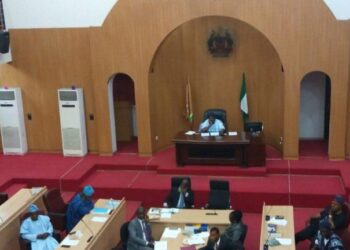
The move, announced on Tuesday during Senate plenary by Senate President Godswill Akpabio, marks a significant and potentially terminal moment for a party that once harbored ambitions of becoming a major political force in Nigeria’s northern heartland.
Akpabio read aloud a formal letter from Hanga during the session, in which the senator cited deep-seated internal fractures within the NNPP as the catalyst for his departure.
Hanga described a party beset by factional disagreements and contradictory leadership directives, a toxic political climate, he argued, that had rendered meaningful legislative work all but impossible.
“The situation created an unstable political environment that hindered his responsibilities as a senator,” the letter stated, in what amounted to a stinging public indictment of the party’s internal governance.
Hanga was careful, however, to frame his exit not merely as a retreat from dysfunction but as a forward-looking political realignment. He noted that the decision followed extensive consultations with constituents and key political stakeholders in Kano Central and that the NDC more closely reflects his legislative priorities and broader vision for governance.
The defection is the latest chapter in what has been a prolonged and painful unravelling of the NNPP’s national ambitions. The party surged into public consciousness ahead of the 2023 general elections, riding largely on the coattails of former Kano Governor Rabiu Musa Kwankwaso’s towering political influence in the northwest.
At its peak, the party commanded a degree of senatorial representation that suggested it could establish itself as a credible third-force alternative to the dominant APC and PDP duopoly.
That promise now lies in ruins.
With Hanga’s departure, the NNPP holds zero seats in the 109-member Senate, a dramatic collapse that raises urgent questions about the party’s organizational capacity, its internal cohesion, and its future viability as a national political platform ahead of the 2027 general elections.
The defection delivers a modest boost to the NDC, which now climbs to three Senate seats, consolidating its status as a minor but present force in the upper chamber.
The ruling All Progressives Congress (APC) retains its overwhelming dominance with 89 seats, a supermajority that continues to render opposition legislative maneuvering largely symbolic.
Political analysts will no doubt scrutinize Hanga’s choice of destination. His movement to the NDC, rather than to the more established PDP or the ruling APC, suggests either a deliberate ideological positioning or, more pragmatically, negotiations that offered him the most favorable terms within his local political constituency.
For the NNPP, the soul-searching must now begin in earnest. The party faces the daunting task of rebuilding its structures, resolving its leadership disputes, and convincing Nigerians, particularly in its Kano stronghold, that it remains a credible vehicle for political representation.
Failure to do so could see it reduced to irrelevance long before the 2027 campaign season officially begins.
As of press time, the NNPP had not issued an official response to Hanga’s defection.
WHAT YOU SHOULD KNOW
Senator Rufai Hanga’s defection from the NNPP to the NDC is more than a routine political realignment; it is the final nail in the coffin of a party that once promised to reshape Nigeria’s political landscape.
The NNPP now holds zero seats in the Senate, a stunning collapse that traces back to one fatal flaw: an inability to manage its own internal affairs. Whatever its founding ambitions, a party that cannot govern itself can hardly be trusted to govern a nation.
With 2027 on the horizon, the NNPP faces an existential question: rebuild or fade into irrelevance.