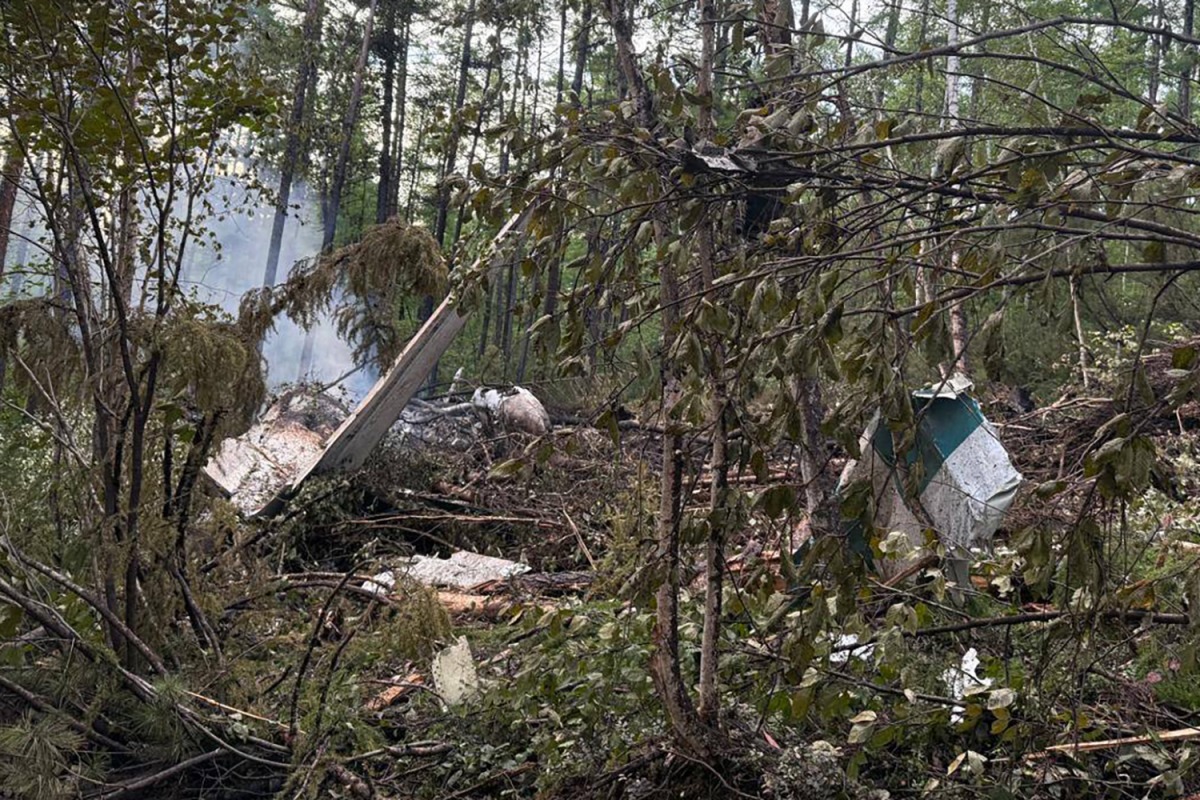
Authorities in Russia have recovered flight data recorders from the wreckage of an Antonov-24 aircraft that crashed in the country’s far east, killing all 48 people onboard. The recovered black boxes will be sent to Moscow for analysis, officials confirmed on Friday.
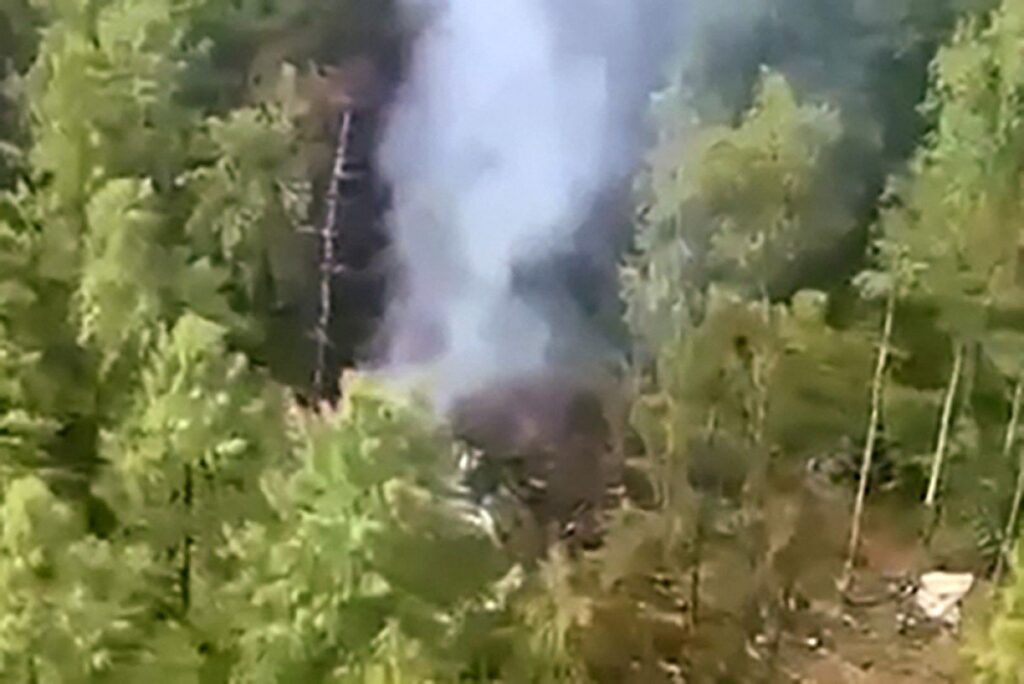
The aircraft, operated by Angara Airlines, lost contact with air traffic control around 1:00 p.m. local time (0400 GMT) on Thursday during a second landing attempt in Tynda, a remote town in Siberia. The wreckage was later found ablaze on a forest-covered mountain slope, roughly 15 kilometres (nine miles) south of the town’s airport.
The cause of the crash remains undetermined, but according to a rescuer cited by TASS news agency, the nearly 50-year-old twin-propeller aircraft was descending in thick cloud cover at the time of the accident. Investigators are examining possible causes, including technical failure or pilot error.
Russia’s transport ministry stated, “The flight recorders have been found at the crash site and will be delivered to Moscow for decryption in the near future.” In addition, a formal inquiry has been launched into Angara Airlines’ operational practices to determine whether it adhered to aviation regulations. The ministry added that a decision regarding the airline’s continued operations will follow the investigation.
Angara Airlines, a regional airline based in Irkutsk, said it was fully cooperating with investigators and taking all necessary steps to understand the cause of the tragedy. The company’s CEO, Sergei Salamanov, disclosed on REN TV that the captain — a highly experienced pilot with 11,000 flight hours — had made the final decision to proceed with the flight despite an “unfavourable” weather forecast.
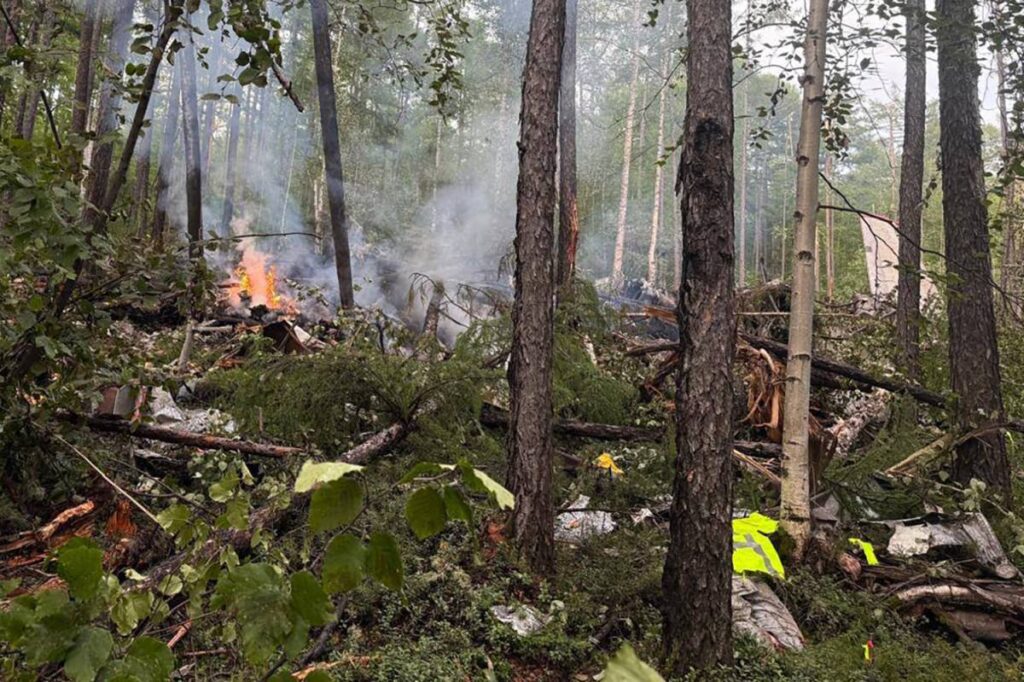
Local investigators confirmed on Friday that bodies had been recovered from the crash site, which was difficult to access and took hours for ground crews to reach. The transport ministry has announced that the families of the 48 victims, including six crew members, will receive compensation of five million rubles ($63,000) each.
What you should know
“The weather forecast was unfavourable,” said Angara Airlines CEO Sergei Salamanov, explaining that the captain—an experienced pilot with 11,000 hours—made the call to fly.
Russian authorities are investigating the crash to determine if technical faults or human error were to blame.