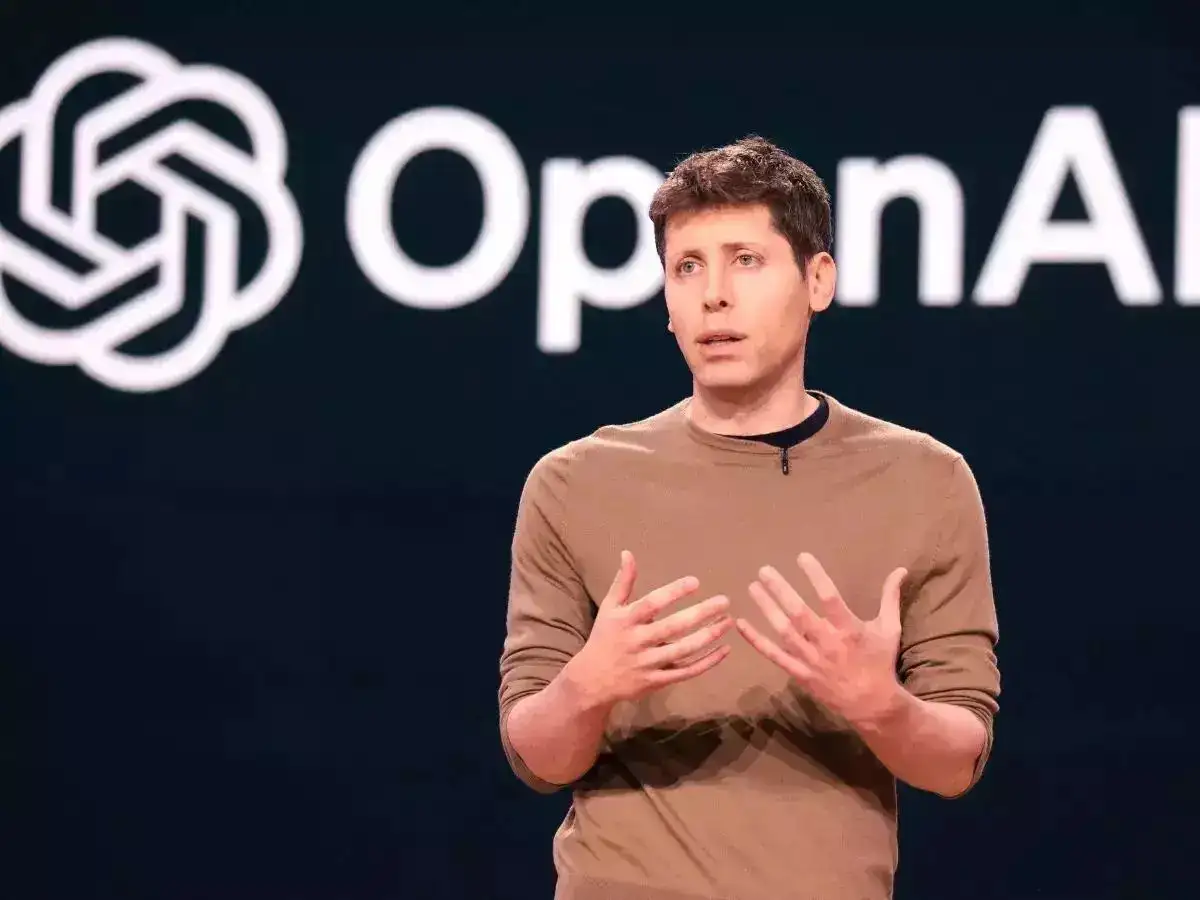
OpenAI has unveiled ChatGPT-5, the newest version of its flagship artificial intelligence tool, describing it as a major step forward in AI performance as competition in the sector intensifies worldwide.
The company announced on Thursday that the upgrade is being rolled out at no cost to all ChatGPT users, who now number nearly 700 million every week.
Sam Altman, OpenAI’s co-founder and chief executive, hailed the release as “clearly a model that is generally intelligent,” while noting that it still falls short of the elusive goal of artificial general intelligence (AGI), where machines can think and learn like humans.
“This is not a model that continuously learns from new things it encounters after deployment, which is something I believe should be part of AGI,” Altman explained. “But the capabilities here are a huge improvement.”
The launch comes amid a wave of investment and rapid development in AI. Industry leaders have pointed to the arrival of a new era in which advanced AI systems could transform human life. “As the pace of AI progress accelerates, developing superintelligence is coming into sight,” Meta CEO Mark Zuckerberg said recently, calling it “the beginning of a new era for humanity.”
Altman suggested that there is still significant room for growth. “There are orders of magnitude more gains to come on the way to AGI. Obviously, you need to invest in compute power at an eye-watering rate to achieve that, but we plan to keep doing it,” he said.
Since ChatGPT’s debut in late 2022, rival firms such as Amazon, Google, Meta, Microsoft, and Elon Musk’s xAI have poured billions into AI. Earlier this year, Chinese startup DeepSeek disrupted the market by producing a high-performing model using cheaper hardware.
According to Altman, ChatGPT-5 outpaces competitors in areas such as coding, writing, and healthcare. He likened its progression to human education: “GPT-3 felt like talking to a high school student — sometimes right, sometimes way off. GPT-4 was more like a college student. GPT-5 is the first time it feels like talking to a PhD-level expert on any subject.” He also predicted that “vibe-coding” — the on-demand creation of software programs — would define the ChatGPT-5 era.
British AI specialist Simon Willison, who tested the model ahead of launch, described it as “just good at stuff.” He said it didn’t feel like a dramatic leap beyond other advanced language models but “exudes competence — it rarely messes up, and frequently impresses me.”
Not all reactions were favorable. Musk claimed on X that his Grok 4 Heavy model “was smarter” than ChatGPT-5.
Safety remains a focal point for OpenAI. Alex Beutel, the company’s safety research lead, explained that ChatGPT-5 was trained to be honest, avoid deception, and steer clear of aiding harmful activities. The model is designed to generate “safe completions” that provide useful, high-level information without enabling malicious use.
In addition to ChatGPT-5, OpenAI released two open-weight AI models this week that users can freely download and modify. The move comes as the company faces growing calls to make its technology more transparent, reflecting its origins as a nonprofit dedicated to open research.
What you should know
OpenAI has launched ChatGPT-5, offering it free to all users and touting significant advances in AI capability. CEO Sam Altman says it marks the first time the chatbot feels like “a PhD-level expert,” though it still falls short of true AGI.
The release arrives amid fierce competition from tech giants and startups, with rivals like Elon Musk questioning its superiority. Safety features have been reinforced, and OpenAI has also made two open-weight models available for public use as part of a push for more openness.