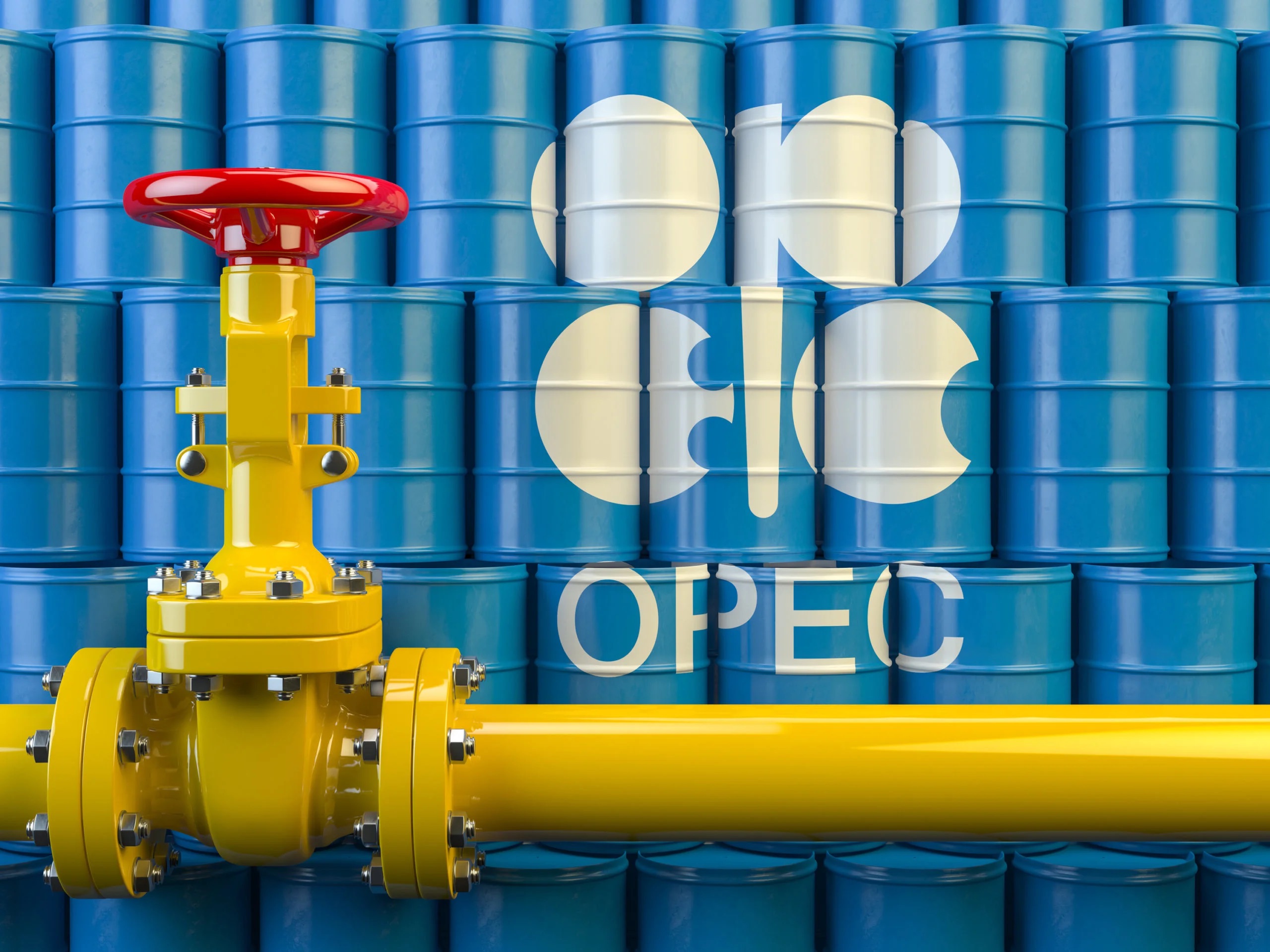
Seven members of the OPEC+ alliance agreed on Sunday to push oil production quotas higher once more, a fresh sign that Gulf producers are edging back toward normal operations after months of war-related disruption in the Middle East.
Energy ministers from Saudi Arabia, Russia, Iraq, Kuwait, Kazakhstan, Algeria, and Oman convened via video call. They agreed to increase combined output by 188,000 barrels per day, according to a statement issued by the organization. The adjustment is set to take effect in August.
The move marks another step in a slow, cautious climb back from what was, by any measure, a brutal stretch for Gulf exporters. When Iran moved to choke off traffic through the Strait of Hormuz during the recent Middle East war, it effectively froze oil exports from the region for months.
The numbers tell the story starkly: OPEC data show that combined production from Saudi Arabia, Iraq, and Kuwait, three of the seven nations now raising quotas, plunged by roughly six million barrels per day between the first quarter of 2026 and May.
The turning point came on June 17, when Iran and the United States signed a memorandum of understanding committing both sides to clearing obstacles to shipping through the Strait for as long as follow-up negotiations continue. It was a narrow, provisional arrangement but enough to set the recovery in motion.
Since then, maritime traffic through the chokepoint has crept back to life, and crude prices have tumbled back toward pre-war levels as markets price in a gradual return to normalcy. A U.S. official cited by Bloomberg suggested oil flows through the Strait may already be topping ten million barrels a day.
Yet analysts caution against reading too much into that figure. Ole Hansen of Saxo Bank noted that much of the oil now transiting the Strait had simply been sitting idle in tankers or storage tanks rather than reflecting a genuine rebound in output: “shut-in production takes time to restart,” as he put it. UBS commodity analyst Giovanni Staunovo offered a similar assessment, saying actual production likely still lags behind OPEC+’s official targets.
Hansen’s outlook is that the recovery will unfold in stages: July should bring visible improvement, with the real acceleration probably arriving in August as shuttered wells and export infrastructure come back online.
Even as the immediate crisis eases, longer-term challenges are piling up for the cartel. Jorge Leon of Rystad Energy told reporters that the consensus view for next year is a market surplus, a scenario that could put sustained downward pressure on prices just as members are eager to pump more.
That tension is already surfacing. Iraq, whose exports were hit hard during the conflict, has formally asked OPEC+ to raise its production quota to compensate for the barrels it lost, according to the country’s Oil Ministry.
For now, restocking the inventories that nations drew down during the war should help cushion the market from any near-term glut. But the underlying arithmetic of recovering supply meeting a softening demand outlook points toward friction ahead.
Hansen played down the urgency of Iraq’s request, arguing that current production remains well below pre-conflict levels, meaning a formal quota increase “is not imminent.” He suggested Baghdad’s case is more likely to be folded into the alliance’s broader 2027 capacity review, when member states’ production baselines will be re-examined.
That review, due at year’s end, is shaping up as a potential flashpoint. OPEC+ enters the process already diminished; the United Arab Emirates exited the group in May and now faces the delicate task of reconciling members’ demands for bigger quotas with a market that may simply have too much oil in it.
How the alliance navigates that balancing act could determine whether its post-war unity holds or frays further.
WHAT YOU SHOULD KNOW
OPEC+’s latest 188,000 barrel-per-day increase is less a sign of full recovery than a cautious first step: Gulf producers are still climbing back from a war-driven shutdown of the Strait of Hormuz, and actual output remains below both pre-war levels and official targets.
The real story to watch isn’t this modest August adjustment; it’s the collision course ahead as recovering supply meets an anticipated 2027 surplus, Iraq pushes for a bigger quota to recoup wartime losses, and a UAE-diminished alliance heads into a contentious year-end capacity review that will test whether OPEC+ can hold together.