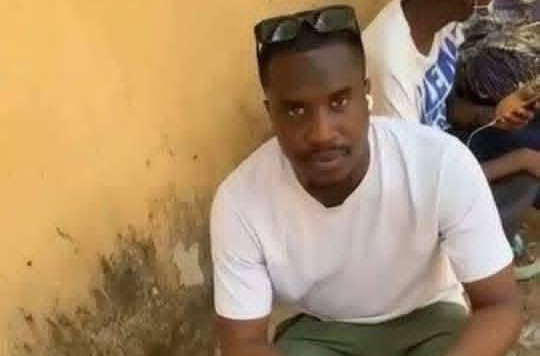
Residents of Shagari Quarters, Deidei, Abuja are reeling after Nigerian Army officers allegedly shot and killed a serving NYSC member, simply identified as Samad, inside his own residence.
The incident, the precise date of which has yet to be officially confirmed by authorities, sent shockwaves through the Deidei community and rapidly ignited a firestorm of outrage across Nigerian social media platforms, where calls for justice have been mounting with increasing urgency.
By all accounts from those who knew him, Samad was not a man who courted trouble. Neighbours and acquaintances described him in unequivocal terms: a law-abiding citizen, a young graduate in the prime of his life, dutifully completing the one-year mandatory national service that the Nigerian state demands of its graduates before they can fully enter professional life.
Sources familiar with the incident allege that Army officers entered or approached the residential premises and, in circumstances that remain deeply unclear, discharged their weapons, fatally wounding Samad inside what should have been the sanctuary of his own home.
The shooting, according to the accounts circulating, is believed to have been a tragic case of mistaken identity, though no official military statement has been issued to either confirm or contest this.
That a young Nigerian serving his country, compelled by law to do so, only to allegedly be gunned down by the very soldiers sworn to protect the citizens he represents, is a detail that has not been lost on the Nigerian public. The cruel irony has only deepened the anger.
News of Samad’s death spread rapidly through social media channels and community networks, triggering a wave of public condemnation not seen in quiet Deidei in recent memory. Civil society voices, youth groups, and ordinary Nigerians took to online platforms to demand answers, with many directing their frustrations squarely at the military high command.
The recurring demands are clear and consistent: that the Nigerian Army immediately open a transparent, independent investigation into the circumstances that led to Samad’s death; that the specific officers involved be identified by name and rank; that those found culpable face the full weight of military and civil law; and that the bereaved family, already plunged into unimaginable grief, receive justice, not silence.
“This is not an isolated complaint about the conduct of security forces,” one civil society observer noted. “When a young man serving his country dies in his own room at the hands of soldiers, it demands accountability, not cover-up.”
Samad’s reported death, adds a disturbing chapter to an already troubling narrative surrounding the safety of NYSC corps members in Nigeria.
In recent years, a number of youth carrying out the NYSC have been killed under varying circumstances , ranging from religious and ethnic violence to encounters with security operatives with persistent calls from lawmakers and the public to scrap or overhaul the scheme altogether.
As far back as January 2019, NYSC corps members staged a protest in Abuja after their colleague, Mustapha Ingawa, was allegedly arrested and tortured to death by a combined team of the Guards Brigade and the Nigerian Police Force, a haunting echo of the current moment.
The pattern speaks to a deeper, systemic failure: Nigeria continues to send its most educated young citizens into environments where their safety cannot be guaranteed — sometimes, allegedly, not even from the very security forces meant to protect them.
As of the time of this report, the Nigerian Army had not issued any official statement acknowledging the incident, confirming or denying the involvement of its officers, or announcing any investigation. That silence, observers say, is itself a statement, and not a reassuring one.
For Samad’s family in Deidei, the absence of official acknowledgement compounds what is already an unbearable loss.
WHAT YOU SHOULD KNOW
A serving NYSC corps member, Samad, was allegedly shot and killed inside his own home in Deidei, Abuja, by Nigerian Army officers in what is believed to be a case of mistaken identity.