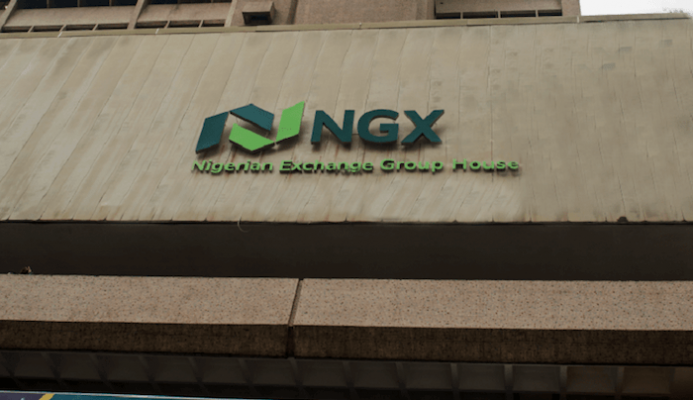
The Nigerian Exchange Limited (NGX) has delivered its strongest first-half performance in recent years, with equity transactions soaring to N4.19 trillion in H1 2025, marking a remarkable 61% increase from the N2.60 trillion recorded in the same period last year. This surge reflects a dramatic turnaround in investor sentiment amid the country’s ongoing economic reforms.
Domestic Investors Drive Market Rally
The Nigerian capital market’s impressive performance has been largely fueled by domestic institutional investors, who have demonstrated renewed confidence in the local bourse. Domestic transactions dominated trading activity, accounting for 72.92% of total trades at N3.06 trillion, while foreign participation contributed N1.14 trillion, representing 27.08% of market activity.
The shift in investor behavior became particularly evident in June 2025, when institutional investors significantly outpaced retail participants. Institutional trades surged 49.39% from N244.13 billion in May to N364.71 billion in June, while retail transactions declined 18.62% to N274.63 billion.
This divergence suggests that large-scale investors—including pension funds, asset managers, and insurance companies—are positioning themselves more aggressively in the market, while individual investors remain cautious amid ongoing cost-of-living pressures.
Foreign Investment Shows Mixed Signals
The foreign investment landscape presents a nuanced picture of cautious optimism tempered by capital flight concerns. Foreign portfolio investment doubled compared to H1 2024, jumping 110% from N540.48 billion to N1.14 trillion. However, the year has been characterized by more capital leaving the country than entering it, with outflows of N576.09 billion exceeding inflows of N559.25 billion by a narrow margin.
March 2025 proved to be a watershed moment, recording the highest monthly trading volume of N1.12 trillion. Remarkably, foreign investors temporarily overtook domestic participants that month, contributing N699.89 billion—or 62.74% of total trades. This spike has been attributed to renewed offshore investor interest driven by favorable exchange rate expectations and an improved macroeconomic outlook.
The volatility in foreign participation was evident throughout the period. While January saw significant outflows of N45.85 billion against inflows of N25.66 billion, May marked a turning point when inflows (N66.11 billion) finally exceeded outflows (N52.80 billion) for the first time in 2025.
Historical Context and Market Evolution
The current market performance gains additional significance when viewed against the NGX’s 18-year trajectory. Since 2007, domestic transactions have grown by 33.15%, rising from N3.56 trillion to N4.73 trillion in 2024, while foreign transactions expanded by 38.31% from N616 billion to N852 billion over the same period.
The sustained dominance of domestic investors—maintaining approximately 85% of total market activity—underscores the resilience of local capital markets and their reduced dependence on volatile foreign portfolio flows.
Economic Reforms Fuel Optimism
The robust market performance comes against the backdrop of significant economic reforms implemented by the Nigerian government, including exchange rate liberalization and monetary policy transparency initiatives. These measures appear to be restoring both domestic and international investor confidence in Africa’s largest economy.
The improved market sentiment is particularly noteworthy given Nigeria’s recent economic challenges, including currency volatility and inflationary pressures. The N4.19 trillion first-half performance suggests that investors are increasingly viewing current market conditions as presenting attractive entry points rather than reasons for capital flight.
Looking Ahead
While the overall trend signals positive momentum for the Nigerian capital market, the persistent outflow of foreign portfolio investment—despite increased participation—remains a concern. The marginal difference between inflows and outflows suggests that while international interest is returning, investors remain selective and quick to repatriate profits.
The strong institutional investor participation provides a solid foundation for sustained market growth, as these entities typically bring longer-term investment horizons and greater market stability compared to retail investors.
As Nigeria continues implementing economic reforms and addressing structural challenges, the capital market’s performance in H1 2025 offers encouraging evidence that investor confidence is gradually returning to one of Africa’s most important financial centers.
WHAT YOU SHOULD KNOW
The Nigerian stock market delivered exceptional performance in the first half of 2025, with equity transactions surging 61% to N4.19 trillion compared to the same period in 2024. This dramatic growth signals a strong recovery in investor confidence driven by Nigeria’s ongoing economic reforms.
Domestic institutions are leading the charge—large investors like pension funds and asset managers increased activity by nearly 50% in June alone, demonstrating renewed faith in the market
Foreign interest is returning but cautious—international investment doubled from last year, though more money is still leaving than entering the country
Reform impact is tangible- Exchange rate liberalization and transparent monetary policies are successfully attracting capital back to Africa’s largest economy
Nigeria’s capital market is experiencing its strongest performance in years, with domestic institutional investors driving growth while foreign participation rebounds. The trend suggests economic reforms are working, though concerns about capital repatriation persist.