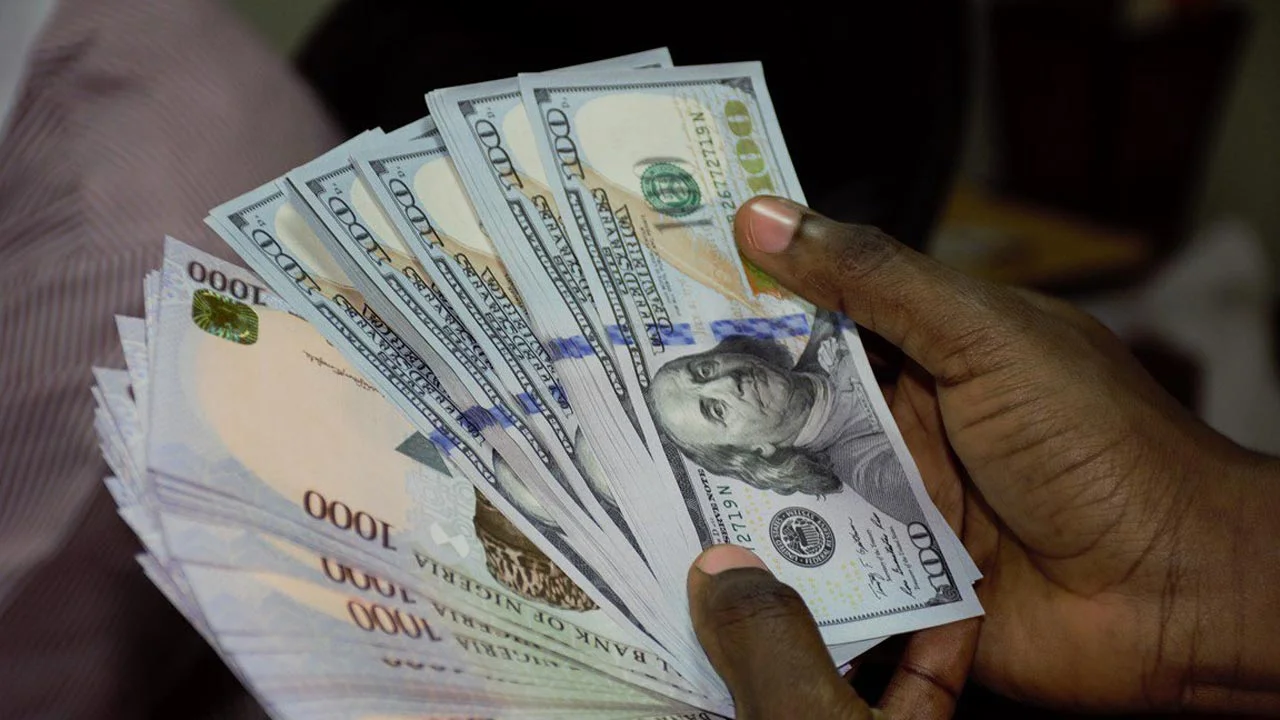
The Nigerian naira extended its recent run of relative calm against the US dollar on Thursday, with the official Nigerian Foreign Exchange Market (NFEM) closing at approximately ₦1,373.99 per dollar, a rate that places the currency squarely within the tight band it has traded in for much of the past week.
The NFEM figure, calculated as a volume-weighted average of transactions executed during the trading session, has become the touchstone for gauging the naira’s underlying health since the Central Bank of Nigeria began pushing reforms aimed at improving transparency and price discovery in the official market.
Thursday’s print continues a pattern seen over the preceding sessions: the naira traded at ₦1,372.96 against the dollar at the NFEM on Wednesday, July 8, and just a day before that, the exchange rate had touched a weekly low of 1367.13 on July 7, evidence of a currency oscillating narrowly rather than drifting decisively in either direction.
Over the past week, the dollar-naira rate fluctuated between a high of 1390.02 on June 30 and a low of 1367.13 on July 7, while data compiled by Trading Economics shows the naira has weakened 0.90% over the past month but remains up 10.53% over the last 12 months, a reminder that today’s tight trading range sits atop a broader year-long appreciation trend.
Outside the regulated window, Nigeria’s parallel, or “black,” market continued to price the dollar at a premium. Thursday’s street rate hovered around ₦1,410, consistent with the day before, when the dollar exchanged at about ₦1,410 on the sell side and ₦1,400 on the buy side, according to market trackers and Bureau de Change reports.
Independent rate aggregators put Wednesday’s average even more precisely, pegging the parallel market sell rate at ₦1,412.50, with buy quotes averaging ₦1,400.
That leaves a spread of roughly ₦36 between the official and street rates a gap that, while still significant, has narrowed noticeably from levels seen earlier this year.
Vanguard’s market coverage noted that the gap between official and parallel rates continues to reflect sustained demand for foreign exchange outside the formal banking system, although the spread has narrowed compared with previous months.
Analysts tracking the naira point to a familiar set of levers behind the currency’s steadiness: foreign exchange liquidity, the pace of dollar demand from importers, and the flow of foreign capital into the economy.
Coverage from earlier in the month attributed the stability to sustained foreign exchange liquidity and ongoing reforms by the Central Bank aimed at improving transparency and efficiency in the FX market, while other outlets flagged inflows from foreign investors, oil export earnings, and monetary policy decisions as the variables likely to shape the naira’s next move.
For everyday Nigerians and businesses, the persistence of a dual-rate system means the “official” number rarely tells the whole story.
Bureaux de change, commercial banks, and street-corner dealers each quote their own figures depending on location and transaction size, a fragmentation that continues to funnel large segments of retail demand, from school fees abroad to import payments, through the costlier parallel channel.
Whether the ₦36 gap continues to narrow or widens again will likely hinge on the same forces analysts have been watching all year: how much dollar liquidity the CBN can sustain in the official window, and whether oil revenues and foreign investment keep flowing in at a pace strong enough to meet Nigeria’s dollar appetite.
WHAT YOU SHOULD KNOW
The naira’s stability at ₦1,373.99/$ officially against ₦1,410 on the street underscores one key point: Nigeria still runs on two exchange rates, and the roughly ₦36 gap between them, though narrowing, means the “official” figure doesn’t reflect what most people actually pay for dollars. That gap, driven by FX liquidity and dollar demand, remains the number to watch.