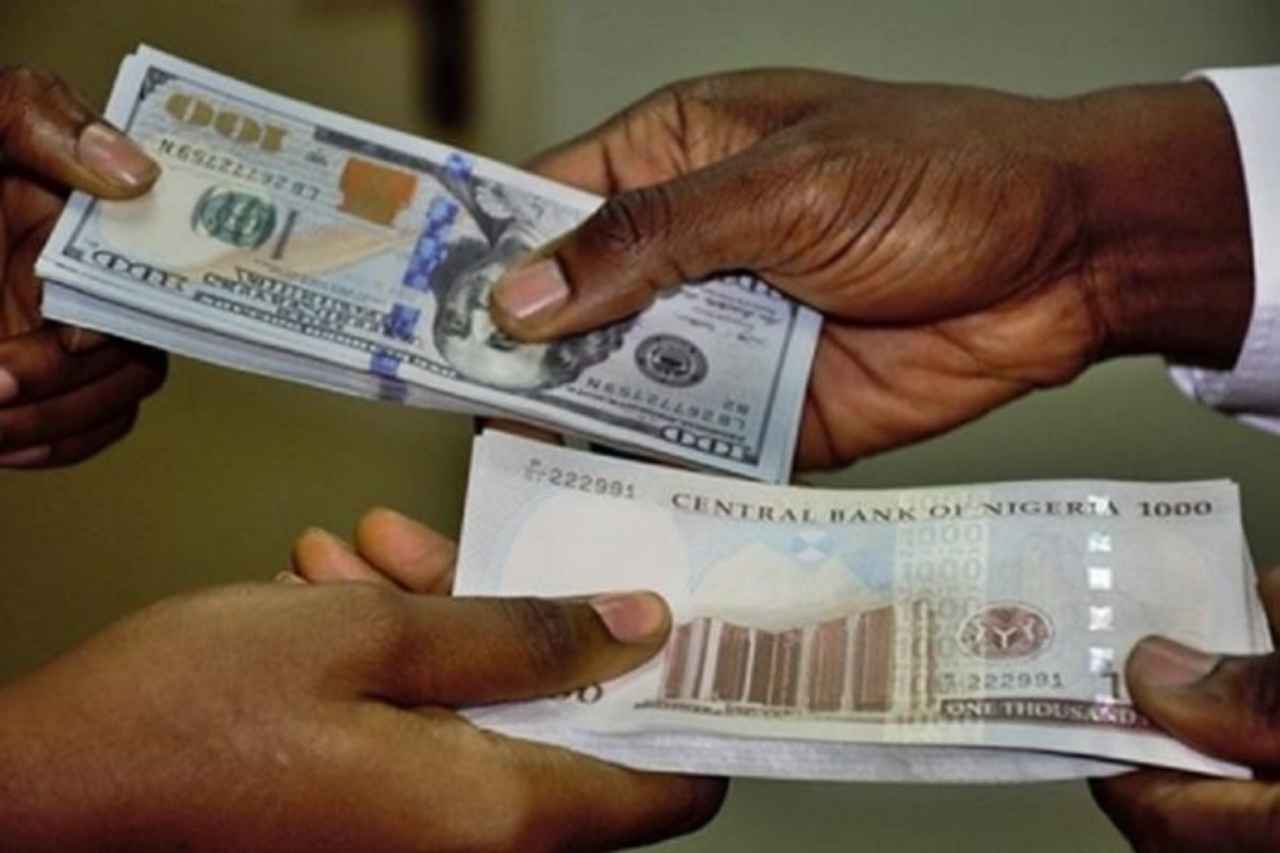
The naira opened the new week on a modestly encouraging note, with the dollar trading at roughly ₦1,337 on the official market, a level offering cautious optimism to currency watchers and businesses used to bracing for bad news.
But cross the invisible line into the parallel market, and the picture turns markedly less flattering. There, the greenback continues to command a hefty premium, trading around ₦1,400, leaving a gap of some ₦63 between the two markets, a spread that traders and economists alike will be watching closely for signs of either narrowing convergence or renewed divergence in the days ahead.
The improvement did not happen overnight. According to figures released by the Central Bank of Nigeria, the Nigerian Foreign Exchange Market (NFEM) closed out Friday’s session at ₦1,337.0000 to the dollar, with the volume-weighted average exchange rate for August 28 settling at ₦1,337.2873/$1.
Rewind the tape to the start of the previous week, and the contrast becomes clear: the local currency had opened at ₦1,349.99 to the dollar on August 24, meaning that over the course of five trading days, the naira clawed back roughly 0.96 per cent of its value against the dollar, a modest but not insignificant gain in a market where sentiment can shift on relatively thin margins.
Away from the regulated corridors of the official market, the story reads differently. Data published by AbokiFX pegged the parallel market rate at approximately ₦1,400 per dollar on Friday, having eased back from ₦1,407 the day before, a ₦7 pullback that, while welcome, does little to close the yawning gap with the official rate.
That persistent premium remains one of the clearest signals that demand for hard currency outside official channels has yet to be fully satisfied, even as authorities point to improving conditions elsewhere in the market.
As the new week got underway, an early indicative rate placed the dollar at around ₦1,346.78, though analysts caution this figure is merely a preliminary marker, not the official NFEM closing rate, and remains subject to revision as the day’s trading activity unfolds.
Exchange rates, as ever, are liable to fluctuate through the session as supply and demand conditions shift in real time.
Behind the headline figures, market fundamentals offered a measure of reassurance. Foreign exchange liquidity held up strongly through the previous week, with NFEM turnover hitting $1.06 billion in a single trading session, a robust showing that suggests dollar supply, at least at the official window, has not been wanting.
Nigeria’s foreign reserves have continued to play a stabilizing role as well, giving the central bank room to defend the naira and smooth out volatility, even as the parallel market continues to trade at a discount to official confidence.
As trading resumes this Monday, the dual reality of Nigeria’s currency market remains firmly in place: an official benchmark hovering near ₦1,337 to the dollar, set against a parallel market still holding above ₦1,400.
For ordinary Nigerians and businesses navigating both worlds, the gap is more than an academic curiosity; it shapes the true cost of imports, remittances, and everyday transactions.
Analysts note that rates quoted by commercial banks, Bureau de Change operators, and other licensed dealers may still diverge from the published reference rates, reflecting transaction charges and dealer margins that vary from one counter to the next.
Whether this week brings further convergence between the two markets or a widening of the gap once again will depend on the familiar interplay of dollar supply, demand pressure, and the central bank’s continued interventions.
WHAT YOU SHOULD KNOW
The naira strengthened modestly at the official market, gaining about 0.96% over the week to close near ₦1,337/$1, but the real story is the persistent ₦63 gap with the parallel market, where the dollar still trades around ₦1,400.
Until that gap narrows, official gains offer only partial relief, since most everyday transactions outside the formal banking system remain priced off the higher parallel rate.