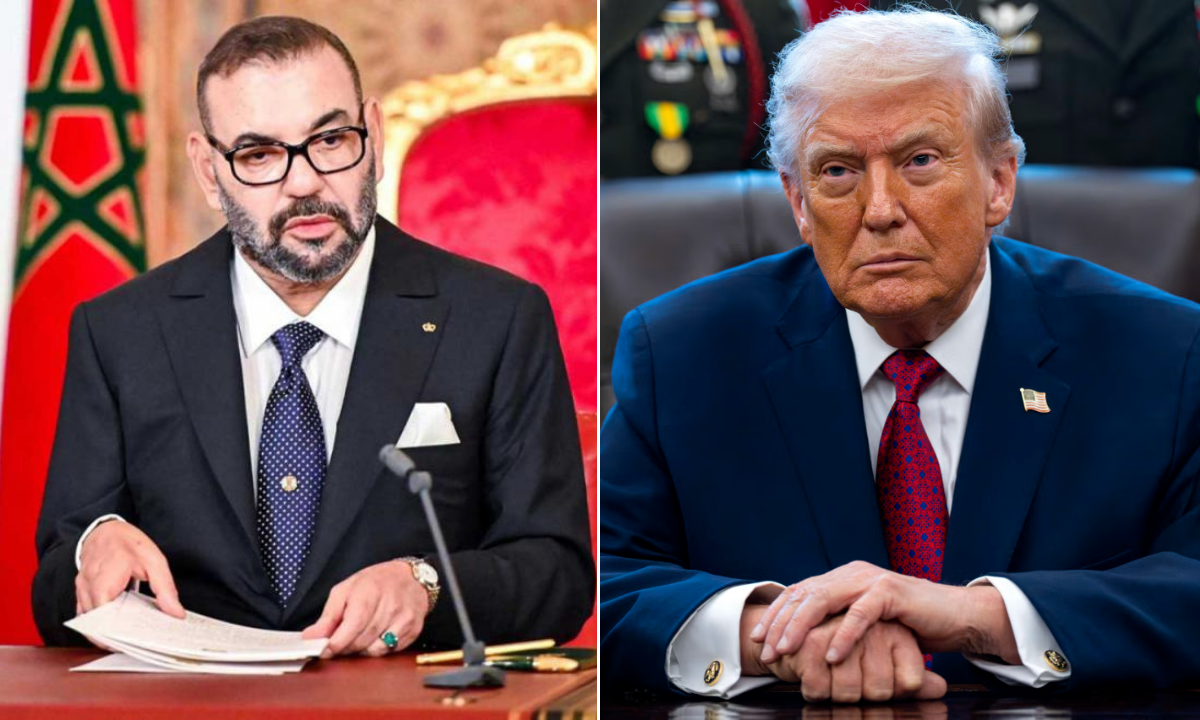
Morocco’s King Mohammed VI has accepted an invitation from US President Donald Trump to become a founding member of the proposed “Board of Peace,” according to a statement released on Monday by the Moroccan foreign ministry.
“Welcoming President Donald Trump’s commitment and vision to promoting peace,” the monarch “has graciously accepted this invitation,” the ministry said in a statement published by MAP news agency, adding that Morocco would “ratify the charter establishing this board.”

The US-backed initiative is intended to “contribute to peace efforts in the Middle East and adopt a new approach to resolving conflicts around the world,” the statement noted. Although the board was initially conceived as a mechanism to oversee the reconstruction of Gaza, its charter does not appear to restrict its mandate solely to the Palestinian territory.
According to the board’s charter seen by AFP, member states would be represented by their head of state or government and could serve for a period of three years, or longer if they contributed more than $1 billion within the first year of the board’s establishment.
The White House has reportedly invited several world leaders to participate in the body, which would be chaired by Trump himself. Those approached include Russian President Vladimir Putin, Hungarian Prime Minister Viktor Orban, and Canadian Prime Minister Mark Carney.
Early reactions from some traditional US allies have been cautious, with France and Canada reportedly offering a lukewarm initial response. Other leaders who have received invitations, including Putin, have yet to publicly state whether they will accept participation in the proposed board.
What you should know
Morocco’s acceptance of the invitation positions the country as one of the first supporters of President Trump’s proposed “Board of Peace,” a new international body aimed at conflict resolution beyond traditional institutions.
The initiative reflects Trump’s long-standing criticism of existing global frameworks and his push for alternative mechanisms led by select states. While the board was initially linked to Gaza’s reconstruction, its broader mandate suggests ambitions that could reshape diplomatic engagement in conflict zones.
Morocco’s decision signals its willingness to play a more visible role in international peace efforts, even as reactions from other major powers remain cautious and uncertain.