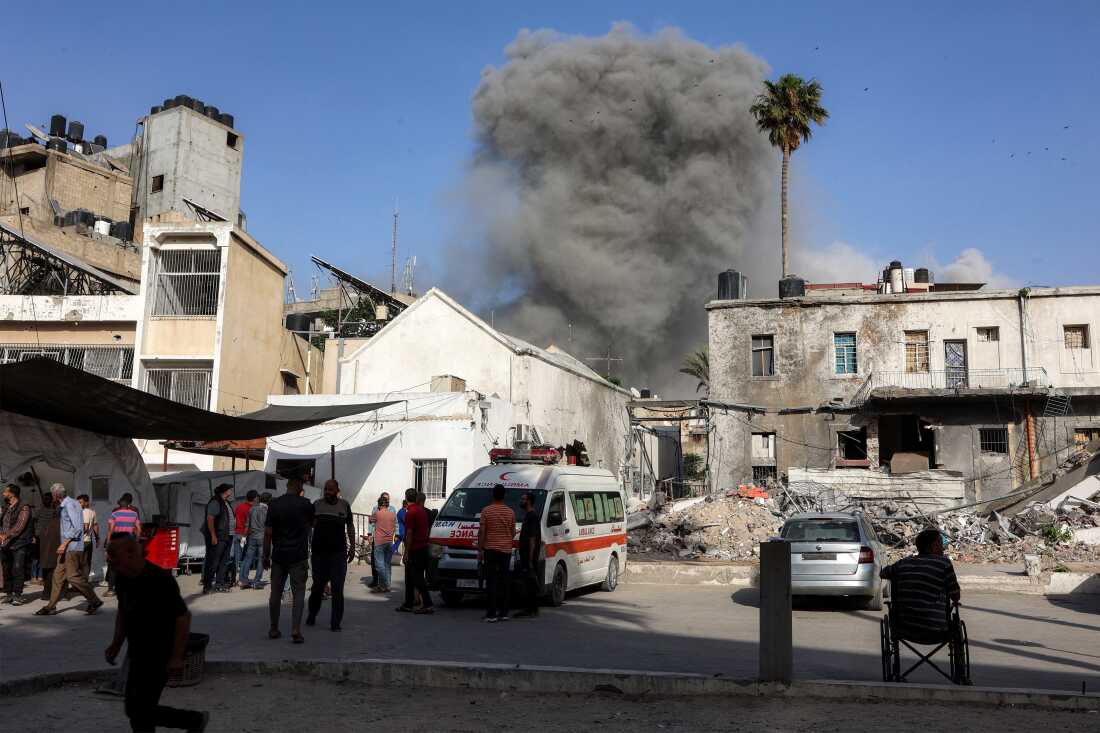
Israel was weighing its next move on Saturday after Hamas signaled readiness to begin immediate negotiations on a US-sponsored ceasefire proposal in Gaza.
The development comes amid intensified diplomatic efforts by US President Donald Trump to secure an end to the near 21-month-long war that has devastated the Palestinian enclave.
Israeli officials remained cautious following Hamas’s late Friday announcement, which followed consultations with other Palestinian factions. “No decision has been made yet on that issue,” a government source told AFP when asked about Israel’s stance on the new ceasefire proposal.
Hamas, in its statement, declared its willingness to “engage immediately and seriously in a cycle of negotiations on the mechanism to put in place” the terms outlined in the US-backed truce plan. Islamic Jihad, another militant group and ally of Hamas, also endorsed the notion of talks but insisted on “guarantees” that Israel would not resume hostilities once hostages held in Gaza are released.
The renewed diplomatic push comes as Israeli Prime Minister Benjamin Netanyahu prepares for a high-stakes meeting in Washington on Monday with President Trump. Trump, speaking aboard Air Force One, welcomed Hamas’s response as “good,” although he noted he had not yet been briefed on the details. “We have to get it over with. We have to do something about Gaza,” he remarked.
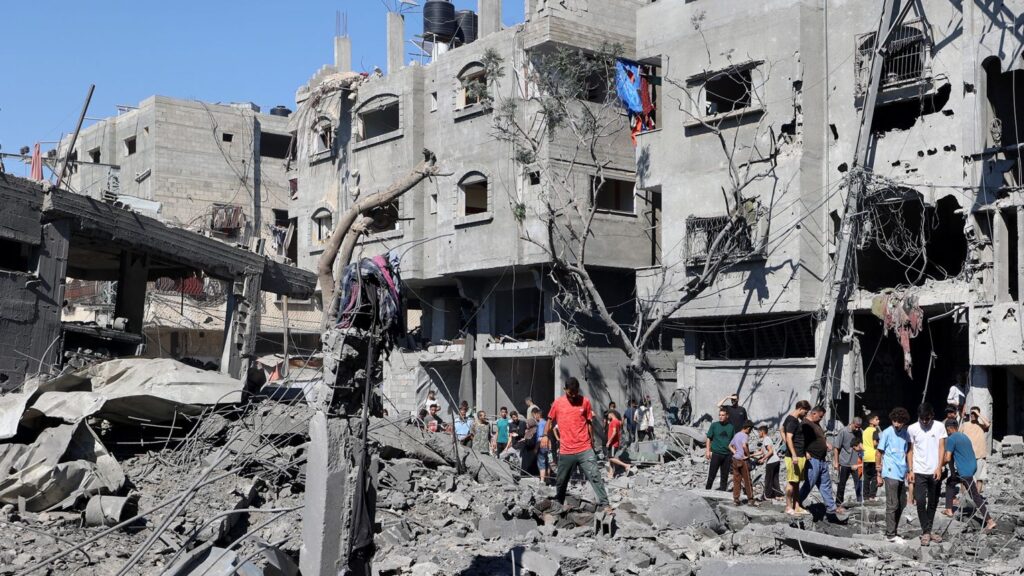
The conflict began with Hamas’s large-scale attack in October 2023, which led to an aggressive Israeli military response aimed at dismantling Hamas and securing the release of hostages taken during the incursion. Of the 251 hostages seized, Israeli military estimates suggest that 49 remain in Gaza, 27 of whom are believed to be dead.
Previous ceasefires mediated by Egypt, Qatar, and the United States led to temporary lulls in fighting and limited hostage-prisoner swaps. However, those efforts repeatedly collapsed over disagreements — chiefly, Hamas’s insistence on a permanent ceasefire and Israel’s refusal to provide such guarantees.
Details of the latest proposal reportedly include a 60-day truce during which Hamas would release approximately half of the living hostages in exchange for a corresponding release of Palestinian prisoners held by Israel.
Meanwhile, the toll on Gaza’s civilian population continues to climb. On Saturday, Gaza’s civil defence agency reported that Israeli operations killed 32 people, including eight in two strikes on schools in Gaza City. AFP was unable to independently verify the numbers due to media restrictions and lack of access to affected areas.
As Israel has expanded its operations, the humanitarian crisis in Gaza has deepened, affecting over two million residents. In late May, the Gaza Humanitarian Foundation (GHF), backed by both the US and Israel, assumed a leading role in distributing food aid following a partial lifting of a two-month blockade.
However, the GHF’s work has not been without controversy. On Saturday, the group reported that two American staff members were injured in an attack at one of its distribution points in Khan Yunis. According to the organization, “two assailants threw two grenades” at the aid workers. The identity and motives of the attackers remain unclear.
UN agencies and other humanitarian organizations have distanced themselves from GHF, citing concerns over its perceived alignment with Israeli military objectives. Ravina Shamdasani, spokeswoman for the UN human rights office, revealed on Friday that more than 500 people have been killed while waiting for food at GHF distribution sites, often amid chaotic and dangerous conditions.
GHF chairman Johnnie Moore, a prominent American evangelical leader with close ties to President Trump, dismissed criticism, insisting that his group’s mission is purely humanitarian. “We will not be shut down,” he told reporters. “We have one job to do. It’s very simple — every day to provide free food to the people of Gaza.”
With Israel’s security cabinet expected to convene after the Sabbath, the coming days could prove decisive for the future of the conflict, especially as diplomatic and humanitarian pressures mount.
What you should know
Hamas has indicated its readiness to negotiate a US-backed 60-day ceasefire, prompting Israel to consider its next steps ahead of Prime Minister Netanyahu’s meeting with President Trump.
The prolonged conflict has taken a severe toll, with over 57,000 Palestinians and more than 1,200 Israelis dead, while humanitarian efforts in Gaza remain deeply contested and dangerous.