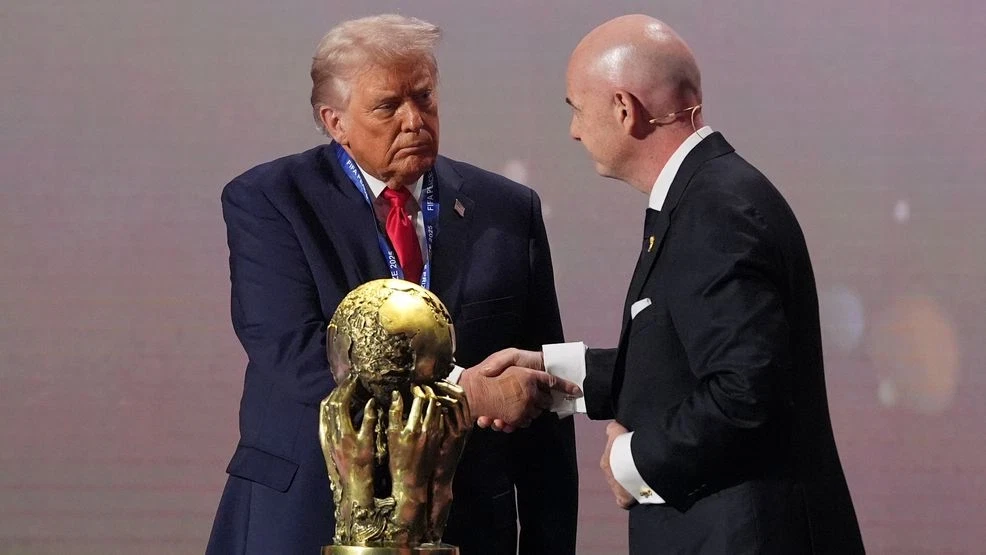
FIFA president Gianni Infantino has defended his much-criticised decision to present a peace prize to United States president Donald Trump, brushing aside growing calls for a boycott of the upcoming World Cup.
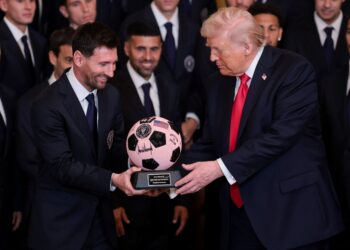
Infantino came under intense backlash after awarding Trump the honour on behalf of world football’s governing body during the 2026 World Cup draw held in Washington DC in December.
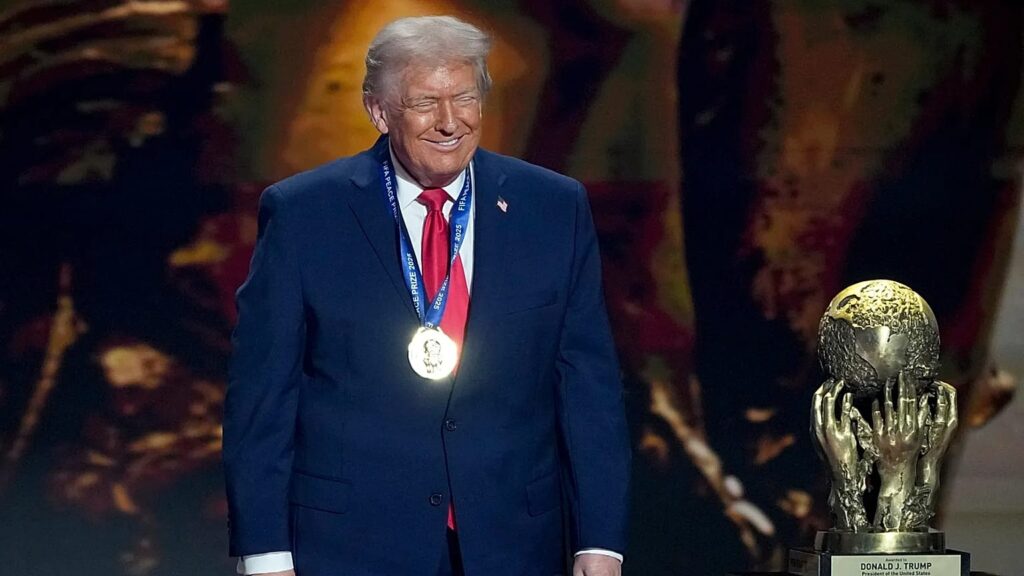
The decision sparked widespread debate across sporting and political circles.
The controversy deepened following developments involving US foreign policy, including the seizure of Venezuelan president Miguel Maduro by American forces, as well as Trump’s renewed push to acquire Greenland on national security grounds.
Despite the criticism, Infantino maintained that Trump merited FIFA’s first-ever peace prize. Speaking to Sky News on Monday, he said, “Objectively, he deserves it.
“Whatever we can do to help peace in the world, we should be doing it, and for this reason, for some time we were thinking we should do something to reward people who do something.”
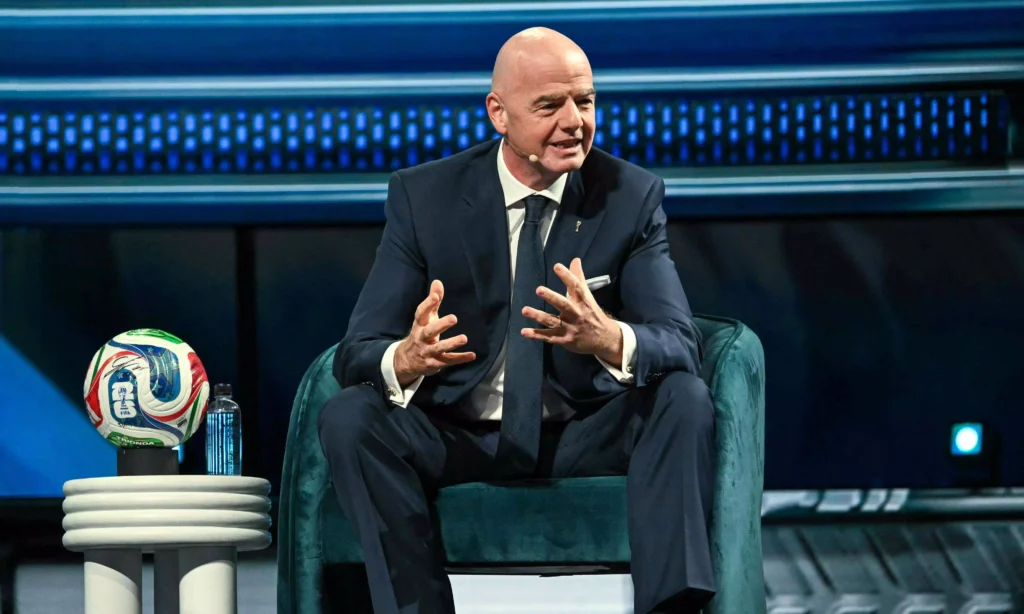
Infantino also pushed back against suggestions that this year’s World Cup could face a boycott over domestic and international policies pursued by the Trump administration. The tournament is scheduled to take place across the United States, Canada and Mexico from June 11 to July 19.
The debate comes amid unrest in several US cities, particularly Minneapolis, linked to the administration’s approach to immigration enforcement. However, the FIFA president questioned why football should be singled out for protest.
He argued that countries are rarely subjected to economic or commercial boycotts over political decisions, asking why the same logic should apply to football events.
“In our divided world, in our aggressive world, we need occasions where people can come, can meet around the passion (for football),” the 55-year-old said.
Infantino also revealed that FIFA, alongside UEFA, would be required to reconsider Russia’s exclusion from international football. Russia has been suspended since its invasion of Ukraine in 2022, but the International Olympic Committee has recently advised sports bodies to allow Russian teams to return at youth level.
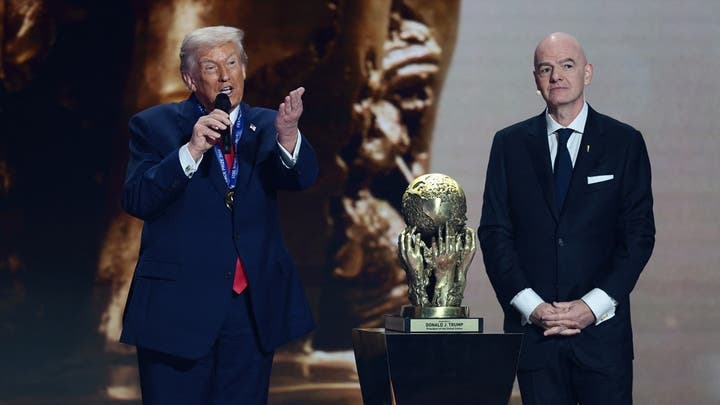
“We have to (look at readmitting Russia). Definitely,” Infantino stated.
“This ban has not achieved anything; it has just created more frustration and hatred.
“Having girls and boys from Russia being able to play football games in other parts of Europe would help.”
What you should know
Gianni Infantino’s comments highlight FIFA’s increasingly political positioning ahead of the 2026 World Cup.
His defence of Donald Trump’s peace prize reflects FIFA’s belief that football should act as a unifying platform, even amid global tension. The remarks also signal a possible policy shift regarding Russia’s ongoing ban, aligning football with the International Olympic Committee’s softer stance at youth levels.
Together, these issues underline FIFA’s effort to frame sport as a bridge for dialogue rather than a tool for political punishment, a stance that continues to divide public opinion worldwide.