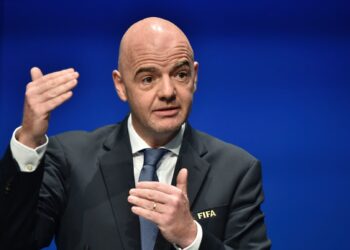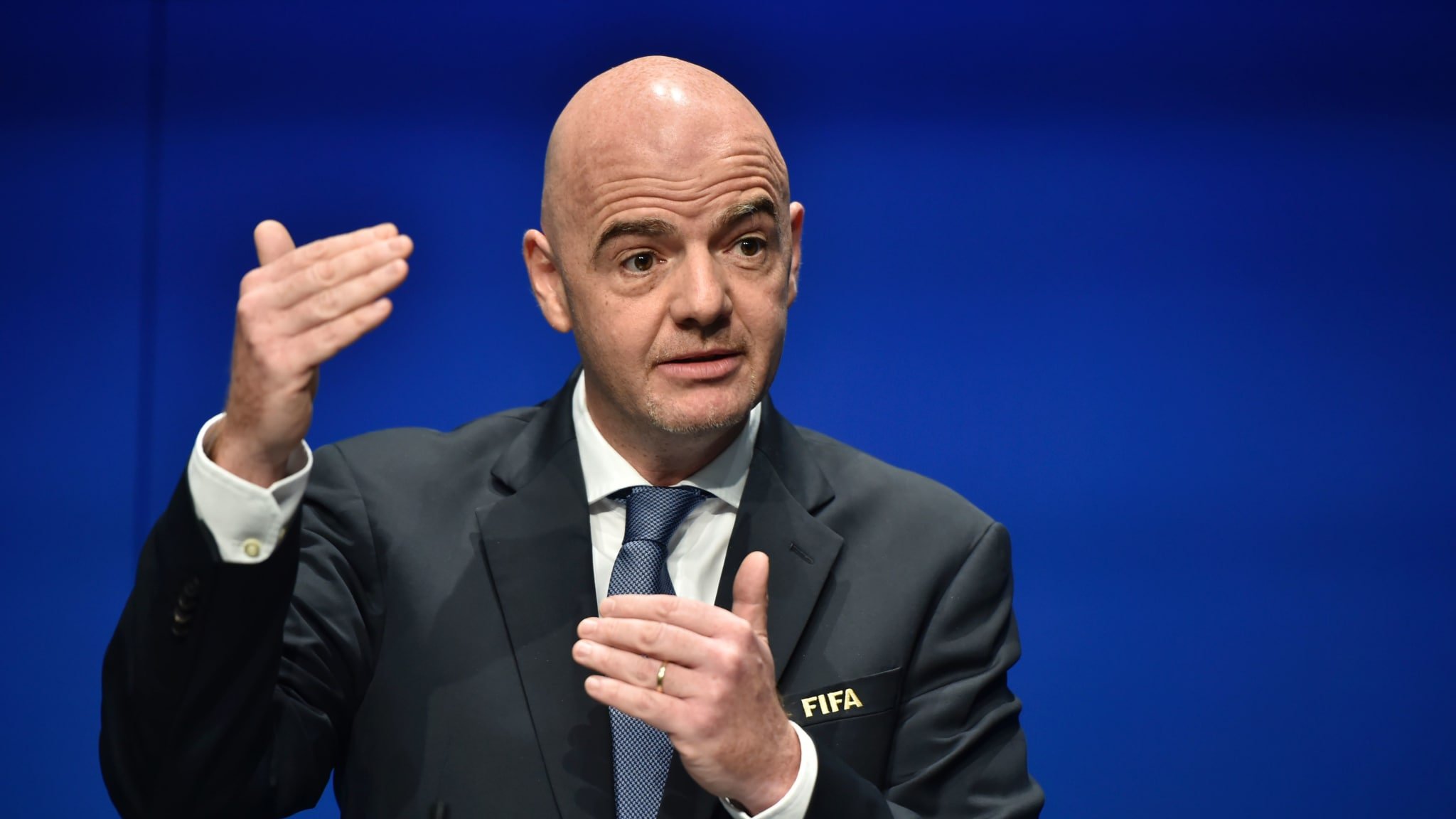
FIFA President Gianni Infantino convened an emergency meeting with senior officials in Morocco on Wednesday as the world football governing body grappled with the fallout from his controversial proposal to open the FIFA World Cup to private investment.
According to a source who spoke to AFP, the meeting took place at FIFA’s Africa regional office in Sale, near Rabat, amid growing criticism of Infantino’s leadership following the collapse of the ambitious plan.
The emergency discussions come just days after the FIFA president was forced to withdraw the proposal in the face of fierce opposition from football stakeholders across the globe.
The investment initiative, which was intended to reshape FIFA’s commercial structure, had been presented as a strategy to unlock significant financial resources for football development. However, instead of winning support, it sparked one of the biggest governance crises of Infantino’s presidency.
Among those believed to have attended the closed-door meeting was FIFA Secretary-General Mattias Grafstrom, whose leaked internal email to staff further intensified scrutiny of the organisation.
In the email, which surfaced on Tuesday, Grafstrom described the events surrounding the proposal as “a sad and reproachable series of events,” suggesting deep internal dissatisfaction over how the issue was handled.
Although he stressed that FIFA’s mission to serve world football remained unchanged, his comments were widely interpreted as an extraordinary public rebuke from one of the organisation’s most senior officials.
Infantino, a 56-year-old Swiss lawyer, was already in Morocco to participate in celebrations marking the country’s annual Feast of the Enthronement. Morocco, which will co-host the 2030 FIFA World Cup alongside Spain and Portugal, has remained one of the few nations to publicly stand by the FIFA president during the controversy.
Moroccan Football Federation President Fouzi Lekjaa, a close ally of Infantino, defended the decision to abandon the investment proposal, describing it as a “wise” move made in the interest of preserving unity within world football.
He also reaffirmed his support for Infantino’s leadership and praised his efforts to expand and develop the global game over the past decade.
The crisis marks a dramatic reversal in fortunes for the FIFA president, who only weeks earlier had been enjoying widespread praise following the successful staging of the expanded 2026 FIFA World Cup.
The tournament, jointly hosted by the United States, Canada and Mexico, featured 48 teams for the first time and was widely regarded as a commercial and organisational success.
That success had strengthened expectations that Infantino would secure an uncontested fourth and final term when FIFA members meet in Rabat next March.
Those expectations were shaken after FIFA unveiled plans to create a new commercial subsidiary, the FIFA Forward Enterprise (FFE), which would oversee major competitions, including the FIFA World Cup and the Club World Cup.
FIFA projected that selling a minority stake in the new entity could generate up to $4.2 billion, based on a valuation of approximately $20 billion. The governing body argued that the proceeds would directly benefit its 211 member associations by providing each with a one-time payment of $20 million in early 2027 while also increasing regular funding allocations for the 2027–2030 cycle from $8 million to $20 million.
Despite the financial incentives, the proposal was met with overwhelming resistance, particularly from Europe’s football leadership, which argued that introducing private investors into the commercial ownership of football’s biggest competitions could fundamentally alter the sport’s governance.
The backlash reached its peak when UEFA reportedly threatened to boycott future FIFA World Cups if the proposal went ahead, an unprecedented warning that underscored the scale of opposition facing Infantino.
Facing mounting pressure, Infantino formally withdrew the proposal last Saturday, saying FIFA’s overriding objective had always been “to unite and improve.”
However, the climbdown did little to calm the growing storm.
UEFA issued a scathing statement, describing the proposal as a “shabby, back-room, opaque deal” orchestrated by Infantino. The European governing body declared that the current FIFA leadership had lost not only UEFA’s confidence but also that of many other members of the global football community.
The criticism extended beyond Europe. North and Central American football confederation CONCACAF called for what it described as “a comprehensive reckoning with this presidency,” accusing Infantino of poor governance and leadership.
With internal divisions now exposed and influential football bodies openly questioning his leadership, the emergency meeting in Morocco is seen as an effort to contain the crisis and restore confidence within FIFA.
The outcome of the talks could prove crucial as Infantino seeks to rebuild support ahead of next year’s FIFA presidential election, where a leadership contest that once appeared to be a mere formality has suddenly become far more uncertain.
WHAT YOU SHOULD KNOW
The controversy surrounding FIFA’s failed private investment proposal has triggered a major leadership crisis for President Gianni Infantino, with mounting criticism from football’s top governing bodies and growing uncertainty over his future at the helm of world football.