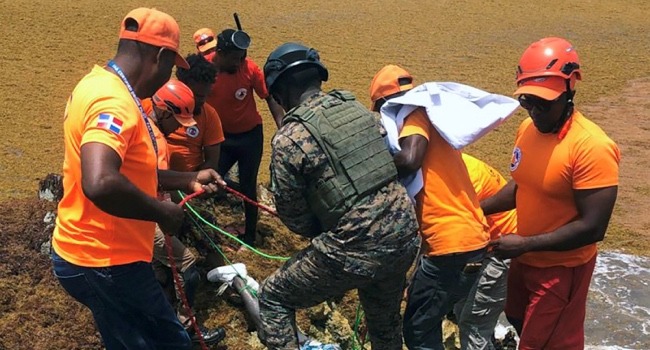
Tragedy struck off the coast of the Dominican Republic as a migrant boat bound for Puerto Rico capsized, leaving four people confirmed dead and around 20 others missing, according to authorities on Friday.
The ill-fated vessel, which was reportedly carrying approximately 40 people, overturned in the waters of the Caribbean while attempting the perilous journey to the United States territory. Seventeen individuals have so far been rescued in a combined effort by the Dominican Republic’s civil defence force and naval units.
According to statements from the country’s navy, the rescued survivors include ten Dominicans and seven Haitians. Among them was a child, further underscoring the desperation and danger faced by families undertaking such voyages.
The vessel involved in the incident was described as a “yola,” a type of small boat often made of wood or fiberglass. These crafts, commonly used in illegal migration attempts, are not equipped with proper safety equipment or structural integrity, making them vulnerable to accidents at sea. Authorities said these vessels do not comply with maritime safety regulations and pose significant risks to passengers.
Dominican and Haitian migrants continue to risk their lives attempting to reach Puerto Rico, a U.S. territory located roughly 380 kilometers (236 miles) from the Dominican coast. Motivated by poverty, instability, and limited economic opportunities, many migrants are lured by the promise of better living conditions and employment prospects in Puerto Rico and the mainland United States.
According to local officials, migrants can pay as much as $7,000 for a seat on these dangerous one-way journeys, a sum that often represents a family’s entire life savings. The high costs, coupled with the use of unsafe vessels and unpredictable sea conditions, make such crossings both economically exploitative and physically perilous.
Illegal maritime migration from the Dominican Republic to Puerto Rico has steadily increased over the past decade. Experts say worsening conditions in Haiti, which shares the island of Hispaniola with the Dominican Republic, have contributed to the rising number of Haitians joining Dominicans in these risky expeditions.
The Dominican civil defence agency said it remains engaged in search and rescue operations, hoping to locate the missing individuals, though the chances of survival diminish with each passing hour. Naval forces and emergency responders continue to patrol the area in hopes of recovering more survivors—or bodies.
Authorities have urged people to avoid such hazardous crossings, reiterating that the journey is not only illegal but frequently fatal. Meanwhile, human rights groups are calling for increased regional cooperation to address the root causes of migration and to implement safer, legal pathways for those fleeing hardship.
The names and identities of the deceased have not yet been released, pending notification of families. The search efforts are expected to continue through the weekend as rescue teams comb the surrounding waters.
What You Should Know
Four people have died and around 20 are missing after a migrant boat capsized off the Dominican Republic coast en route to Puerto Rico. The wooden or fiberglass “yola” boats used are unsafe and unregulated.
Despite the dangers, many migrants from the Dominican Republic and Haiti continue to risk the crossing, often paying up to $7,000 in search of a better life.