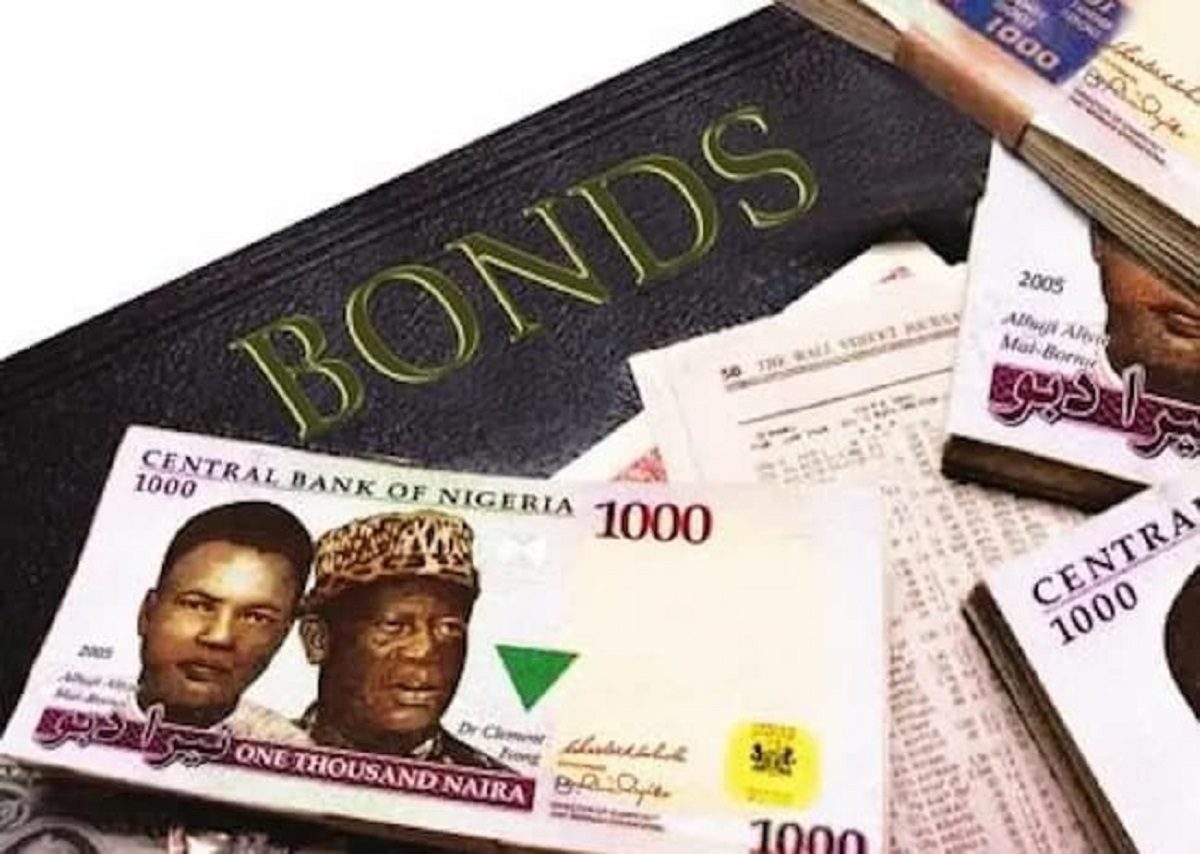
The Federal Government successfully raised N596.465 billion from its bond auction held on December 15, 2025, significantly exceeding the initial N460 billion offered, according to data released by the Debt Management Office (DMO).
The auction, which reopened two existing bonds, saw particularly robust demand for longer-dated securities, with the seven-year instrument attracting subscriptions more than three times its offer size—a clear signal of sustained investor confidence in Nigeria’s sovereign debt despite prevailing economic headwinds.
Seven-Year Bond Drives Oversubscription
The standout performer was the 17.95% FGN JUN 2032 bond, a seven-year instrument with a remaining tenor of six years and six months. Originally offered at N230 billion, it drew subscriptions totaling N731.40 billion—an oversubscription rate of 318%. The DMO ultimately allotted N494.48 billion at a marginal rate of 17.30%, alongside an additional N4 billion in non-competitive bids.
Bid rates for the seven-year paper ranged from 15.00% to 18.52%, reflecting varied investor expectations about inflation, monetary policy trajectory, and sovereign credit risk over the medium term.
Five-Year Bond Sees Tepid Demand
In contrast, the five-year 17.945% FGN AUG 2030 bond, with a remaining tenor of four years and eight months, struggled to attract sufficient interest. Offered at N230 billion, it received subscriptions of only N159.21 billion—a shortfall of nearly 31%. The DMO allotted N101.99 billion from 38 successful bids out of 60 submitted, with a marginal rate of 17.20%. Bid rates ranged from 15.00% to 18.51%.
The tepid response to the shorter-dated instrument suggests investors may be pricing in near-term fiscal and monetary uncertainties or favoring the higher duration exposure offered by the seven-year bond.
Marginal Rates vs. Coupon Rates
Both bonds were allotted at their respective marginal rates—17.20% for the five-year and 17.30% for the seven-year. However, the DMO clarified that the original coupon rates of 17.945% and 17.95% remain unchanged. This means investors who secured allotments will continue to receive semi-annual interest payments based on the higher coupon rates, even as the effective yield at which the bonds were priced reflects current market conditions.
Implications for Fiscal Policy
The N596.5 billion raised represents a 30% increase over the initial offer, underscoring the government’s ability to tap domestic capital markets to finance its budget deficit and refinance maturing obligations. With Nigeria’s public debt servicing costs remaining elevated, the successful auction provides the Federal Government with critical liquidity heading into the new year.
However, the divergent demand patterns between the two instruments—strong appetite for seven-year debt versus weak uptake of five-year paper—may prompt the DMO to recalibrate its issuance strategy in future auctions, potentially tilting toward longer tenors to maximize subscription levels.
As inflationary pressures persist and the Central Bank of Nigeria maintains a tight monetary stance, market watchers will be closely monitoring upcoming auctions for further insights into investor sentiment and the government’s evolving debt management framework.
WHAT YOU SHOULD KNOW
The Federal Government raised N596.5 billion in its December 15 bond auction—30% above the N460 billion target—driven by overwhelming demand for the seven-year bond, which was oversubscribed by over 300%. In contrast, the five-year bond fell short, attracting only 69% of its offer.
Investors are showing strong confidence in Nigeria’s longer-term debt, signaling an appetite for higher yields and extended maturities despite economic uncertainties. The government’s ability to significantly exceed its borrowing target provides critical fiscal breathing room as debt servicing costs remain high.