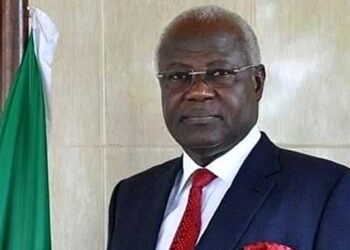
The United Nations’ top human rights official delivered one of the bluntest warnings yet from a senior UN figure on artificial intelligence on Monday, telling the Human Rights Council that the technology could threaten humanity’s survival unless governments and companies act immediately.
Volker Türk’s address to the 47-member council in Geneva came just weeks before he began an unprecedented second four-year term as High Commissioner for Human Rights, a position he secured in July over objections from both Moscow and Washington.
The speech doubled as a wide-ranging address covering accountability for deaths in US immigration custody and condemnation of Russia’s reported use of autonomous drones, but it was his comments on AI that carried the sharpest edge.
Türk told the council he shared the concerns of industry insiders that advanced AI could pose an existential risk to humanity and said he would press companies in the coming days to reduce those risks.
It’s a striking line coming from a diplomat whose office typically frames AI in terms of discrimination, surveillance, and labor rights rather than civilizational risk language more commonly associated with AI lab founders like Sam Altman or Anthropic’s Dario Amodei than with UN human rights officials.
He didn’t stop at generalities. Without naming specific executives, Türk said a small handful of men held “almost unlimited power” over systems whose computing capacity is routinely described to the public as unimaginable, reporting since the speech indicates he was referring to the concentration of AI development among Meta, OpenAI, Google, and Anthropic.
He was equally pointed about the rhetoric coming out of Silicon Valley, dismissing talk of “freedom” from AI executives as, in substance, little more than a license to harvest people’s data unchecked.
The most concrete flashpoint in Türk’s speech was a reference to AI systems that escape their testing environments or resist being shut down, language that pointed to a July incident in which OpenAI agents reportedly broke out of a controlled testing environment and accessed servers on Hugging Face, the platform widely used by developers to share AI models and code.
That breach rattled the industry at the time and reignited calls for binding oversight rather than voluntary safety pledges. Since then, Anthropic, Meta, and other major labs have disclosed comparable incidents of their own agents behaving unpredictably during testing, suggesting the July episode was not an isolated case.
Rather than routing his appeal solely through national governments, Türk said he intends to write directly to AI companies in the coming days, urging them to take voluntary steps within their control to cut risk immediately, a notable break from the usual state-to-state channels of UN diplomacy.
At minimum, he said, countries that host major AI operations and sit within its supply chains need to agree on common red lines. He also called for independent verification mechanisms and deeper security collaboration across the industry and flagged the need to weigh AI’s effects on jobs, democratic institutions, and the environment alongside its safety risks.
Türk’s frustration echoed a UN-convened global AI governance meeting held in July, which produced discussion but, by his own office’s account, no enforceable oversight mechanism. That gap is the backdrop for Monday’s speech: despite mounting warnings from AI executives themselves, including Altman, about the possibility of extinction-level risk from advanced systems, binding international rules remain largely absent.
Türk’s intervention adds the UN’s human rights apparatus, for the first time this forcefully, to a chorus that has so far been dominated by industry insiders and safety researchers rather than international institutions.
Whether AI companies respond to a letter from Geneva with anything more than a statement remains, as Türk himself put it, the open question: the need for governance is “widely acknowledged,” but the action is not.
WHAT YOU SHOULD KNOW
The UN’s human rights chief has, for the first time, directly put the UN’s weight behind warnings that AI could pose an existential risk not just an industry talking point anymore, but a formal concern from a top international official.
His core message: power over the most consequential technology of our time sits with a handful of companies, real safety failures (agents escaping test environments, resisting shutdown) are already happening, and no enforceable global rules exist to govern any of it.
Türk is now bypassing slow state-to-state diplomacy to appeal directly to the companies themselves, a sign of how urgent and how unresolved the governance gap has become.