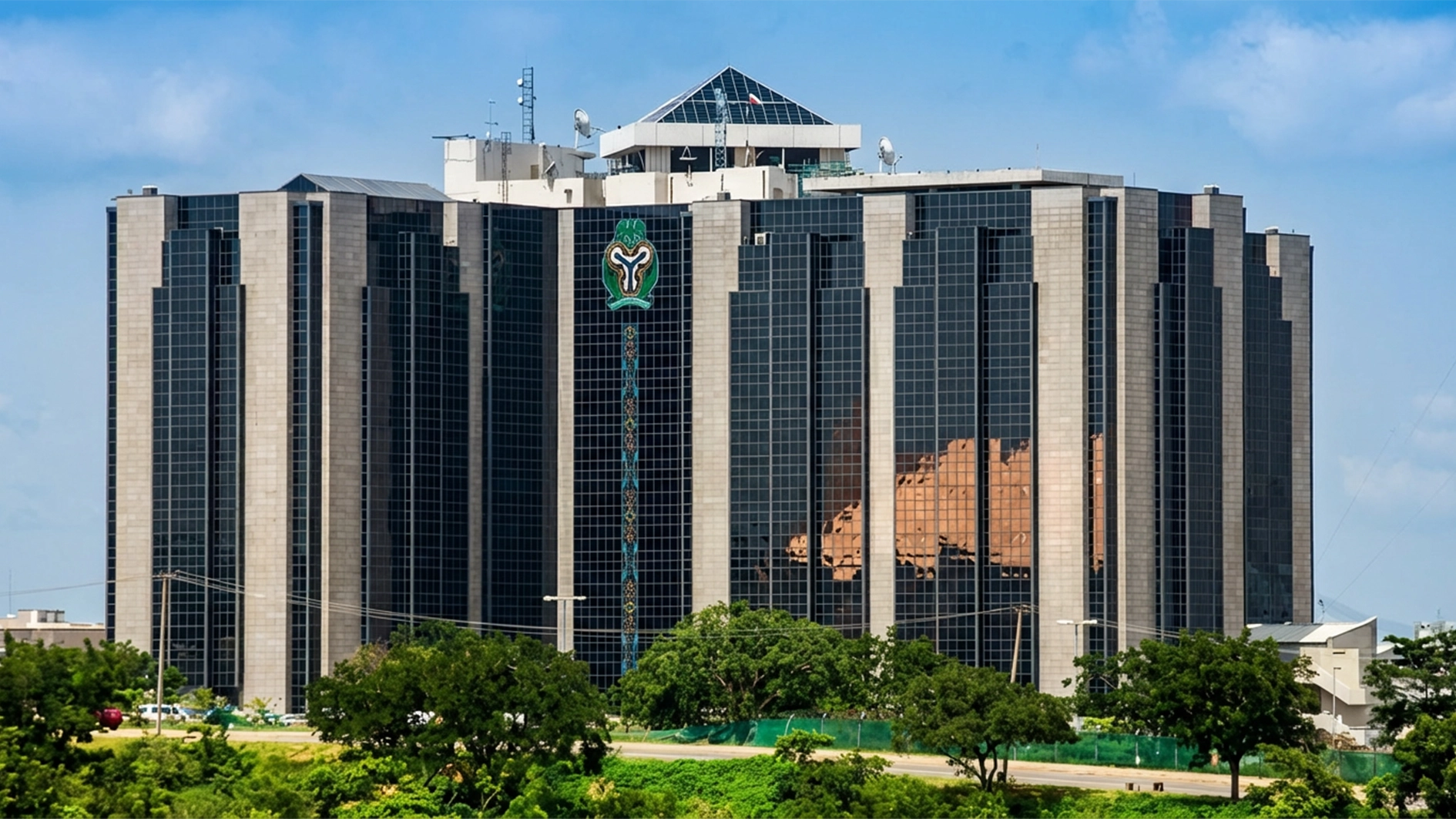
The Central Bank of Nigeria (CBN), acting for the Debt Management Office, returns to the money market this week with a N700 billion Treasury Bills offer, the opening move in the final stretch of Q3’s borrowing program, even as concerns grow over how sustainable the government’s high interest rates really are.
According to an Invitation to Tender notice obtained by Nairametrics, the auction on the first of September will span the standard three tenors: 91-day, 182-day, and 364-day bills.
Money Market Dealers have been directed to submit their bids through the CBN’s S4 Web Interface within a tight three-hour window, from 8:00 a.m. to 11:00 a.m. on Wednesday, September 2, 2026.
Of the N700 billion on the table, the short end of the curve remains modest while the long end continues to dominate:
- 91-day bill: N100 billion
- 182-day bill: N100 billion
- 364-day bill: N500 billion
That skew toward the one-year paper is consistent with a pattern that has defined the entire quarter the DMO’s evident preference for locking in longer-dated funding, even at a premium, rather than rolling over shorter obligations more frequently.
As is standard practice, bids must come in multiples of N1,000, with a minimum subscription of N50,001,000. Dealers may also bid on behalf of non-money market dealers and members of the public, widening the pool of participants beyond the primary dealer community.
The CBN, as ever, has reserved the right to reject bids outright or to adjust the amount on offer depending on how market conditions evolve between now and auction day.
Results are expected the same day the auction closes, Wednesday, September 2, with allotment letters to follow on Thursday, September 3. Successful bidders will then have until 11:00 a.m. that Thursday to settle payment with the apex bank, keeping the settlement cycle as brisk as it has been throughout the quarter.
This week’s sale is one of three auctions left to close out the Q3 NTB calendar, and it lands against the backdrop of an ambitious, some would say aggressive, quarterly borrowing plan.
Between July and September 2026, the DMO and CBN had set out to raise N5.8 trillion through Treasury Bills: N900 billion in 91-day paper, N900 billion in 182-day paper, and a dominant N4 trillion in 364-day bills, which alone account for roughly 69% of the entire program.
With N2.644 trillion in bills maturing over the same quarter, the arithmetic points to an estimated net new borrowing of about N3.16 trillion, a substantial liquidity withdrawal by any measure, and one that has forced the central bank into a delicate balancing act between funding government obligations and managing naira liquidity in the banking system.
That balancing act has not gone entirely to plan. The original Q3 calendar had scheduled major N700 billion auctions for July 8, July 29, August 5, August 12, August 26, and September 2.
The August 5 auction, however, was scrapped altogether, a casualty of back-to-back Open Market Operations (OMO) sales that had already drained significant liquidity from the system, leaving little appetite or need for an additional NTB sale that week.
Elsewhere in the quarter, two liquidity gaps briefly complicated the picture. On July 22, N378.43 billion in maturing bills rolled off without any corresponding fresh issuance, temporarily loosening liquidity conditions.
A similar dynamic played out on August 19, when N429.23 billion matured and flowed back into the banking system. In both cases, the CBN moved swiftly to return to the market with fresh auctions to mop up the excess, a reminder of how tightly the central bank is now managing the liquidity dial, week to week, in pursuit of its broader monetary objectives.
If there was any doubt about investor appetite for Nigerian government paper, the August 12 auction put it to rest. Demand came in at N4.4 trillion against a N700 billion offer, a subscription level that underscores just how much idle liquidity remains chasing risk-free naira assets.
The 364-day bill alone pulled in N4.19 trillion of that demand.
But that appetite has come at a cost. The stop rate on the one-year bill climbed 24 basis points to 17.59% at that auction, extending a trend of elevated yields that has now persisted for much of the year.
For a government funding a widening deficit, and for a central bank trying to keep rates high enough to hold foreign portfolio investors and defend the naira, the trade-off is becoming harder to ignore.
Market watchers are increasingly vocal about the price of that strategy. Mr. Tajudeen Olayinka, CEO of Wyoming Capital Partners Limited, has cautioned that keeping interest rates elevated purely to attract foreign portfolio inflows carries a very high cost to the broader economy, a warning that speaks to the crowding-out effect high-yield government paper can have on private sector credit and real-sector investment.
Not everyone views the strategy in purely cautionary terms, however. Mr. Charles Fakrogha, CEO of ECL Asset Management Limited, has framed the Q3 program as evidence of deliberate, coordinated planning, a calibrated attempt by the authorities to control money supply, rein in inflation, and stabilize the exchange rate, rather than reactive, ad hoc debt management.
With this week’s N700 billion sale and two further auctions still to come before the quarter closes, the coming weeks will test whether the CBN can continue threading the needle between funding needs, liquidity management, and rate stability, all while investor demand, for now, shows little sign of cooling.
Whether that demand holds if and when rates begin to ease will likely shape the tone of the Q4 borrowing program when it is unveiled.
WHAT YOU SHOULD KNOW
The CBN is paying a steep price to keep Nigeria’s debt market attractive. With N700 billion on offer this week, part of a N5.8 trillion Q3 program skewed heavily toward the 364-day bill, investors keep showing up in force (N4.4 trillion in bids against N700 billion offered in August).
The demand is being bought with rising yields, now at 17.59% on the one-year paper. Analysts are split: some see this as necessary discipline to control inflation and defend the naira; others warn it’s crowding out cheaper credit for the real economy.
Strong auction demand looks like good news on the surface, but it’s coming at a real cost the economy will keep paying as long as rates stay this high.