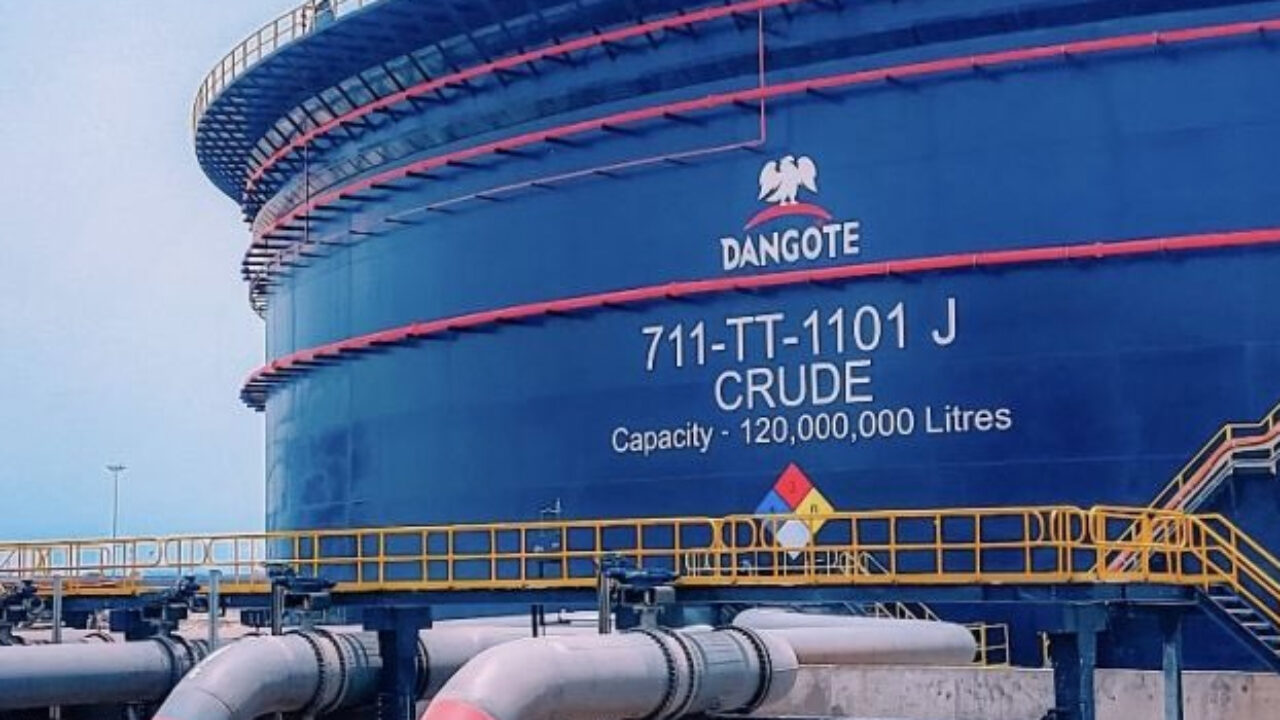
Dangote Refinery is considering cutting Premium Motor Spirit (PMS) supplies to marketers still importing fuel, a bold move signaling its growing dominance over Nigeria’s import-dependent petrol trade.
Sources familiar with the matter, who spoke on condition of anonymity given the sensitivity of the internal deliberations, say the restriction could take effect as early as this week, though it remains subject to further consultations and could still be revised before implementation.
At the heart of the dispute is not simply competition between imported and locally refined fuel, but something more reputational: allegations that some marketers are blending imported PMS of unverified quality with product lifted directly from Dangote’s Lekki-based facility before releasing the mixed batch to retail stations under conditions that make its true origin untraceable.
For a refinery that has staked its brand on meeting internationally recognized specifications, the implications are unsettling. “It is difficult to understand why we would invest heavily in producing high-quality petroleum products for Nigerians, only for those products to be mixed with imported products of uncertain quality and the resulting product to be associated with the refinery,” one source close to the refinery’s position said.
Compounding the concern is what industry insiders describe as a regulatory vacuum: the absence of a standard laboratory or robust quality-control infrastructure to independently verify and certify the specifications of imported fuel entering Nigerian ports.
Without such oversight, the refinery argues, there is little to stop substandard cargoes from entering the supply chain and, once blended, becoming indistinguishable from Dangote’s own output.
This is not the first sign of friction. Reports in recent days indicate the refinery had already suspended coastal PMS sales to depot owners and importers in Lagos, redirecting output toward markets less saturated with imported fuel.
According to data cited by the refinery, imported PMS accounted for roughly 43 percent of total petrol supplied into Nigeria in July, a volume it considers significant enough to shape its production and distribution strategy.
The refinery has also called for greater transparency around import licensing and better coordination among downstream players.
The tension is unfolding against the backdrop of a structural shift in Nigeria’s fuel market. For decades, the country, Africa’s largest oil producer, was paradoxically reliant on imported refined products due to the near-total dysfunction of its state refineries. That dependence is now eroding rapidly.
Dangote Refinery, with a nameplate capacity of 700,000 barrels per day, has emerged not just as Nigeria’s dominant domestic supplier but as a rising force in global product markets.
The U.S. Energy Information Administration recently pointed to the refinery as a principal driver behind the surge in Nigeria’s seaborne petroleum product exports, which averaged 561,000 barrels per day in the second quarter of 2026, up from just 79,000 barrels per day as recently as 2023.
Its jet fuel, meanwhile, has gained particular traction in Europe and the United States, with monthly export volumes to Europe reportedly surpassing those of established American and Middle Eastern suppliers.
Should the restriction proceed, it could force major marketers to reconsider their import programmes altogether, accelerating Nigeria’s pivot toward domestic refining but not without near-term friction.
Marketers who have built import-based supply chains may face tighter margins or scarcity risk if cut off from Dangote’s product, particularly in markets like Lagos where imported fuel has maintained a strong foothold.
As one downstream operator put it, the dispute ultimately reduces to a simple consumer-protection question: “Consumers should be able to know where the petrol they are buying comes from.”
Whether the measure is implemented this week, softened through negotiation, or shelved entirely will offer an early signal of how much leverage Dangote now wields over a downstream sector it has fundamentally reshaped in under two years of full operations.
WHAT YOU SHOULD KNOW
Dangote Refinery’s threatened supply cut isn’t really about competition it’s about control over quality and brand integrity. The refinery fears that unregulated blending of imported fuel with its own product, absent any independent lab to verify import standards, is putting consumers at risk while unfairly tarnishing the Dangote name.
With Nigeria now producing enough refined petrol domestically to meet demand, this standoff marks a pivotal test of whether the country’s downstream market will fully break from decades of import dependence and whether marketers, not just regulators, will be forced to adapt first.