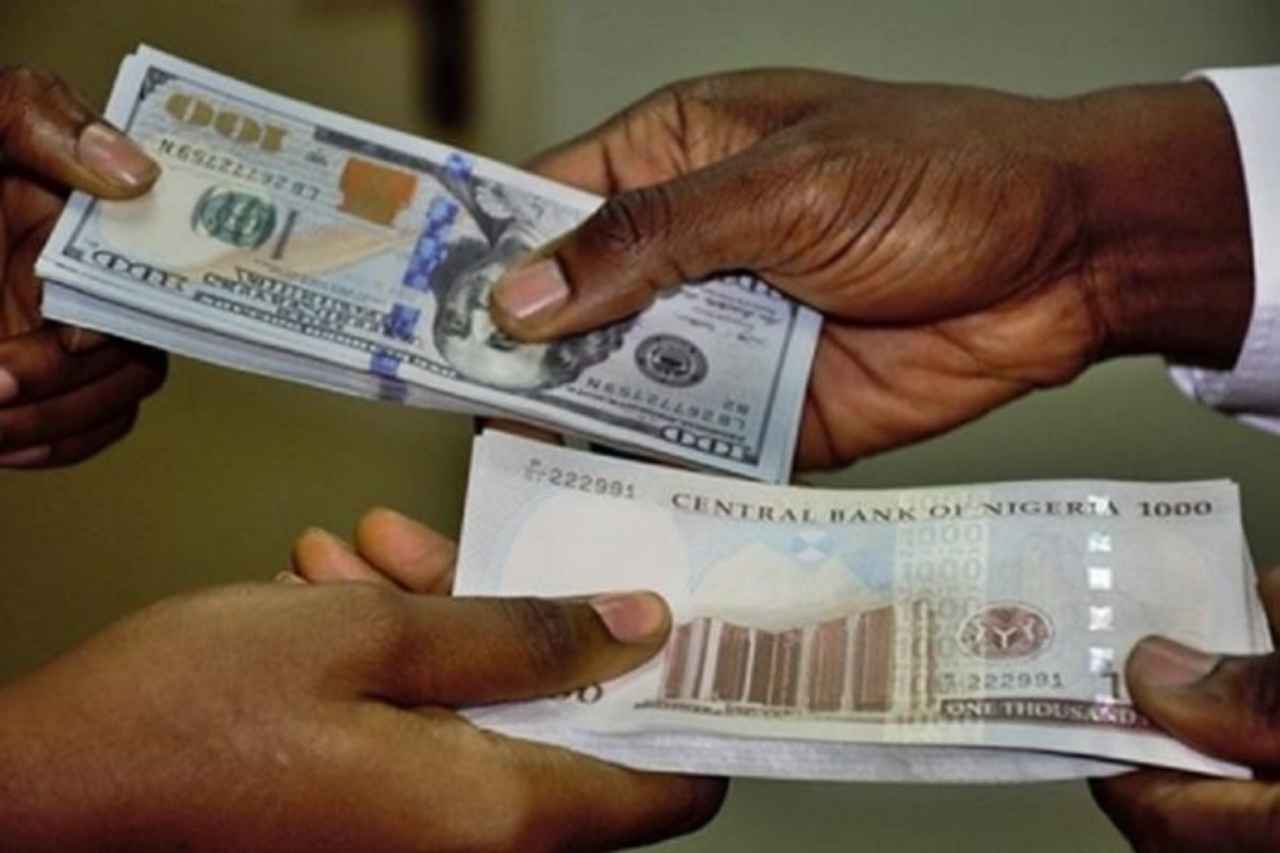
The naira closed relatively unchanged against the US dollar on Tuesday, extending a period of calm that has defined Nigeria’s official foreign exchange market in recent weeks.
Trading data from the Central Bank of Nigeria (CBN) and FMDQ showed the local currency exchanging hands at roughly ₦1,368.22 to the dollar on the Nigerian Foreign Exchange Market (NFEM), with the broader market benchmark settling at ₦1,368.37/$ figures that placed the day’s trading squarely within the ₦1,360–₦1,370 band that has held for much of the past several sessions.
For a currency that endured repeated bouts of turbulence through 2024 and 2025, Tuesday’s session was notable chiefly for what didn’t happen: no sharp swings, no scramble for dollars, no signs of the kind of volatility that once defined trading days in Lagos and Abuja.
Currency dealers described demand from importers and manufacturers as steady rather than aggressive, and pointed to improved liquidity from autonomous sources dollar inflows from exporters, investors and other non-CBN channels as a key reason the official rate has been able to hold its ground.
That stability was echoed at the parallel market, where the dollar changed hands at approximately ₦1,405, putting the spread between the official and street rates at around ₦37. It is a gap analysts continue to watch closely, since the premium between Nigeria’s two markets has historically served as an informal barometer of underlying FX pressure.
A spread this narrow, dramatically smaller than the several-hundred-naira gaps recorded during the depths of 2024’s currency crisis, suggests retail demand for dollars, while persistent, is not currently overwhelming supply.
The official figure is not a single quoted price but a volume-weighted average drawn from actual transactions conducted on the NFEM, the platform that emerged as Nigeria’s benchmark market following the unification of the country’s multiple exchange-rate windows.
FMDQ, the securities exchange that oversees much of Nigeria’s fixed-income and currency trading infrastructure, publishes the daily data used to track pricing and activity in that market.
Importantly, the published benchmark is a reference point rather than a guarantee. The rate a business or individual actually receives can differ, sometimes meaningfully depending on the bank, bureau de change or transfer platform used, as well as the size of the transaction and where in the country it takes place.
Even with the current calm, the naira’s recent history counsels caution against reading too much into any single day’s trading. Wise’s historical data shows the currency fluctuating between roughly ₦1,382 and ₦1,393 to the dollar over the past week alone, while separate tracking has placed the dollar as high as ₦1,425 against the naira earlier this year in February, a reminder that even within a broadly “stable” period, meaningful day-to-day and week-to-week movement persists.
For now, though, the story is one of relative equilibrium: a currency trading in a tight band, a shrinking gap between official and street rates, and a market that for the moment appears less prone to the shocks that rattled it in the recent past.
Whether that holds will likely depend on the durability of the autonomous liquidity traders’ credit for the current calm and on demand pressures that typically build as businesses restock and settle import obligations later in the year.
WHAT YOU SHOULD KNOW
The naira held steady at around ₦1,368/$ in the official market on August 11, 2026, with only a ₦37 gap to the parallel market rate of ₦1,405, a sign that FX pressure remains moderate compared to the sharp volatility of 2024–2025.
Improved dollar liquidity from autonomous sources, not just CBN intervention, is what’s currently keeping the naira stable, though actual rates for individuals may still vary by bank, platform, or transaction size.