Oil markets edged higher on Thursday, but the gains carried the cautious, watchful quality of a trade that has been burned before.
Brent crude futures rose 48 cents, or 0.60%, to $79.93 a barrel by 07:55 GMT, while U.S. West Texas Intermediate added 29 cents, or 0.39%, to reach $75.51.
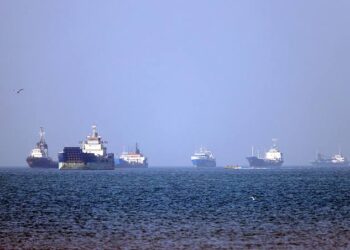
The modest uptick reflected a market suspended between hope and hesitation: hope that a new arrangement between Iran and Oman might finally restore normal shipping through the Strait of Hormuz, and hesitation born of the memory of how quickly the last such promise collapsed.
That memory is not abstract. Iran and the United States signed a memorandum of understanding in June aimed at reopening the strait, only for the deal to unravel within weeks as fighting broke out over the specific routes vessels were required to take.
“Traders still remember the short-lived Memorandum of Understanding signed in June, so there is understandable anxiety that any new deal could prove equally fragile,” said Tim Waterer, chief market analyst at KCM Trade, a sentiment that has effectively become the market’s operating assumption whenever headlines suggest a breakthrough is close.
This time, the framework being discussed centers on Oman as an intermediary. Iran’s Foreign Ministry spokesperson, Esmaeil Baghaei, said Wednesday that Tehran and Muscat had reached an understanding on the geographic coordinates for a shipping corridor through the strait, and that a joint announcement was being finalized, provided, he added pointedly, that unspecified “third parties” did not interfere. That caveat is not incidental.
According to a senior Iranian source and two regional officials who spoke to Reuters, the proposed arrangement would hand Tehran effective control over vessels entering the Gulf through the strait, a significant concession that underscores just how much leverage Iran has accumulated by controlling the waterway’s northern flank during the conflict.
The stakes attached to that leverage are considerable. Before hostilities began in late February, the Strait of Hormuz carried roughly one-fifth of the world’s daily oil and liquefied natural gas supplies.
Shipping data reviewed this week shows Gulf crude and condensate exports have stayed largely flat through July but remain about 40% below pre-war levels a gap that has persisted even as diplomats trade optimistic signals.
“Until we see sustained, verifiable increases in volumes, the market will continue to price in a degree of supply risk,” Waterer said, a line that captures why traders have grown reluctant to move decisively on rhetoric alone.
Adding another layer of risk to the picture, Iran has privately warned Gulf states that any fresh American strike on its territory would trigger retaliation against regional energy infrastructure, according to five sources familiar with the warnings.
The message appears calculated to raise the political cost of further U.S. military action by threatening Washington’s closest allies in the region rather than the U.S. directly a strategy that keeps Saudi Arabia, the UAE and others anxiously invested in seeing the Hormuz talks succeed.
That anxiety was reinforced on Wednesday when Yemen’s Iran-aligned Houthi movement claimed missile strikes on two separate Saudi oil tankers, one near the Red Sea port of Yanbu, another in the Gulf of Aden.
Riyadh had not confirmed either incident as of Thursday, but the claims alone were enough to remind traders that the conflict’s front lines extend well beyond the strait itself, into shipping lanes that had until recently been treated as comparatively safe.
Amid the volatility, Saudi Arabia moved forward with its routine commercial signaling: state oil giant Aramco set the September official selling price for Arab Light crude to Asia at $2 a barrel below the Oman/Dubai average, a discount deeper than the previous month’s, according to a pricing document reviewed by Reuters a sign, analysts say, that Riyadh is working to keep its barrels competitive even as regional supply uncertainty lingers.
The conflict’s reach was also felt elsewhere on Thursday. Ukrainian President Volodymyr Zelenskiy said on Telegram that Ukraine’s military had struck two oil refineries deep inside Russian territory, a reminder that energy infrastructure has become a battlefield target in more than one theater this year even if that front has, for now, less direct bearing on Gulf benchmark pricing.
Taken together, Thursday’s modest price gains say less about confidence in an imminent resolution than about a market that has learned, the hard way, to treat diplomatic breakthroughs as provisional until oil is actually moving. As one trader close to the situation put it, the strait may reopen on paper well before it reopens in practice.
WHAT YOU SHOULD KNOW
Oil prices rose Thursday, but only modestly because the market no longer trusts headlines about a Hormuz deal until barrels are actually flowing. Traders were burned once already by the June memorandum that collapsed within weeks, so this new Iran-Oman framework, even with its “final stages” language, is being priced with heavy skepticism.
Add to that unconfirmed Houthi attacks on Saudi tankers in the Red Sea and Gulf of Aden, and Iran’s private warnings of retaliation against regional energy infrastructure, and the picture is clear: geopolitical risk, not actual supply disruption, is still the main force driving prices.
Until verified shipping volumes through the strait actually increase, expect prices to keep reacting nervously to diplomatic signals rather than settling.