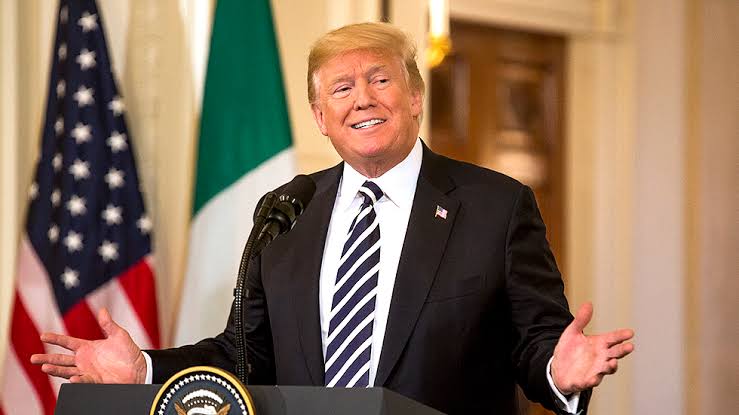
President Donald Trump’s abrupt reversal Saturday night standing down from what had appeared to be an imminent new wave of strikes on Iran capped a frantic 24 hours of shuttle diplomacy that pulled the Middle East back from the brink of a dangerous new escalation, at least for now.
The pattern is becoming familiar. Since the war erupted on February 28 when American and Israeli forces launched hundreds of strikes that killed Iran’s Supreme Leader and senior commanders in a single night Trump has repeatedly threatened devastating follow-up attacks only to pull back at the last moment, citing progress toward a deal.
He has often threatened major attacks on Iran only to call them off, insisting an agreement between Washington and Tehran was close.
A 60-day memorandum of understanding signed in mid-June was supposed to halt the fighting and reopen shipping lanes, but it failed to produce a lasting peace, and tit-for-tat strikes between both sides resumed in the weeks that followed.
Trump’s Saturday night Truth Social post followed a flurry of calls between regional powers. According to a person familiar with the discussion, Saudi Crown Prince Mohammed bin Salman had earlier phoned Trump to raise concerns about the U.S. potentially escalating the conflict, a conversation first reported by Axios.
Riyadh’s state media confirmed the call and said the Crown Prince stressed the need to prioritize dialogue. Tehran, meanwhile, reached out separately to Saudi Arabia as well as to longtime mediators Pakistan and Turkey.
The framework Trump described centers on two demands he has increasingly emphasized in recent weeks: an end to Iran’s nuclear ambitions, and perhaps more urgently for global markets full reopening of the Strait of Hormuz, the chokepoint through which roughly a fifth of the world’s oil and gas flowed before the war.
Iran has at times effectively shut down the waterway, including with attacks on ships it said had not received proper approval from Tehran.
Not everyone in Iran is going along with Trump’s version of events. Iranian state media disputed the idea that Tehran had come begging for a pause, instead describing a call between the Saudi and Iranian foreign ministers and separate conversations with Pakistani and Turkish officials focused on de-escalation a more mutual framing than Trump’s telling suggests. Iran’s military has publicly insisted it remains on full alert.
Even with the pause, the underlying volatility hasn’t gone away:
– Shipping through Hormuz has been repeatedly disrupted, rattling energy markets that had briefly calmed during an earlier ceasefire attempt before fighting resumed.
– A drone strike on a US-owned gas vessel in an Egyptian port and an unidentified projectile hitting a tanker off Oman this past week are reminders that the conflict has metastasized well beyond direct US-Israel-Iran exchanges, drawing in shipping lanes across the wider region.
– The Houthis’ posture around the Bab el-Mandeb Strait adds a second flashpoint for global trade.
– US embassies across the Middle East issued fresh warnings for citizens to prepare to leave — a signal that, despite the diplomatic optimism, officials on the ground are still bracing for the worst.
Trump’s timeline is also being shaped by domestic politics. With midterm elections roughly three months away, a war that keeps flaring up despite repeated promises of imminent peace is a liability his Republican Party would clearly rather not carry into November. That pressure may help explain why “hold off, subject to a deal” has become such a recurring refrain from the White House a way to project momentum toward peace without fully committing to it.
What was announced Saturday isn’t a ceasefire it’s a pause conditioned on negotiations that have collapsed before.
Given that an earlier deal with nearly identical terms already fell apart, with Iran tightening its grip on Hormuz rather than loosening it, there’s ample reason for skepticism about how long this reprieve will hold.
For now, both militaries remain, in Trump’s own words, “locked and loaded” leaving the region
one failed phone call away from where it was 48 hours ago.
WHAT YOU SHOULD KNOW
Trump’s decision to hold off on new strikes is a temporary reprieve driven by fresh diplomacy between Washington, Tehran, and regional mediators not a resolved ceasefire.
The single most important thing to understand: this exact pattern (threat → claimed deal → stand-down) has happened before and collapsed before, with Iran tightening control over the Strait of Hormuz rather than reopening it.
Until an actual, verified agreement is signed not just announced on social media the war remains one broken promise away from resuming, and global oil markets, shipping routes, and civilians across the region stay exposed to that risk.