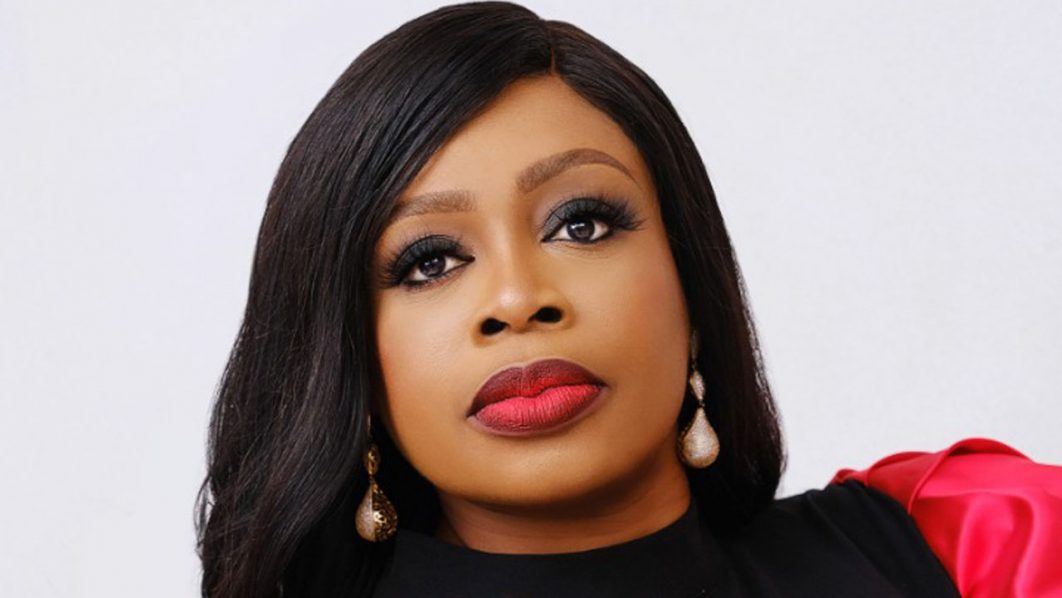
The Federal High Court, Lagos Judicial Division, has thrown out a ₦5 billion copyright suit filed against gospel singer Osinachi Joseph Egbu, known worldwide as Sinach, over her hit song “Way Maker,” affirming her as the song’s sole author and copyright owner.
Delivering judgment in Suit No. On Friday, July 24, in FHC/L/CS/402/2024, Justice Ambrose Lewis-Allagoa held that the plaintiff, music producer Michael Oluwole, who performs under the name “Maye,” failed to prove his claim that he co-authored or co-owned the award-winning song.
Oluwole had approached the court in March 2024, claiming to be a co-author and co-owner of the song. Beyond seeking legal recognition of joint ownership, he asked the court to grant him a share of the song’s royalties and licensing income, recognize alleged infringement of his performer’s rights, and award him ₦5 billion in general damages, among other reliefs.
The court’s findings turned on the timeline of the song’s creation. Justice Lewis-Allagoa held that Sinach had already written, arranged, and performed Way Maker before engaging Oluwole, whose role was limited to mixing and mastering the commercially released version of the track in 2015.
Notably, during cross-examination, the court noted that Oluwole admitted Sinach had brought him an already existing song, which he merely assisted in developing into its recorded version.
The court also found that the plaintiff was hired under an oral agreement and was duly compensated for providing technical production services, undercutting his claim to an ongoing stake in the work.
Justice Lewis-Allagoa’s ruling laid out a clear standard for musical authorship under Nigerian law: copyright authorship belongs to the person who creates the original expressive elements of a musical work, including its melody, lyrics, harmony, or arrangement.
He went further to clarify the limits of technical contributions, holding that producers, sound engineers, or session contributors do not automatically become authors of a musical work simply by providing technical production services, unless they contribute original creative expression.
In dismissing the case, the judge did not mince words, describing the suit as “gold-digging and unmeritorious” before throwing out all of Oluwole’s claims in their entirety.
Senior Advocate of Nigeria Emeka Etiaba led Sinach’s legal team. The singer’s camp, including Joseph Egbu, Chairman of Slic Inspire Ltd and Gosgem Records, the companies that manage Sinach, joined the artiste in expressing gratitude to the legal team for their professional representation.
The ruling settles a dispute over one of gospel music’s biggest global exports. Released in 2015, Way Maker gained international popularity after being recorded by several gospel artistes, including Michael W. Smith and Leeland, and has been translated into multiple languages, becoming one of Nigeria’s most successful gospel exports.
It became the first Nigerian gospel song to exceed 100 million views on YouTube, reaching that milestone in March 2019, and has won the GMA Dove Award for Song of the Year, been translated into more than 50 languages, and covered by over 60 Christian artists.
Legal observers have noted that the judgment carries broader significance beyond the parties involved, serving as a reaffirmation of copyright principles in Nigeria’s music industry, particularly regarding the distinction between creative authorship and technical production services a distinction likely to be cited in future disputes between artists and the producers, engineers, and studio personnel who help bring their work to market.
WHAT YOU SHOULD KNOW
The Federal High Court’s dismissal of Michael Oluwole’s ₦5 billion suit affirms a clear legal principle: copyright ownership rests with whoever creates a song’s original expressive content the melody, lyrics, harmony, and arrangement not with those who provide technical services after the fact.
Since Sinach had already written and performed “Way Maker” before hiring Oluwole to mix and master it for release, his paid technical contribution did not entitle him to co-authorship.
The case sets an important precedent for Nigeria’s music industry, drawing a firm line between creative ownership and studio production work.