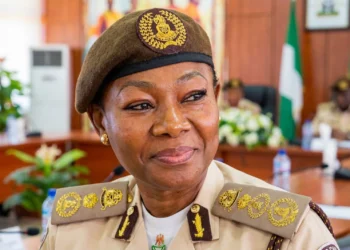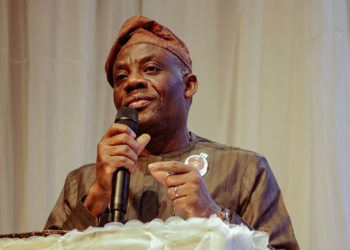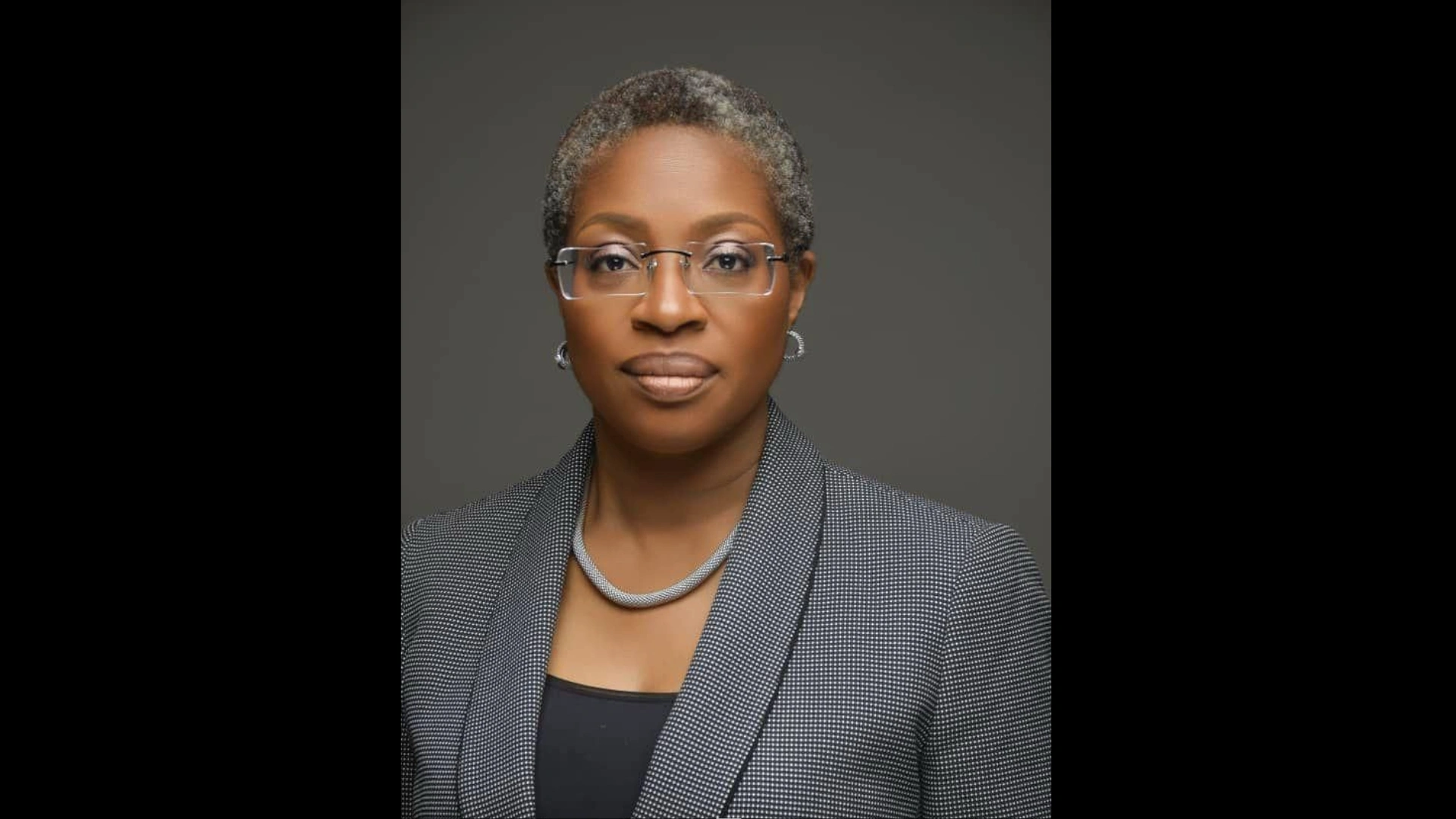
Nigeria’s legal profession has a new leader, and history has been made in the process. Mrs. Oyinkansola Badejo-Okusanya, SAN, was on Sunday declared the 33rd President of the Nigerian Bar Association (NBA), capping a fiercely contested and technically fraught election that tested the resilience of the country’s premier legal body.
The result was announced at the NBA National Secretariat in Abuja by Aham Ejelam, SAN, chairman of the association’s Electoral Committee, following a 24-hour voting window that began at 7:35 a.m. on Saturday and ran, with interruptions, through to the following morning.
Badejo-Okusanya’s victory was comfortable rather than narrow. She polled 12,317 votes, 47.18 percent of the 26,106 ballots cast in the presidential race, comfortably outdistancing Lateef Akangbe, SAN, who trailed with 7,934 votes (30.39 percent), and Olumuyiwa Akinboro, SAN, who came third with 5,855 votes (22.43 percent).
Her lead had been evident for much of the count: election-night tallies from Saturday evening already showed her holding a double-digit percentage advantage over her nearest rival. This gap held steady as the final votes were tallied.
Her win makes her only the second woman to lead the NBA in its history, following in the footsteps of Priscilla Kuye, who served as president from 1991 to 1992, a gap of roughly 35 years between female leadership of the association.
The election was anything but routine. In the early hours of voting, the NBA’s electronic voting portal buckled under what the Electoral Committee later described as a “deliberate, coordinated, and sustained cyberattack” aimed at sabotaging the process.
The disruption forced ECNBA officials to rebuild and migrate the entire voting infrastructure to a more secure server mid-election. This extraordinary intervention delayed proceedings but ultimately did not derail them.
Outgoing NBA President Afam Osigwe, SAN, addressed the episode head-on in his valedictory remarks, framing it as an attack on the integrity of the Bar itself. “Our colleagues planned to truncate the election, but we stood firm,” he told the gathering. “Every effort to derail this process failed. This is a trying time for the Bar. In the build-up to this election, many went to great lengths to rubbish the association.”
He struck a note of both defiance and caution, predicting that the full story of the sabotage attempt would eventually come to light: “Someday, the story will be told of how this election was almost sabotaged.”
He also used the moment to press home a broader point about self-governance within the profession, declaring, “May we never see the day when those who lead us will be elected by people other than lawyers.”
Osigwe’s closing address leaned heavily on themes of reconciliation. He urged the incoming executive to govern with humility and asked disappointed candidates to rally behind the new leadership.
“To those who won, be magnanimous in victory; for those who lost, there is always another day,” he said, adding that the cyberattack was a wake-up call on data protection: “We must do more in data protection. Let us collectively acceptably do things.”
Notably, Badejo-Okusanya herself was not present when the results were formally declared. Aminu Gadanya, SAN, a member of her campaign team, told those gathered that a flight delay had kept the president-elect away but relayed her intention to extend a “handshake of friendship” to the candidates she defeated, an early signal of the conciliatory tone she may set as she takes office.
Badejo-Okusanya will not govern alone. Voters also returned a fresh slate of national officers alongside her: Oghenero Okoro was elected First Vice-President with 11,024 votes; Afam Okeke takes over as General Secretary with 8,478 votes; Aghogho Gladys becomes Assistant General Secretary after polling 14,312 votes; and Chinelo Audrey Ofoegbunam was elected Welfare Secretary with 14,911 votes, the highest individual vote tally recorded across the officer races.
Badejo-Okusanya now begins a two-year term running through 2028, inheriting an association still absorbing the shock of the attempted cyber-sabotage.
Osigwe confirmed that the Electoral Committee would carry out a full review of the election, with particular attention to the technical vulnerabilities exposed during voting, in a bid to shore up cybersecurity and restore confidence ahead of future NBA polls.
For an association that prides itself on self-regulation and independence, the message from the outgoing leadership was unambiguous: the vote had been contested, attacked, and delayed but not defeated.
Whether that resolve translates into lasting unity within the Bar will likely be one of the first tests of the incoming president’s tenure.
WHAT YOU SHOULD KNOW
Oyinkansola Badejo-Okusanya has been elected the 33rd President of the Nigerian Bar Association, becoming only the second woman to lead the body in its history. She won decisively with 47.18% of the vote, defeating Lateef Akangbe and Olumuyiwa Akinboro.
The bigger story, though, is that this election survived a deliberate cyberattack meant to derail it, forcing a mid-vote system migration, and outgoing President Afam Osigwe used the moment to warn that safeguarding the Bar’s electoral integrity and its right to choose its own leaders without outside interference must now be a top priority.