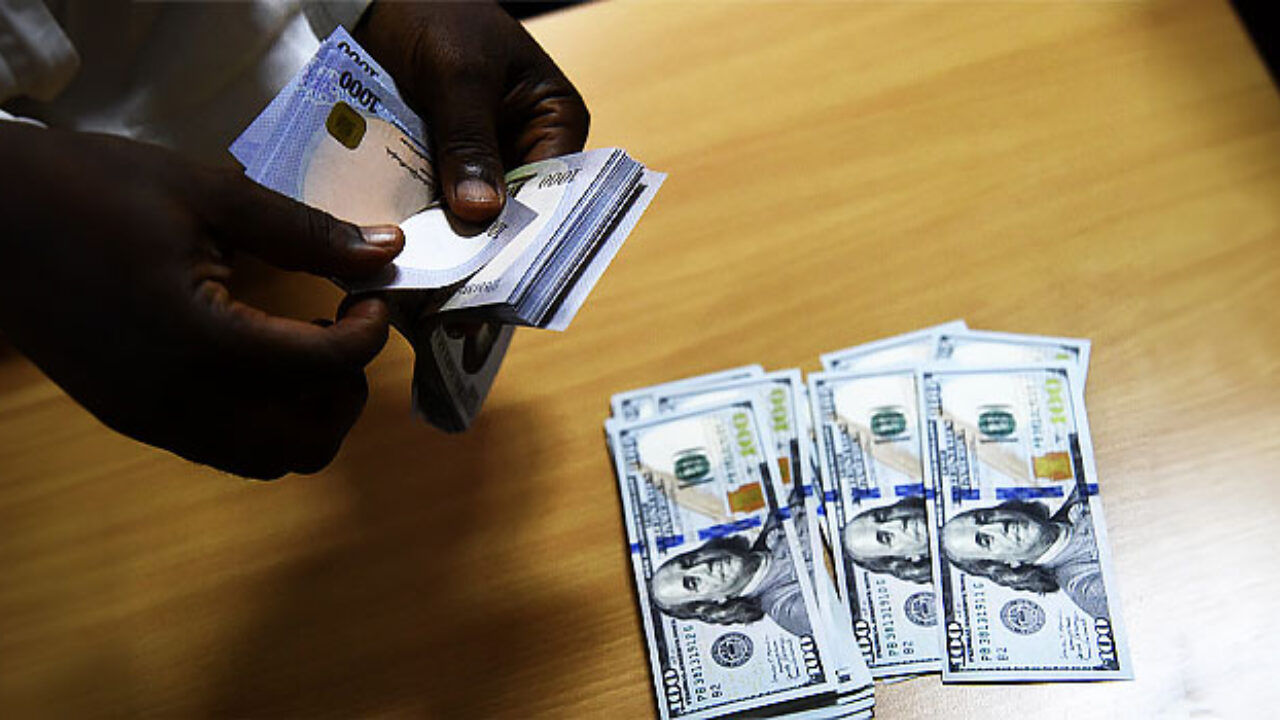
The naira extended its recent losing streak on Wednesday, shedding further ground against the US dollar in both the official and unofficial trading windows, as renewed pressure on the naira continues to test the resilience of the Central Bank’s exchange rate reforms.
Data released by the Central Bank of Nigeria (CBN) showed the naira closing at N1,379 to the dollar in the Nigerian Foreign Exchange Market (NFEM), the apex bank’s official trading platform, representing an N8 depreciation from Monday’s rate of N1,371 per dollar.
The slide marks one of the more pronounced single-day movements the official market has recorded in recent weeks, reversing a relatively stable run through much of late June and early July.
In the parallel market, where individuals and businesses unable to access foreign exchange through licensed channels turn for dollar liquidity, the naira similarly weakened, with street traders quoting the dollar at N1,405, up from N1,400 on Monday.
Bureau de change operators in Lagos and Abuja, who often serve as bellwethers of informal market sentiment, attributed the uptick largely to sustained demand from importers and travelers, even as overall dollar supply in that segment remained tight.
Perhaps the more closely watched metric for currency analysts, however, was the narrowing spread between the two markets. The gap between the parallel and official rates tightened to N26 per dollar on Tuesday, down from N29 the previous session, a development the CBN has consistently pointed to as evidence that its unification and liquidity-boosting measures are gradually anchoring the naira’s multiple exchange windows closer together.
A tighter gap between official and black-market rates typically signals reduced arbitrage incentive, discourages round-tripping by dollar speculators, and reflects growing confidence that the NFEM window is offering rates genuinely reflective of market conditions, a key objective of the CBN’s ongoing FX reforms since the unification of exchange rate windows.
Still, Tuesday’s depreciation across both markets will renew questions about the durability of the naira’s recent stability. Analysts have repeatedly cautioned that the currency’s near-term trajectory hinges on a handful of structural variables: the volume of dollar inflows from oil exports and portfolio investors, the strength of external reserves, import demand pressures, and broader sentiment among offshore investors watching Nigeria’s monetary policy stance.
The naira had, in the days prior, shown signs of firming, with the official rate dipping below the N1,370 mark earlier in the week on the back of improved liquidity in the interbank market.
Tuesday’s reversal suggests that stability remains fragile and that gains recorded in one session can be quickly eroded in the next as underlying supply constraints persist.
Market watchers will now be looking to the CBN’s subsequent interventions, including any fresh dollar sales to authorized dealers, and incoming trade and reserves data to gauge whether Tuesday’s slide is a temporary blip or the start of a fresh bout of pressure on the local currency.
Let me know if you’d like this adapted into a different format: a shorter wire-style brief, a version with pull quotes from a fictional analyst, or a Word document formatted for publication.
WHAT YOU SHOULD KNOW
The naira weakened further on Tuesday: N1,379/$ officially and N1,405/$ on the street, but the real story is the narrowing spread: down to N26 from N29.
That’s the number that matters most, because it signals the CBN’s reforms are slowly pulling the official and parallel markets closer together, even as the currency itself keeps losing ground.
The naira is depreciating, but it’s depreciating in a more unified, less distorted market, which is the CBN’s real measure of success right now, not the headline rate itself.