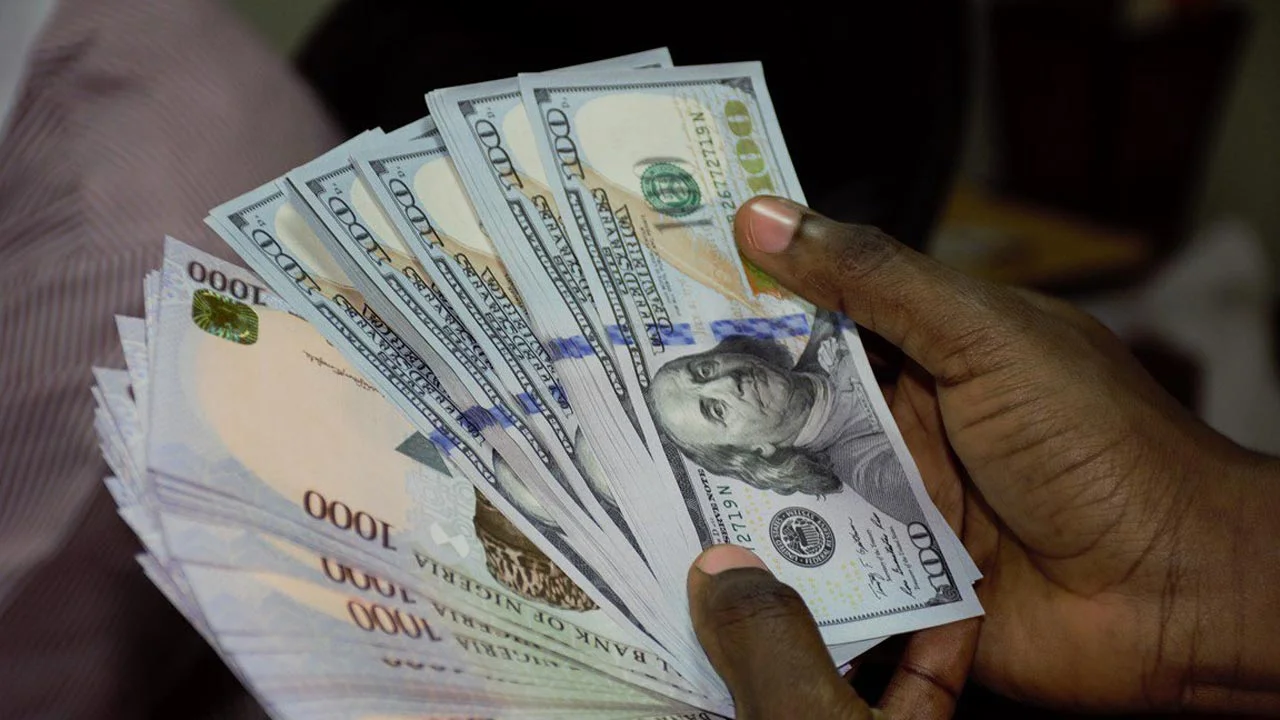
The naira firmed against the dollar in both official and parallel markets midweek, even as the spread between the two widened, a trend analysts say is worth watching in the weeks ahead.
Figures released by the Central Bank of Nigeria (CBN) on Wednesday showed the naira’s indicative rate at the Nigerian Foreign Exchange Market (NFEM), the country’s official trading window, improving to ₦1,369 per dollar, down from ₦1,376 per dollar recorded a day earlier.
The ₦7 gain marks the naira’s latest advance in a market that has, in recent sessions, shown intermittent but persistent signs of stability, buoyed in part by the CBN’s continued push for greater liquidity and transparency in FX trading.
The NFEM rate, it should be noted, is not fixed by fiat but is derived as a volume-weighted average of actual trades executed during the day, meaning Wednesday’s appreciation reflects real transactional demand and supply dynamics among authorized dealers rather than an administrative adjustment.
Away from the interbank window, the story was much the same. Street traders and bureau de change operators quoted the dollar at ₦1,385 on Wednesday, a modest improvement from ₦1,390 the previous day.
While more modest in scale than the official market’s movement, the parallel market’s gain suggests that sentiment among retail FX users, often the first to react to shifts in scarcity or speculative pressure, has also turned cautiously positive.
Perhaps the more telling figure in Wednesday’s data is not the appreciation itself, but the arbitrage gap it leaves behind. With the official rate advancing faster than its parallel-market counterpart, the spread between the two widened to ₦16 per dollar, up from ₦14 on Tuesday.
A persistently widening gap between official and street rates has historically been one of the clearest early indicators of stress in Nigeria’s multiple exchange-rate regime, the kind of divergence that fuels arbitrage, discourages formal market participation, and complicates the CBN’s efforts to present a single, credible reference rate to investors.
Market watchers will be looking to see whether this week’s widening proves a temporary blip driven by short-term trading flows or the start of a more sustained divergence that could draw renewed policy attention.
Wednesday’s movement continues a broader pattern seen through the current trading week, with both markets recording successive days of naira appreciation even as the official-parallel spread has fluctuated.
For businesses reliant on dollar-denominated imports, and for millions of Nigerians tracking the naira’s fortunes as a proxy for the health of the wider economy, the message from this week’s data is a familiar one: modest relief in the headline rate, tempered by the reminder that Nigeria’s currency market remains a tale of two prices.
WHAT YOU SHOULD KNOW
The naira strengthened this week in both markets: ₦1,369/$ officially and ₦1,385/$ on the street, but the key thing to watch isn’t the gain itself; it’s the widening gap between the two rates, now at ₦16 from ₦14.
The growing spread is the real signal: it points to uneven demand pressure between the official and parallel markets, and historically, a widening gap like this tends to precede renewed FX volatility rather than sustained stability.