Nigeria’s naira held steady on Friday, trading at roughly ₦1,374.76 per dollar officially. At the same time, parallel market operators quoted rates between ₦1,388 and ₦1,400, a narrowing gap that analysts say points to growing stability in Africa’s largest economy.
In a foreign exchange market that has for years been defined by volatility, suspense, and the ever-widening chasm between official and street-level rates, Friday’s figures offered a moment of relative calm.
Data from the Nigerian Foreign Exchange Market (NFEM) confirmed that the local currency has held within the ₦1,370 band across several recent trading sessions, a consistency that, while modest in isolation, represents something more meaningful in context: a market finding its footing.
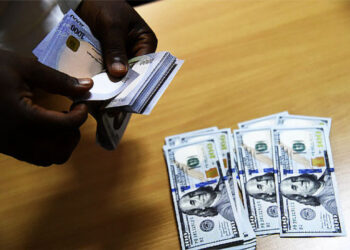
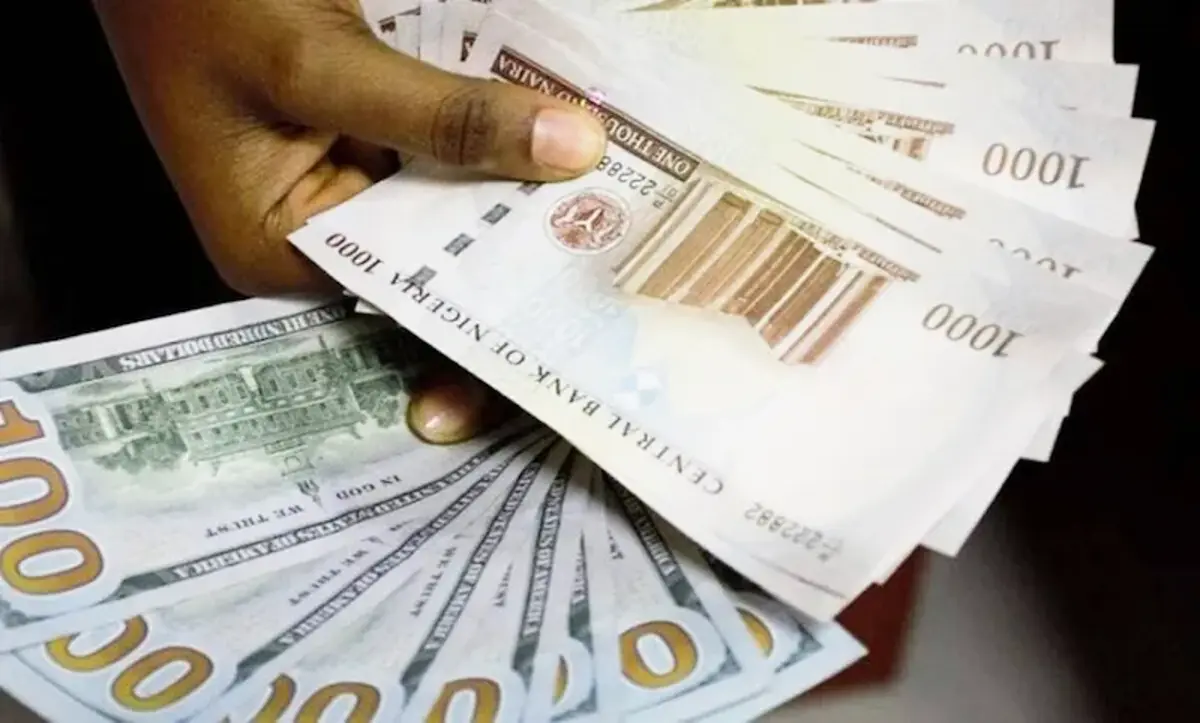
For ordinary Nigerians, the numbers translate directly into purchasing power. At the official rate, every $100 costs ₦137,476, while $1,000, a sum that represents months of savings for many, exchanges for approximately ₦1.37 million.
On the streets of Lagos, those same dollars fetch slightly more for BDC sellers: ₦140,000 per hundred and roughly ₦1.4 million per thousand. Dealers were quick to caution, however, that rates shift with location and the size of the transaction.
Thursday’s Central Bank of Nigeria figures placed the NFEM rate at ₦1,380.11 per dollar, a figure that bookends Friday’s session, during which the naira swung between a high of ₦1,390.50 and a low of ₦1,376.00. That a roughly ₦14.50 trading band represents limited fluctuation in Nigeria’s forex market is, in itself, a testament to how far the market has traveled from its most turbulent days, when daily swings of far greater magnitude were routine.
The parallel market, long a barometer of public confidence in the official rate, told a similar story of narrowing distance. The gap between the NFEM rate of ₦1,374.76 and the street selling rate of ₦1,400 sits at just over ₦25, a spread that forex analysts described as “relatively narrow” by historical standards.
“The convergence we are seeing between official and parallel market rates is a positive signal,” one foreign exchange analyst told this reporter. “It suggests the reforms are holding and that confidence in the official market is gradually being restored.”
Yet seasoned observers of Nigeria’s foreign exchange market know better than to uncork the champagne prematurely. The naira’s performance in the weeks ahead, analysts warned, will hinge on several variables, each with the potential to either sustain the current stability or unravel it.
Chief among these is the flow of dollars from crude oil exports. Nigeria’s economy remains deeply anchored to oil revenues, and any disruption, whether from production outages, pipeline vandalism, or a softening in global crude prices, could tighten dollar supply and put fresh pressure on the naira.
Diaspora remittances, which have emerged as an increasingly vital source of foreign exchange, will also be closely watched, as will foreign portfolio investments, whose appetite for Nigerian assets often tracks global risk sentiment.
Critically, market participants will have one eye firmly on Abuja. The Central Bank of Nigeria’s appetite and capacity for market intervention, injecting liquidity at key moments to prevent runaway depreciation, remain perhaps the single most consequential variable in the equation.
What Friday’s figures ultimately sketch is the portrait of a market in transition, not yet arrived at its destination but no longer lost. The naira is not thriving in any conventional sense; ₦1,374 to the dollar is still a rate that would have seemed unthinkable a decade ago.
But stability, however fragile, is the precondition for everything else: investment, planning, and the quiet confidence of a business owner who can price their goods today without fear that the rate will have lurched dramatically by morning.
Whether that stability endures will depend, as it always has in Nigeria, on forces both within and beyond the Central Bank’s control.
WHAT YOU SHOULD KNOW
Nigeria’s naira closed Friday, June 26, 2026, trading at ₦1,374.76 to the dollar officially and ₦1,400 on the parallel market, and the most important takeaway is this: the gap between those two figures is narrowing.
That convergence signals growing confidence in Nigeria’s official forex market and suggests the CBN’s reform efforts are gaining traction.
However, the naira’s stability remains fragile and contingent on crude oil earnings, diaspora remittances, and the Central Bank’s willingness to intervene. The calm is real, but it is not yet guaranteed.