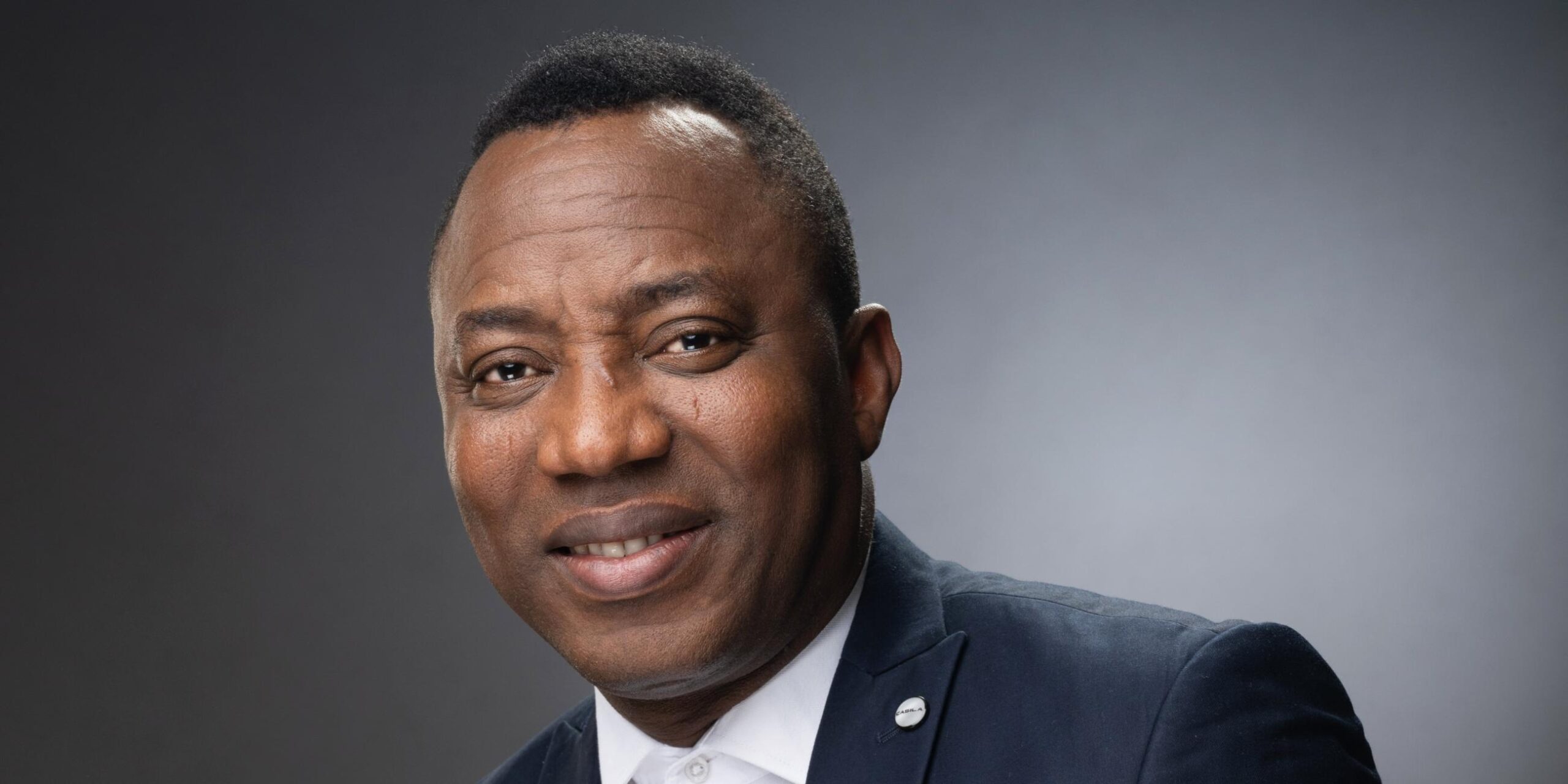
The Federal High Court in Abuja has scheduled a June 30, 2026, ruling on activist and publisher Omoyele Sowore’s application to have his bail restored and bench warrant vacated.
Justice Mohammed Umar made the pronouncement on Wednesday after both the defense and prosecution teams adopted their respective court processes, bringing the latest chapter of a legal battle that has drawn significant public attention to a dramatic pause ahead of what promises to be a consequential ruling.
The current legal quagmire traces its roots to June 16, when Justice Umar revoked Sowore’s existing bail and directed that a bench warrant be issued for his arrest after the defendant failed to appear before the court for the continuation of his trial.
Sowore faces charges bordering on cybercrime and criminal defamation allegations stemming from posts made on his official X (formerly Twitter) and Facebook accounts, in which he allegedly referred to President Bola Tinubu as a “criminal.”
The charges were brought by the Department of State Services, and Sowore has maintained his innocence, entering a plea of not guilty.
Following the revocation of his bail, the court on Monday ordered that Sowore be remanded at the Kuje Correctional Centre, pending the outcome of his application seeking a stay of execution of the bench warrant order, a confinement that his legal team says is already taking a toll on the activist’s health.
At Wednesday’s resumed sitting, Sowore’s defense team, led by R.O. Adakole and C.S. Etonyeaku, the latter holding the brief of senior advocate Adeyinka Olumide-Fusika (SAN), told the court that the defendant had filed a motion on notice dated June 17 and formally filed on June 19, 2026.
The application, anchored on Sections 35(4), 36(1), and 6(6)(a) and (b) of the 1999 Constitution of the Federal Republic of Nigeria, as well as Sections 169 and 352 of the Administration of Criminal Justice Act, 2015, and the court’s inherent jurisdiction, contained no fewer than 12 reliefs.
Chief among these were requests for an order setting aside the June 16 bail revocation, an order vacating the bench warrant, and a restoration of the earlier bail conditions.
The defence relied on a 34-paragraph affidavit deposed to by one Emmanuel Larry, a 36-paragraph affidavit by one Sodiq Temitope filed on June 24, and a written address accompanied by a reply on points of law. Urging the court to grant the application, the defence asked that the prosecution’s counter-affidavit be discountenanced.
The prosecution, represented by senior advocate Akinlolu Kehinde (SAN), fired back with a 25-paragraph counter-affidavit deposed to by one Moses Madara. Kehinde urged the court to refuse the application, arguing pointedly that Sowore had failed to place truthful and compelling facts before the court sufficient to sway its discretion in his favour, particularly drawing the court’s attention to paragraphs 10 to 23 of the counter-affidavit.
Following the adjournment, the drama in the courtroom was far from over. The defence made an oral application, asking Justice Umar to release Sowore into the custody of his legal team until the June 30 ruling date, with an undertaking that the defendant would be produced in court on that date.
The prosecution swiftly opposed the request, dismissing it as “a little bit absurd” and arguing that such an application required formal processes to allow for a proper prosecutorial response.
The defence countered, assuring the court that releasing Sowore temporarily would not prejudice the ruling in any way and fell squarely within the court’s discretionary powers. Crucially, counsel also disclosed that Sowore was reportedly in poor health at the Kuje facility, adding an element of humanitarian urgency to the request.
The prosecution, while stopping short of an outright objection in its final word on the matter, reminded the court of the “optics of the matter,” an apparent reference to the public scrutiny surrounding the case, and left the final call to judicial discretion.
Justice Umar, however, was unmoved. The judge declined the oral application, reasoning that granting it would undermine the very purpose for which the matter had been adjourned, namely, to allow him adequate time to review all processes filed by both parties before delivering a considered ruling.
Sowore was consequently ordered back to the Kuje Correctional Centre, where he will remain until at least June 30.
Beyond the procedural mechanics of Wednesday’s hearing lies a case that many civil society actors and press freedom advocates say represents a worrying pattern of using criminal law as a lever against dissent.
Sowore, a long-time government critic and founder of the online news platform “Sahara Reporters,” has had repeated run-ins with state security agencies over the years, and his supporters argue that the defamation charges against him amount to an attempt to silence a vocal opposition voice.
The Federal Government, on the other hand, maintains that no individual, regardless of their political profile, is above the law.
All eyes now turn to June 30, when Justice Umar’s ruling could either restore Sowore’s freedom pending trial or keep him confined as the legal process runs its full course.
WHAT YOU SHOULD KNOW
Omoyele Sowore remains detained at Kuje Correctional Centre as the Federal High Court in Abuja awaits June 30 to rule on whether to restore his bail and vacate the bench warrant issued against him.
At the heart of this case is a deeply troubling question: are Nigeria’s criminal defamation laws being weaponized to silence legitimate dissent?
Sowore’s alleged offense, calling President Tinubu a “criminal” on social media, has landed him behind bars, a fact that should concern every Nigerian who values free expression.
Whatever the court decides on June 30, this case will serve as a significant litmus test for the health of democracy and press freedom in Nigeria.