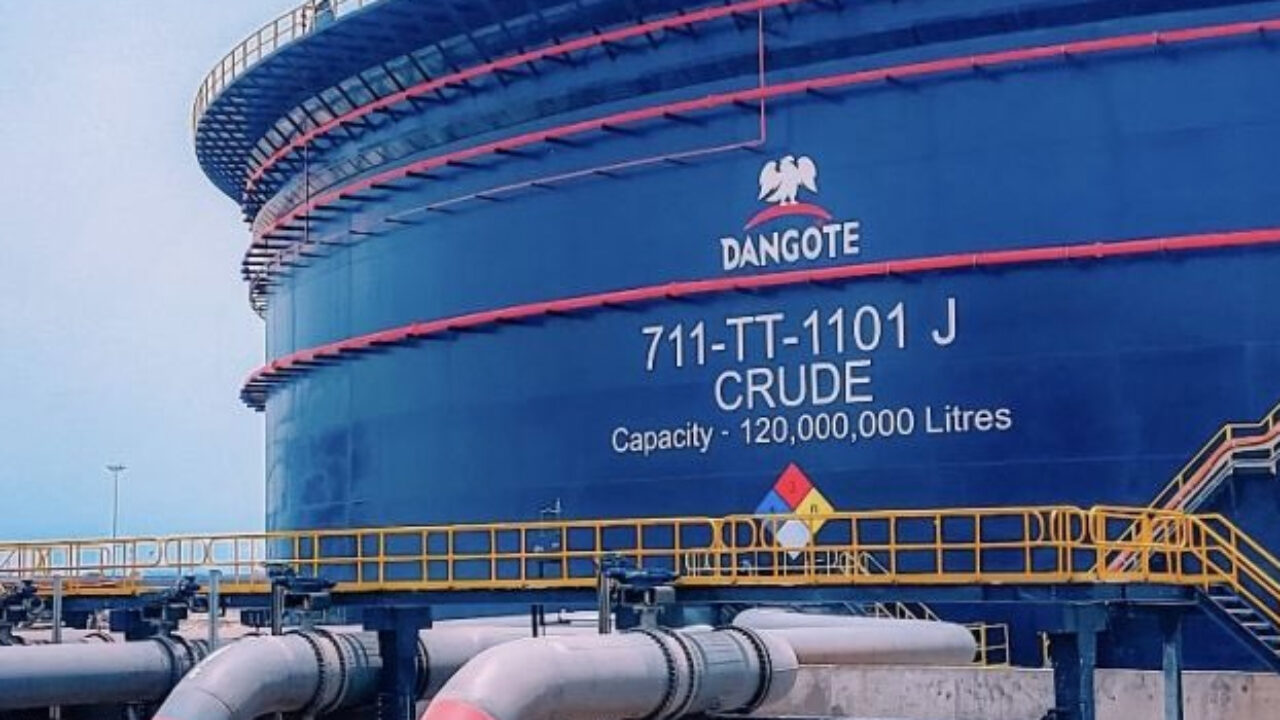
Dangote Petroleum Refinery has pushed back sharply against allegations that it exports petroleum products to Lomé, Togo, only to have them re-imported back into Nigeria, dismissing the claims as a deliberate campaign of misinformation.
The statement, issued amid what appears to be a growing wave of speculation in energy and trading circles, represents one of the most direct and detailed public responses from the $20 billion facility since it began commercial operations.
And the tone leaves little doubt that management views the claims not merely as inaccurate but as a deliberate attempt to undermine the refinery’s standing in Nigeria’s highly competitive downstream petroleum sector.
At the heart of Dangote Refinery’s defence is a straightforward challenge: the alleged trade route simply makes no financial sense.
Management disclosed that the estimated logistics costs of transporting petroleum products from the refinery’s Lekki facility to Lomé and back into Nigeria range between US$82 and US$90 per metric ton, a figure that would, by any standard market analysis, obliterate any conceivable profit margin.
“No rational producer would incur additional shipping, storage, financing, and handling costs only for products to re-enter and compete in its primary market,” the statement read, in what amounted to a pointed challenge to anyone peddling the narrative.
The refinery further noted that it does not offer export discounts large enough to offset those costs or create the kind of arbitrage opportunity between export and domestic markets that the allegations imply. In the world of commodity trading, where margins are often razor-thin, the arithmetic alone, management argues, is enough to collapse the theory entirely.
Beyond economics, Dangote Refinery says its commercial architecture is designed precisely to prevent the scenario being alleged. Management confirmed that all sales contracts and tender agreements expressly prohibit the resale or re-importation of its products back into Nigeria, a contractual safeguard that, if violated, would expose counterparties to significant legal liability.
In the global petroleum trading industry, destination clauses and anti-diversion provisions are standard tools used by producers to protect domestic market integrity. The fact that Dangote Refinery has embedded these protections into its commercial framework suggests that management was alive to this risk long before the current controversy erupted.
Adding another layer to its defence, the refinery revealed that it operates stringent product traceability protocols, maintaining detailed records of lifting points, nominated vessels, counterparties, and declared destinations across its entire supply chain. In plain terms, the refinery knows exactly where every barrel it sells ends up or is contractually and operationally positioned to find out.
While the statement is careful to frame the rebuttal in technical and commercial terms, the subtext points to something larger: a battle over Nigeria’s downstream petroleum market and who gets to supply it.
Dangote Refinery has, since its commissioning, positioned itself as the answer to Nigeria’s decades-long dependence on imported refined petroleum products, a dependence that has cost the country hundreds of billions of dollars in foreign exchange and kept fuel prices hostage to global market swings and volatile shipping costs. The refinery’s stated core mandate is to strengthen domestic supply and reduce that dependence, not to feed it.
Against that backdrop, management’s language in this statement takes on added significance. The allegation, if left unaddressed, could damage the refinery’s relationships with the Nigerian government, regulators, and the public at a time when it is still working to capture a dominant share of the domestic market.
It could also embolden competitors, including those who benefit most from continued fuel importation, to push the narrative further.
“Management underscores that encouraging or enabling re-importation would undermine local refining efforts, strain foreign exchange reserves, and weaken national industrial growth,” the statement said, a reminder that the stakes in this debate extend far beyond one company’s commercial interests.
The refinery did not mince words in its conclusion. The allegation, it declared, “is entirely unfounded and does not withstand scrutiny when measured against market logic, contractual frameworks, and industry practices.”
Notably, management acknowledged that it does not, as a matter of policy, respond to what it considers baseless allegations, suggesting that the decision to issue this statement was itself a deliberate escalation, a signal that whoever is behind the claims has crossed a line.
For now, Dangote Refinery says it remains focused on its broader mission: enhancing Nigeria’s energy security, supporting local refining, and contributing to Africa’s industrial development.
Whether the statement puts the controversy to rest or whether fresh allegations will follow remains to be seen. In Nigeria’s downstream energy sector, long defined by fierce commercial rivalries, opaque trading arrangements, and high political stakes, it rarely pays to assume any dispute is truly over.
WHAT YOU SHOULD KNOW
Dangote Petroleum Refinery has firmly rejected allegations that it exports petroleum products to Lomé, Togo, for re-importation back into Nigeria, calling the claims deliberately misleading and economically illogical.
The refinery points to three unambiguous facts: the logistics costs alone, between $82 and $90 per metric ton, make the alleged trade route commercially unviable; all its sales contracts explicitly prohibit resale or re-importation of its products into Nigeria; and its traceability systems ensure full accountability across every transaction in its supply chain.
The bigger picture, however, is that these allegations appear targeted at a company that directly threatens the profitability of those who have long profited from Nigeria’s dependence on imported fuel.
Dangote Refinery is not just defending its reputation; it is defending the very idea of local refining in Africa’s largest economy. Until Nigeria fully backs its own industrial capacity over entrenched import interests, controversies like this one will continue to surface.