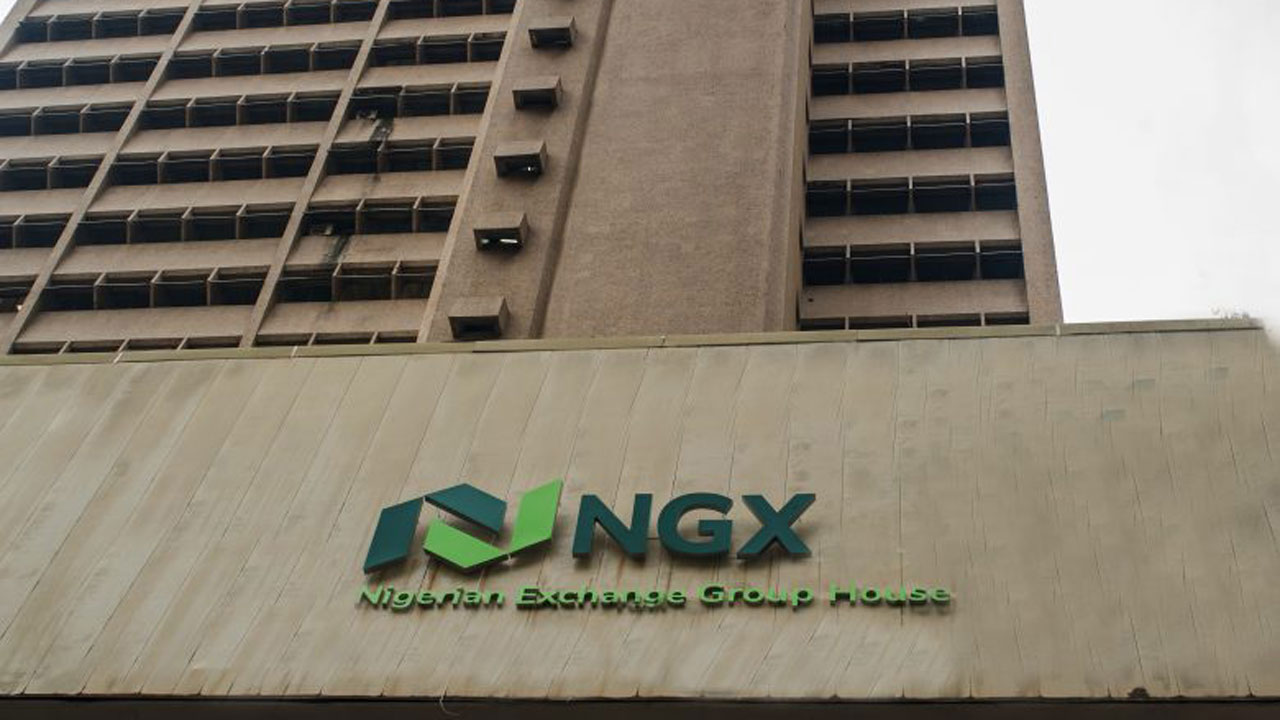
The Nigerian Exchange (NGX) is preparing to introduce one of its most significant trading reforms in recent years, a tiered minimum volume threshold system that will require a defined number of shares to be traded before any movement in a stock’s price can occur.
The development, confirmed to this reporter by three independent stockbrokers and traders familiar with the matter, signals a decisive shift in how the exchange intends to govern price discovery on Nigeria’s premier equity market.
The NGX is yet to make a formal public announcement, and the effective date is expected to be communicated in due course. However, word of the incoming framework has already begun circulating among trading desks, prompting early debate about its implications.
For equities trading at ₦1,000 and above, a bracket that includes some of Nigeria’s most valuable listed companies, a minimum of 10,000 shares must change hands before a price movement can be recorded.
In the mid-range bracket, stocks trading between ₦500 and below ₦1,000 will require at least 50,000 shares to trigger a price change. At the lower end, stocks priced below ₦500, which represent the bulk of NGX-listed equities,, will need a minimum of 100,000 shares traded before their market price can shift.
The logic behind the tiering is deliberate. A single naira price movement on a stock trading at ₦2,000 carries far greater monetary weight than the same move on a ₦50 stock.
By setting proportionally lower volume requirements at the higher price brackets, the exchange is acknowledging this asymmetry while still raising the bar meaningfully across the board.
Nigeria’s equity market has long grappled with a structural weakness: the ease with which small, coordinated transactions can move stock prices in thinly traded counters.
In stocks with shallow order books and low free floats, a handful of strategically placed trades have historically been sufficient to trigger significant price swings that bear little relationship to the underlying fundamentals of the companies involved.
This vulnerability has been a persistent irritant for institutional investors seeking reliable price benchmarks and has occasionally lured retail participants into buying on what turned out to be artificially inflated price signals.
The new volume thresholds are designed to raise the minimum threshold of economic activity before the market registers a price change, effectively making it harder to paint misleading price pictures through low-volume maneuvers.
The reform also arrives at a moment when the NGX is under growing pressure to demonstrate that its price formation mechanism meets the standards expected by an increasingly sophisticated and international investor base.
Trading volumes on the exchange have remained elevated in 2026, with retail and institutional participation both expanding. With that growth comes heightened scrutiny of whether quoted prices genuinely reflect supply and demand.
Reaction from market participants has been predictably split. Supporters of the reform argue it is a long-overdue correction that will add credibility to the exchange’s price signals and reduce the incidence of speculative, volume-light rallies that have periodically distorted valuations.
For high-priced blue-chip stocks, the new thresholds are seen as a reasonable safeguard, a minimum test of genuine market interest before a price shift is sanctioned.
For stocks that routinely trade only a few tens of thousands of shares on an average session, a 100,000-share threshold could mean that prices remain stationary for days at a time, not because there is no market interest, but simply because the volume required to register that interest has not been reached.
Critics warn this could introduce a form of artificial price stickiness in smaller and mid-cap stocks, where the gap between the official quoted price and where buyers and sellers would actually transact could widen uncomfortably.
“The policy makes sense for liquid, high-turnover stocks,” one senior stockbroker noted. “But for the smaller names, you risk creating a market where the price on the screen tells you very little about what the stock is actually worth today.”
The NGX’s push for this reform is consistent with a broader regulatory drive to strengthen market integrity and transparency across Nigeria’s capital market.
The exchange has, in recent periods, moved to tighten rules around block divestments, large-volume trades, and free float compliance, all aimed at closing loopholes that have allowed certain participants to operate in ways that undermine fair and orderly trading.
The introduction of volume-triggered price movement rules represents the next logical step in that program, an attempt to ensure that the prices quoted on Nigeria’s stock exchange are the product of genuine, substantive market activity rather than the outcome of thin, easily engineered transactions.
WHAT YOU SHOULD KNOW
The Nigerian Exchange is set to introduce a tiered minimum trading volume rule that will require a defined number of shares to change hands before a stock’s price can move, ranging from 10,000 shares for stocks priced at ₦1,000 and above, down to 100,000 shares for stocks below ₦500.
The core objective is straightforward: stop a handful of low-volume trades from artificially moving prices and strengthen the integrity of price discovery on the exchange.
The policy is a net positive for market credibility and institutional confidence, but carries a real risk for thinly traded stocks, where the new thresholds could effectively freeze price movement altogether, undermining rather than improving fair valuation.