Nigeria’s petrol import bill climbed sharply in May, even as the country’s domestic refining industry continued its remarkable expansion, new regulatory data shows, painting a complex picture of a fuel market in transition but not yet weaned off foreign supply.
Figures released by the Nigerian Midstream and Downstream Petroleum Regulatory Authority (NMDPRA) reveal that average daily imports of Premium Motor Spirit (PMS), commonly known as petrol, surged 59.5% in May to 5.9 million liters per day, up from 3.7 million liters per day recorded in April.
The rebound, driven by oil marketers supplementing local supplies, arrived even as the Dangote Refinery and other private facilities ramped up domestic output to record levels.
Nigeria’s overall petrol supply rose to 47.4 million liters per day in May, a 6.8% increase from April’s 44.4 million liters per day, a figure that, on its surface, signals growing fuel security for Africa’s most populous nation.
The bulk of that supply, some 41.5 million liters per day, or nearly 88%, came from domestic refineries. Imported volumes, at 5.9 million liters per day, filled the remaining gap. While local production remains firmly dominant, the uptick in imports raises questions about whether Nigeria’s nascent refining sector can yet absorb the full burden of the nation’s voracious fuel appetite without external reinforcement.
“The data tells two stories at once,” one energy analyst familiar with the sector observed. “On one hand, you have a domestic refining industry that has been genuinely transformational. On the other hand, you have importers who clearly still see opportunity and market need to bring in products from abroad.”
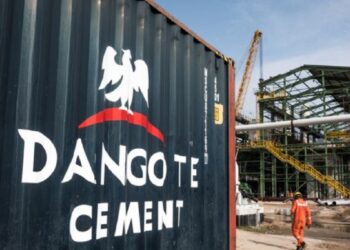
No single facility has reshaped Nigeria’s downstream energy landscape quite like the Dangote Refinery, and May’s data reaffirms its commanding position. The Aliko Dangote-owned plant supplied the entire 41.5 million liters per day attributable to domestic refineries, up from 40.7 million liters per day in April, and achieved an average capacity utilization rate of 101.25%, operating at or above full nameplate capacity on most days of the month.
That figure is striking in a country where the words “Nigerian refinery” had, for decades, been synonymous with dysfunction, underinvestment, and chronic shortfalls. The three other active private refineries, WalterSmith (65.31% utilization), Edo Refinery and Petrochemicals (91.66%), and Aradel Refinery (62.94%), contributed to what is increasingly a private-sector-led refining revolution.
The NNPC-operated Warri and Kaduna refinery facilities, which once anchored Nigeria’s petroleum ambitions and into which billions of naira in rehabilitation funds have been poured over the years, recorded zero production in May. Both plants remain idle despite the government’s repeated assurances that their turnaround is imminent.
“The figures underscore, once again, that private capital is doing what state investment has failed to deliver for decades,” said a Lagos-based petroleum economist who requested anonymity to speak candidly. “Until Warri and Kaduna come back online in any meaningful way, Nigeria’s energy sovereignty will rest on the shoulders of Aliko Dangote.”
Not all the numbers point upward. Crude oil deliveries to domestic refineries fell to an average of 578,000 barrels per day in May, compared with 612,000 barrels per day in April, a 5.6% decline that analysts say warrants monitoring.
The drop comes amid longstanding concerns about the reliability and pricing of domestic crude supply, particularly the terms under which the Dangote Refinery and other local processors access Nigerian crude from the Nigerian National Petroleum Company Limited (NNPC Ltd).
Crude supply disruptions have previously forced the Dangote facility to source feedstock from international markets, adding costs and complicating the economics of local refining.
If crude deliveries to domestic plants continue to slide while output is simultaneously being asked to cover a larger share of national demand, Nigeria could find itself increasingly reliant on imports, precisely the outcome policymakers had hoped to avoid.
In January 2026, Nigeria was importing an average of 24.8 million liters of petrol per day, a level that reflected the country’s historic dependence on foreign supplies. By February, that figure had crashed to just 3 million liters per day before settling into a range of roughly 3.7 to 5.9 million liters in subsequent months.
The trend is directionally encouraging: imports today stand at a fraction of their January levels, even as total supply has grown. The structural shift from an import-dependent market to one in which domestic refining accounts for nearly nine in every ten liters consumed is, by any measure, a historic development for Nigeria’s energy sector.
Yet the May data is a reminder that the transition is neither linear nor complete. Supply gaps persist, and oil marketers have proven both willing and able to fill them with imported product when economics or logistics demand it. With the naira remaining under pressure and global oil prices volatile, the cost implications of any sustained return to higher import volumes are significant.
Industry watchers will be closely monitoring whether June brings a further consolidation of domestic supply gains or whether the import uptick seen in May proves to be the beginning of a new trend.
Key variables include the reliability of crude oil deliveries to local plants, the operational performance of the four active private refineries, and critically, any progress on the long-promised revamp of the Warri and Kaduna facilities.
For now, the NMDPRA data points to a market that is stronger and more self-sufficient than at any point in recent memory, even if full energy independence remains a work in progress.
The private sector has demonstrated what is possible. The question is whether the broader ecosystem of crude supply, infrastructure, and policy can keep pace.
WHAT YOU SHOULD KNOW
Nigeria’s petrol market is undergoing a genuine structural transformation, with domestic refining led overwhelmingly by the Dangote Refinery now accounting for nearly 88% of the national supply.
The May 2026 import spike is a bump in the road, not a reversal of that trend; imports remain far below where they stood just five months ago.
While the Dangote plant runs at over 100% capacity, government-owned refineries in Warri and Kaduna continue to sit idle. Until that changes, Nigeria’s fuel security will remain a private-sector story, impressive in its progress but fragile in its foundations.