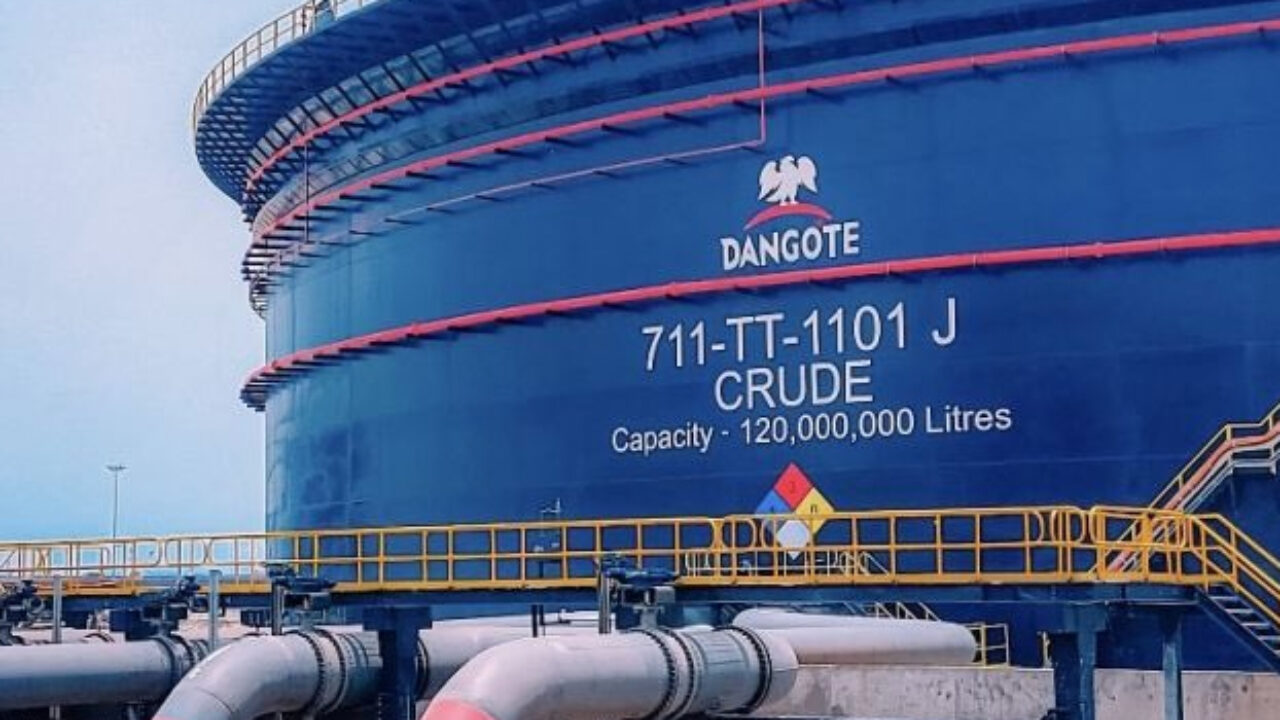
Dangote Petroleum Refinery has cut aviation fuel (Jet A1) prices by ₦100, from ₦1,750 to ₦1,650 per litre, a move welcomed by industry watchers, though its real impact on airfares remains to be seen.
The announcement, made through a statement issued on Monday by the refinery’s Group Chief Branding and Communications Officer, Anthony Chiejina, comes against the backdrop of one of the most turbulent periods in the recent history of Nigerian civil aviation.
According to the Airline Operators of Nigeria (AON), the cost of aviation fuel had surged from ₦900 per litre as of February 28 to as high as ₦3,300 per litre by mid-April 2026, a near-quadrupling in price in under two months that left domestic carriers with an almost impossible choice: ground planes or bleed cash.
The roots of the current crisis run deep. Since the escalation of the US-Iran conflict, there has been a sharp spike in aviation fuel prices in Nigeria, one that the Airline Operators of Nigeria argued was not proportionate to international market movements.
While global oil markets reacted to geopolitical tensions, the Nigerian impact was amplified by a combination of naira depreciation, import dependency, foreign exchange scarcity, and the unchecked influence of fuel marketers in a largely deregulated market.
A spokesperson for United Nigeria Airlines had earlier disclosed that fuel expenses for some operators surged from approximately ₦2.9 million per flight in January to as high as ₦7.6 million, depending on aircraft type, a financial shock that made profitable operations virtually untenable. For an industry already operating on thin margins, such figures were devastating.
The Airline Operators of Nigeria had at one point threatened to shut down entirely, a plan they shelved only following interventions by the Federal Government. That threat, unprecedented in its starkness, underscored just how close Nigeria came to waking up one morning with no domestic airline service.
The refinery’s intervention goes beyond the price cut alone. In addition to reducing the Jet A1 price to ₦1,650 per litre, the refinery announced a 30-day interest-free credit facility backed by bank guarantees for marketers and airline operators, as well as a shift from a dollar-denominated pricing structure to a naira-based model.
Each of these measures targets a different pressure point in the aviation value chain. The price cut directly reduces procurement costs. The interest-free credit facility addresses the acute liquidity crisis facing operators who struggle to fund large fuel purchases upfront.
And the transition to naira-denominated pricing is arguably the most structurally significant of the three, aiming to reduce foreign exchange exposure in aviation fuel transactions, an exposure that has been a persistent source of cost volatility in an economy where the naira has faced sustained depreciation.
According to the refinery’s statement, the decision is expected to provide relief to airline operators by lowering fuel procurement costs, improving operational stability, and supporting efforts to moderate airfares.
The Dangote announcement did not emerge in a vacuum. It follows weeks of high-level government engagement with aviation stakeholders. The Federal Government had intervened in the pricing crisis the previous month, convening strategic meetings led by Minister of Aviation and Aerospace Development, Festus Keyamo, SAN, who assured of the government’s commitment to maintaining a stable and balanced aviation market, noting that while Nigeria operates a free-market system, market forces must not be allowed to undermine public interest or disrupt critical national services.
Regulators at the Nigerian Midstream and Downstream Petroleum Regulatory Authority had also engaged fuel marketers and airline operators in discussions aimed at preventing a complete supply crisis, with proposals on the table to cap jet fuel prices and extend credit support to cash-strapped carriers.
The announcement has been cautiously welcomed, but analysts urge restraint in expectations. While domestic refining capacity may help reduce import-linked shocks, broader pressures such as exchange rate instability and global crude oil fluctuations will continue to influence aviation fuel pricing dynamics.
There is also the crucial question of transmission. Despite earlier regulatory guidance on price bands, industry reports indicated that many oil marketers continued to sell jet fuel to airlines at ₦2,230 per litre or higher, pocketing the difference rather than passing savings down the chain. Unless enforcement mechanisms accompany these announcements, the gap between depot prices and what airlines actually pay at the point of delivery could persist.
What is clear is that Dangote’s intervention, whether driven by commercial strategy, public pressure, or a genuine sense of national responsibility, has shifted the dynamics of the conversation.
The refinery, which has increasingly positioned itself as a domestic alternative to Nigeria’s reliance on imported refined products, is now at the centre of efforts to stabilise an industry that touches millions of Nigerians who depend on air travel for business, family, and the movement of goods.
For now, the skies above Nigeria remain open. But for how long they stay that way at prices ordinary passengers can afford will depend on whether this week’s commitments translate into sustained action on the ground.
WHAT YOU SHOULD KNOW
Nigeria’s aviation sector has been pushed to the brink by jet fuel prices that surged nearly 300% in under two months, threatening airline shutdowns and crippling domestic air travel.
Dangote Refinery‘s decision to cut Jet A1 prices to ₦1,650 per litre, introduce interest-free credit facilities, and shift to naira-based pricing is a welcome and much-needed intervention, but it is not a silver bullet.
The real test lies in whether fuel marketers will pass these savings on to airlines, and whether the naira’s instability and global oil market pressures will undo today’s gains tomorrow.