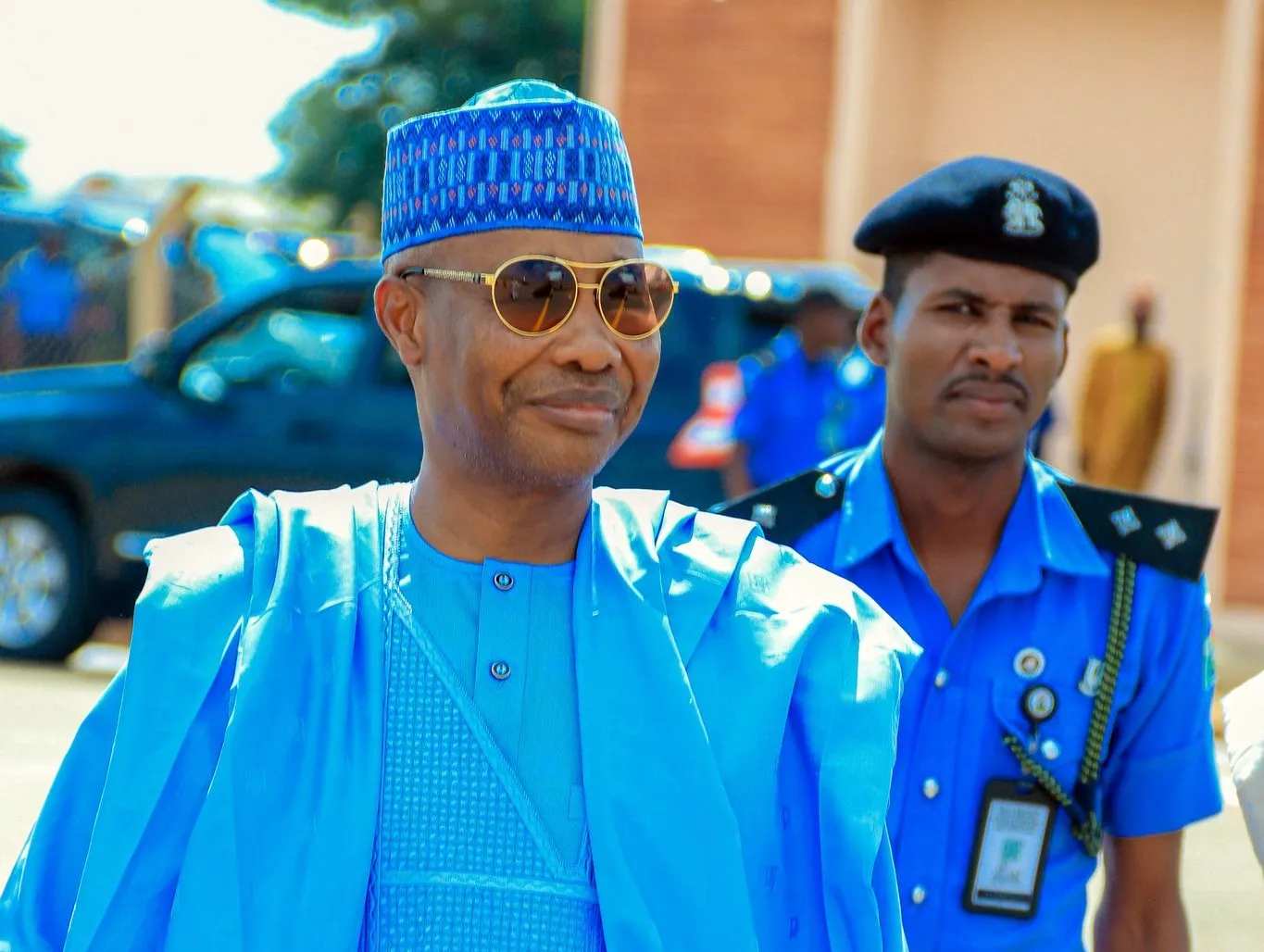
Former Inspector-General of Police, Usman Baba Alkali, has formally withdrawn from the All Progressives Congress (APC) governorship contest in Yobe State, notably stopping short of throwing his weight behind the party’s preferred candidate.
Alkali, a retired top cop who once commanded Nigeria’s entire police apparatus, announced in an official statement released to journalists on Wednesday, bringing the curtain down on what had promised to be a fiercely contested internal party battle.
The former police boss was careful to frame his exit not as a retreat but as a statesmanlike sacrifice on the altar of party unity. According to him, the decision came only after an extensive round of high-level consultations that reached the very heart of Nigeria’s federal establishment.
“After due consultations and exhaustive meetings with the Vice President, Federal Republic of Nigeria, Senator Kashim Shettima, GCON, the executive governors of Yobe and Borno states, elders, and political associates, as well as some very critical stakeholders across the seventeen Local Government Areas, I have decided to withdraw my aspiration to the governorship ticket ahead of the 2027 general elections,” Alkali stated.
The involvement of Vice President Kashim Shettima and Yobe State Governor Mai Mala Buni in brokering the withdrawal signals just how seriously the APC’s top brass had been monitoring the simmering internal crisis and how determined party leadership was to avoid an embarrassing and destabilizing primary contest in one of its stronghold states.
Alkali’s withdrawal does not occur in a vacuum. It is the latest chapter in a turbulent internal struggle that erupted when the APC moved to anoint Alhaji Baba Mallam Wali as its consensus governorship candidate for Yobe State, a process that six prominent aspirants initially refused to accept.
Those aspirants, Senator Ibrahim Bomai, Mustapha Maihaja, Bashir Machina, the former IGP himself, Kashim Musa Tumsah, and Lawan Kolo Geidam, had collectively dug in their heels, insisting that the party was obligated to conduct direct primaries in strict accordance with the Electoral Act 2026 and the APC’s own internal guidelines.
It was a principled, if politically dangerous, stand against what they clearly viewed as an imposition from above.
Now, with Alkali and former FCT Mandate Secretary on Agriculture and Rural Development, Lawan Kolo Geidam, having both stepped aside, the field has narrowed from six aspirants to four. The remaining quartet, Bomai, Maihaja, Machina, and Tumsah, now find themselves holding the line alone.
Perhaps the most politically charged aspect of Alkali’s exit is what he did not say. Despite bowing out of the race, the former IGP conspicuously declined to endorse Alhaji Baba Mallam Wali, the man APC leadership had handpicked as its consensus candidate. Lawan Kolo, the other aspirant who withdrew, has similarly withheld his endorsement.
Their silence is deafening. In Nigerian political circles, where the endorsement of a withdrawing aspirant can be instrumental in consolidating support, the refusal of two high-profile figures to back the preferred candidate raises uncomfortable questions for the APC hierarchy: Has the crisis truly been resolved, or has it merely been papered over?
Political analysts watching the Yobe situation will note that a candidate who exits gracefully but refuses to endorse a successor often retains significant leverage—and significant followership. The loyalties of Alkali’s “teeming supporters,” as he described them, remain officially unaligned.
In what appeared to be a deliberate attempt to prevent his supporters from venting their frustration through disruptive means, Alkali appealed for decorum and continued loyalty to the party.
“Having made this decision, we have but to urge our teeming supporters to remain calm and law-abiding and continue to support our great party, the APC, as well as the eventual gubernatorial candidate,” he said.
The measured language suggests a politician who is stepping back from this particular battle but is far from stepping away from the political arena altogether.
With four aspirants still standing and the consensus question far from fully settled, the APC’s path to a smooth governorship primary in Yobe State remains anything but straightforward.
Party leadership will now have to contend with the remaining holdouts while managing the optics of two public withdrawals that came without the coveted prize of an open endorsement.
For Alkali, a man who once presided over the security of an entire nation, Wednesday’s announcement marks the end of one ambition, but in the fluid world of Nigerian politics, rarely does a door close without another creaking open somewhere down the corridor.
WHAT YOU SHOULD KNOW
Former Inspector-General of Police Usman Baba Alkali has withdrawn from the Yobe State APC governorship race ahead of the 2027 elections, citing party unity following consultations with Vice President Kashim Shettima and Governor Mai Mala Buni.
However, his exit comes with a significant caveat: he has refused to endorse the party’s preferred consensus candidate, Alhaji Baba Mallam Wali. With a second aspirant, Lawan Kolo, also withdrawing without an endorsement, the APC’s internal crisis in Yobe State is far from over.
Four aspirants remain in the race, and the battle over whether a consensus or direct primary will determine the party’s candidate is still very much alive.