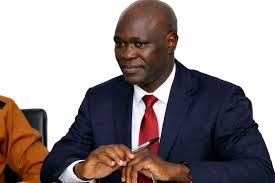
Former Accountant-General Dr. Zakka Yakubu has declared his governorship bid, promising to abandon the long-standing top-down approach to budgeting and public spending in Nasarawa State.
Dr. Yakubu announced on Sunday before a crowd of supporters gathered in Akwanga Local Government Area, where he declared his intention to seek the governorship ticket of the ruling All Progressives Congress (APC).
The declaration, delivered with the measured confidence of a man who has spent years navigating the corridors of public finance, was centered on a single, defining promise: a people’s budget.
At the heart of Dr. Yakubu’s campaign pitch is what he describes as a participatory budgeting framework, a governance approach in which the needs of ordinary citizens, not the preferences of bureaucrats or political elites, determine how public funds are allocated.
“People’s budget means that councillors will go to their wards and ask the people what they want, and it will form part of the budget,” he told the rally. “Members of the House of Assembly will also engage their constituencies to know their priorities.”
It is a concept not entirely unfamiliar in global governance circles. Participatory budgeting has been embraced with considerable success in countries such as Brazil, Portugal, and South Korea. Still, it remains largely alien to the practical realities of Nigerian state governance, where budget processes have historically been opaque and driven by political patronage rather than public need.
For a man who served as accountant-general of Nasarawa State, a role that placed him at the very center of the state’s financial management machinery, Dr. Yakubu’s critique carries particular weight. He is not an outsider looking in. He has seen, from the inside, how government money moves and, perhaps more tellingly, where it fails to reach.
In what appeared to be a thinly veiled criticism of the current administration’s approach to governance, Dr. Yakubu decried what he called the culture of misaligned government spending, a pattern in which communities in desperate need of schools or hospitals find themselves receiving roads, and vice versa.
“If people need support in the health sector and the government is busy constructing roads, then there is a mismatch. Some communities need schools, and the government may be doing something entirely different. That is not good,” he said, drawing audible agreement from the crowd.
He vowed that his administration would put an end to the phenomenon of “white elephant projects,” the large, often politically motivated infrastructure schemes that consume vast public resources while delivering little tangible benefit to everyday Nigerians and redirect government spending toward interventions with direct, measurable impact on citizens’ welfare.
“When you know the problems of the people, you will solve them according to what they want. This type of budget brings faster development because it focuses on the exact needs of the people,” he added.
Dr. Yakubu’s declaration in Akwanga is not without political significance. The choice of Akwanga LGA as the venue for his announcement signals a deliberate effort to consolidate support in the Nasarawa North Senatorial District, a region that has historically been a key battleground in the state’s political contests.
His APC platform also places him within the fold of the ruling party, potentially giving him access to the party structure and machinery that has dominated Nasarawa State politics in recent cycles.
However, the road to the APC governorship ticket is unlikely to be a straight one. The 2027 election cycle is expected to draw a crowded field of aspirants, and Dr. Yakubu will need to distinguish his brand of technocratic, people-centered governance from the political messaging of rivals who are also expected to appeal to the same grassroots constituency.
His background as a financial administrator rather than a career politician could prove to be either his greatest asset or his most significant liability. On one hand, it lends his economic and governance proposals a degree of credibility that resonates with an electorate increasingly weary of empty campaign promises. On the other, it means he enters the race without the established political machinery that seasoned politicians typically rely upon.
Yakubu closed his declaration with warm words for his supporters, thanking them for their confidence and reaffirming his commitment to community-driven development as the organizing principle of his potential administration. The mood at the Akwanga rally, by all accounts, was enthusiastic, a promising, if early, signal for a campaign that has only just begun.
With Nigeria’s political season still in its early innings ahead of 2027, Dr. Zakka Yakubu has time to build his movement. But in Nigerian politics, where alliances shift quickly, and momentum can evaporate just as fast as it builds, the coming months will be critical in determining whether his people’s budget vision can translate into the kind of broad-based political support needed to win both a party primary and, ultimately, a general election.
For now, Nasarawa State has a new name in the governorship conversation and a promise that, if kept, could redefine what governance looks like in Nigeria’s north-central heartland.
WHAT YOU SHOULD KNOW
Dr. Zakka Yakubu, a former Accountant-General of Nasarawa State, has declared his intention to contest the 2027 governorship election on the APC platform, with one standout promise setting him apart from the typical Nigerian political aspirant: a “people’s budget.”
Rather than allowing government officials to dictate spending priorities, he proposes a bottom-up approach where communities directly determine how public funds are used, eliminating wasteful projects and ensuring development actually meets the real needs of ordinary citizens.
His financial expertise lends his vision credibility, but the true test will be whether he can convert a compelling governance idea into the political muscle needed to win.