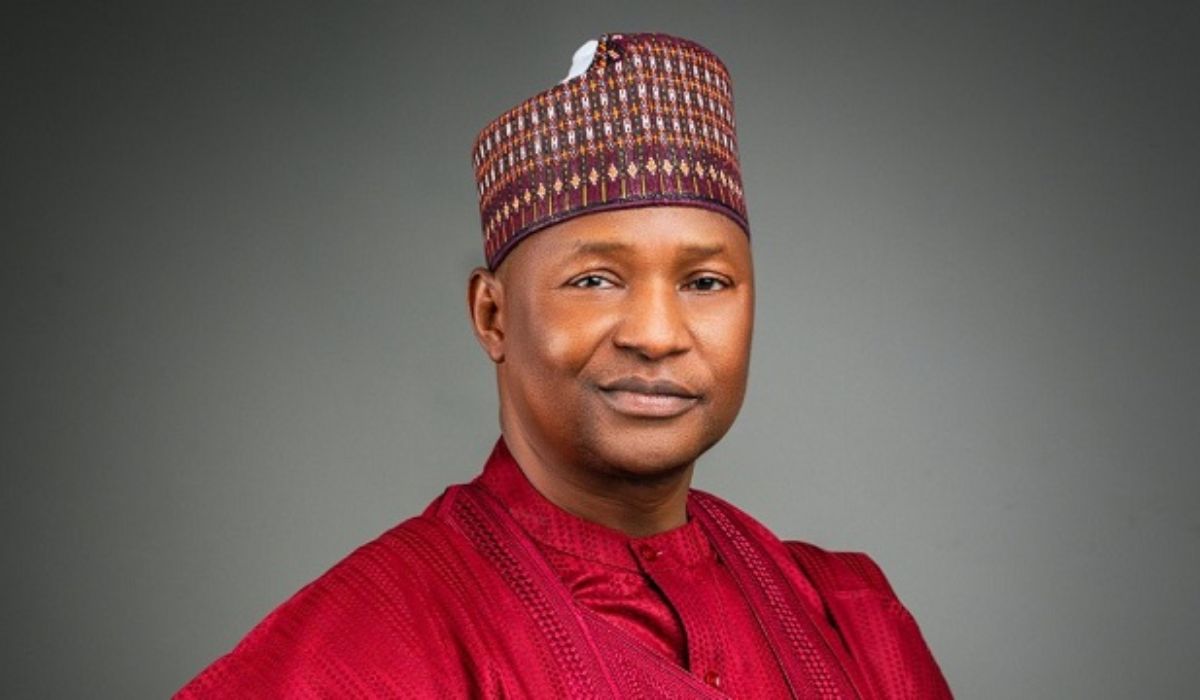
Former Attorney General Abubakar Malami, SAN, has obtained the ADC governorship nomination form for Kebbi State, formally declaring his intention to contest the 2027 governorship election.
Malami, who served as Nigeria’s chief law officer under President Muhammadu Buhari from 2015 to 2023, announced on Saturday through his official Facebook page, deploying the kind of charged language rarely associated with mere political declarations.
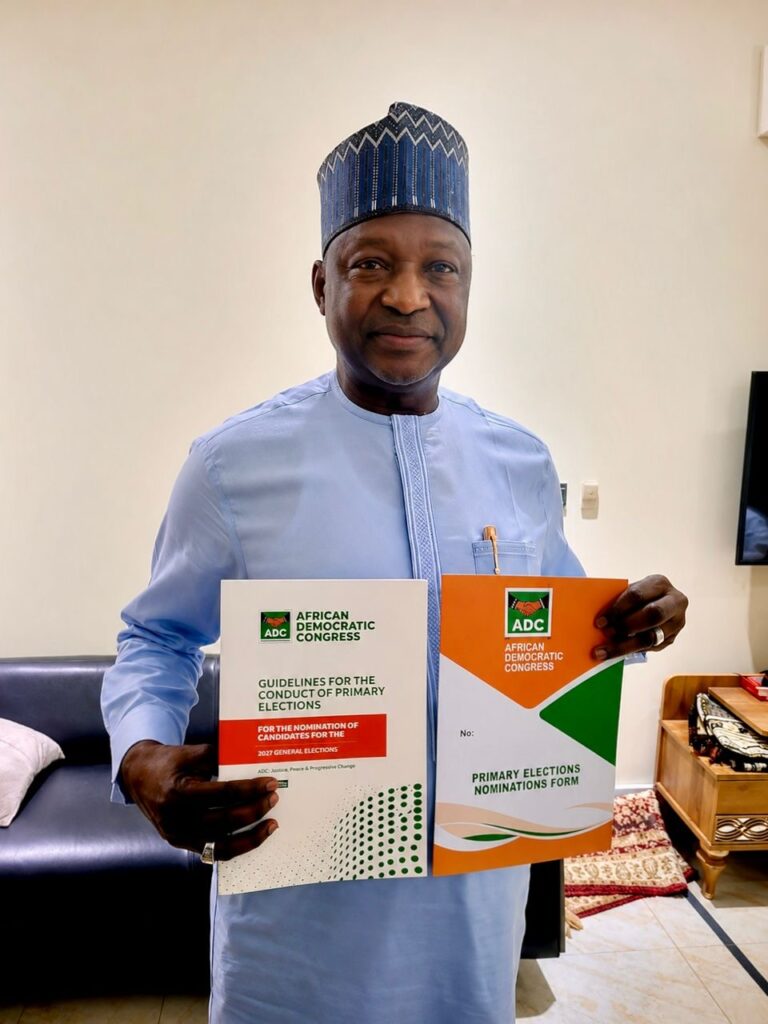
He invoked a “state of emergency on misgovernance in Kebbi State,” a phrase that was as much a political indictment of the current administration as it was a personal mission statement.
At the heart of Malami’s campaign launch was a barrage of statistics that, if accurate, paint a deeply troubling picture of life in Kebbi State. The former minister cited figures that he said reflect a government that has lost its way.
According to him, over 67 percent of children between the ages of 6 and 15 in Kebbi are currently out of school, a staggering figure that, if verified, would place the state among the worst-performing in the country on basic education indicators.
He further alleged that more than 88 percent of children in the state are living in multidimensional poverty, a composite measure that accounts for deprivation in health, education, and living standards.
Perhaps the most alarming claim made by the former minister was the reported death of hundreds of severely malnourished children within just nine months of 2025. He also pointed to what he described as critical levels of maternal mortality and poor under-five health outcomes, largely blamed on the near-absence of functional healthcare infrastructure in Kebbi’s rural communities.
These are not merely campaign talking points; they are, if substantiated, a damning indictment of governance priorities in a state that, despite its agricultural potential and federal allocations, appears to have left a significant portion of its population behind.
Beyond the humanitarian crisis, Malami painted a picture of a state increasingly gripped by violence and fear. He described a security situation that has deteriorated markedly across several parts of Kebbi, with bandit attacks, kidnappings, and the displacement of farming communities becoming recurring features of daily life.
The consequences of this instability, he argued, extend well beyond physical safety. Farmers have been forced off their lands, agricultural productivity has declined, and economic activity across affected communities has slowed to a crawl.
In a state whose economy is heavily anchored in farming and fishing along the Kebbi River basin, such disruptions carry outsized consequences for livelihoods and food security.
“These conditions,” Malami said, “reflect misplaced priorities and the collapse of key public sectors”—a carefully worded but unmistakable attack on the incumbent administration’s stewardship of the state.
Malami’s decision to run on the ADC platform rather than return to the All Progressives Congress (APC), under whose banner he served in the federal cabinet for eight years, is itself a significant political statement.
It suggests that pathways within the ruling party in Kebbi may be closed or unattractive and that he is willing to chart an independent course, betting on his personal brand, legal stature, and public profile to carry him to the Government House in Birnin Kebbi.
The move also raises important questions about the emerging political architecture in the North-West ahead of 2027. Will Malami’s entry into the race draw significant defections from the APC? Can the ADC, historically a minor party with limited grassroots machinery in Kebbi, provide a credible platform for a gubernatorial campaign? And how will the incumbent administration respond to what is, in effect, a very public vote of no confidence from a once-powerful federal minister?
Malami was careful to frame his declaration not merely as a critique but as the opening chapter of an alternative vision for Kebbi. He pledged, if elected, to prioritize security, education, healthcare, agriculture, youth empowerment, and governance reform, the pillars, he suggested, of a modern and functional state.
He spoke of accountability and sustainable development as guiding principles and vowed to end what he called “the era of poor leadership and propaganda.” The rhetoric was bold, the language presidential in its ambition, and the implicit message was clear: Kebbi, under current management, has failed.
With the 2027 general elections still over a year away, the political terrain in Kebbi and indeed across Nigeria’s North-West remains fluid. The Independent National Electoral Commission (INEC) is yet to announce a formal timetable for state-level primaries, but parties and aspirants are already maneuvering for position.
Malami’s formal entry into the race is likely to accelerate those dynamics, forcing both the APC and other opposition actors to sharpen their own strategies. Whether his campaign ultimately gains traction will depend on far more than impassioned declarations; it will hinge on organization, funding, coalition-building, and his ability to translate a powerful narrative into votes on election day.
WHAT YOU SHOULD KNOW
Former Attorney General Abubakar Malami has thrown his hat into the ring for the 2027 Kebbi governorship election on the ADC platform, declaring a “state of emergency on misgovernance” in the state.
His entry is driven by alarming statistics: over 67% of school-age children are out of school, 88% are living in multidimensional poverty, there is widespread malnutrition, and bandit attacks are worsening, which he squarely blames on the failures of the current administration.