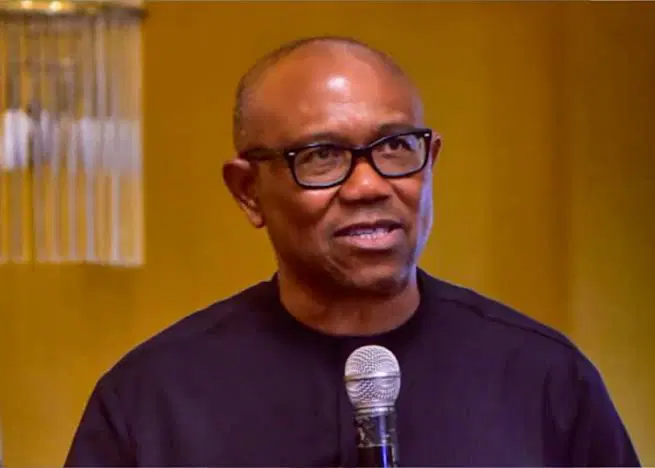
The All Progressives Congress (APC) has taken a swipe at former presidential candidate Peter Obi, criticising what it described as his recurring political defections and questioning his consistency as the 2027 general elections draw closer.
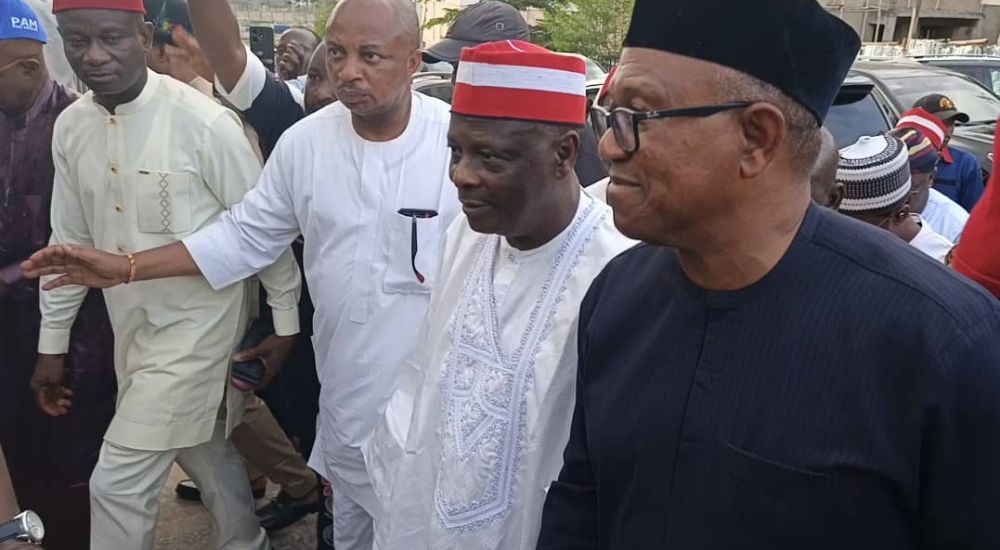
The ruling party’s reaction follows the recent decision by Peter Obi and former Kano State Governor Rabiu Musa Kwankwaso to leave the African Democratic Congress (ADC) for the Nigeria Democratic Congress (NDC), a move that has sparked fresh debate across Nigeria’s political landscape.
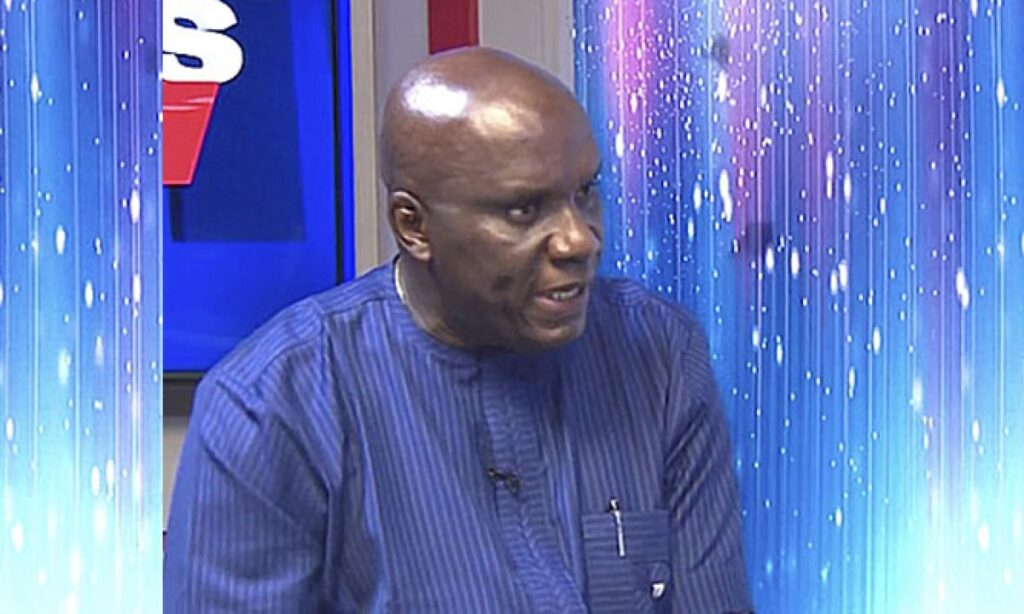
Speaking during an appearance on Channels Television’s Morning Brief on Monday, APC National Publicity Secretary Felix Morka dismissed suggestions that the APC played any role in the internal crisis that rocked the ADC and eventually led to the departure of the two opposition figures.
According to him, the latest development only strengthens concerns over what he described as Obi’s repeated movement from one political platform to another in search of strategic advantage rather than building a stable and enduring political structure.
“These individuals are not taking things seriously, and it is difficult to see how anyone can take them seriously,” Morka said.
He further argued that while opposition figures often present themselves as alternatives to the ruling establishment, their actions tell a different story.
“They claim to oppose the status quo, yet instead of presenting a clear alternative vision, they are busy moving from one platform to another in search of a cheap or convenient route to secure presidential tickets.”
Morka described the trend as a pattern of “nomadic movement,” suggesting that Obi’s exits from political parties whenever internal disputes arise cast doubt on the discipline, resilience, and stability expected of someone seeking the nation’s highest office.
The APC spokesman also pointed to what he termed contradictions in Obi’s political rhetoric, noting that the former Anambra State governor had previously criticised politicians who switch parties for convenience, only to now be involved in yet another high-profile defection.
According to Morka, such actions lend credibility to the argument that Obi lacks a firm political foundation and may be more focused on electoral positioning than long-term institution building.
Addressing allegations that the APC engineered the crisis within the ADC to destabilise the opposition, Morka firmly rejected the claims.
He described the ADC’s internal turmoil as self-inflicted and argued that the party was bound to collapse under the weight of its internal contradictions.
“Are we now to believe that the APC forced them to leave one party and join another within 48 hours?” he asked.
He insisted that the opposition’s inability to maintain cohesion reflects deeper structural weaknesses rather than external interference from the ruling party.
Morka also reaffirmed that the APC remains focused on governance and delivering on its promises to Nigerians.
He maintained that despite criticism from opposition leaders, the Tinubu administration is making measurable progress in governance, infrastructure development, and economic reforms.
The latest comments underscore the intensifying political exchanges ahead of the 2027 presidential race, with Obi’s latest political realignment becoming a fresh talking point in the battle for public perception.
The development also raises broader questions about coalition politics, party loyalty, and the challenges opposition leaders face in building sustainable platforms capable of mounting a credible challenge against the ruling APC.
What You Should Know
Peter Obi’s latest defection from the ADC to the NDC has sparked sharp criticism from the APC, which argues that his repeated movement between parties weakens his credibility as a serious presidential contender.
The ruling party insists it had no role in the ADC crisis and says the opposition’s instability is self-created.
With 2027 approaching, these developments reflect growing political tension as major parties and opposition figures continue repositioning for what is expected to be a highly competitive election cycle in Nigeria.