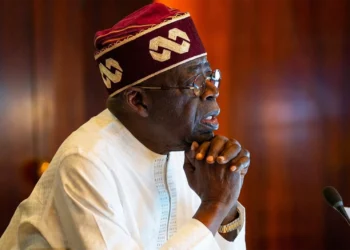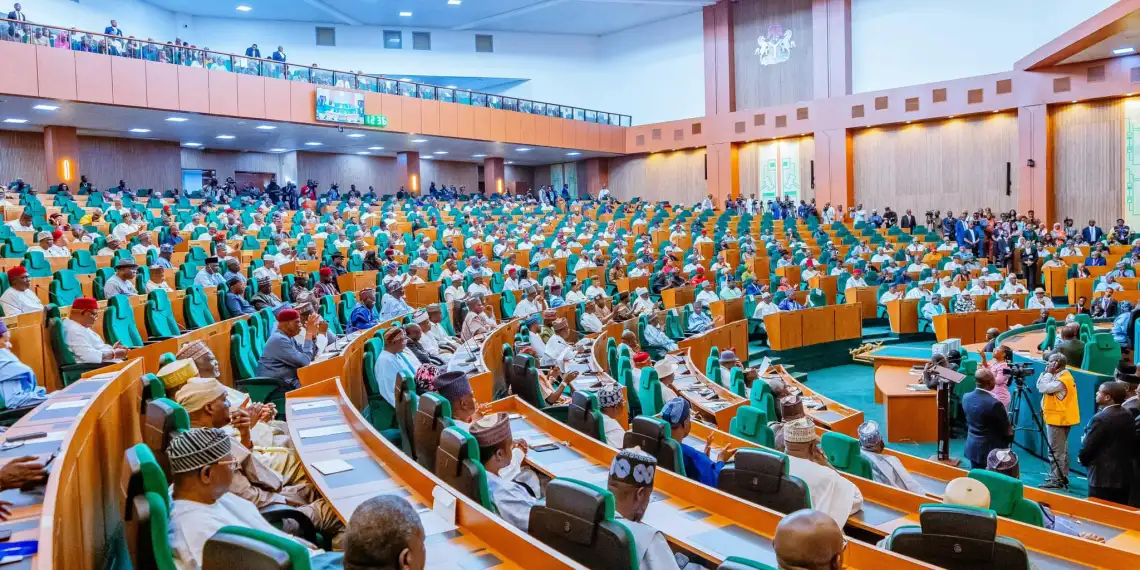
Nigeria’s House of Representatives on Tuesday approved President Tinubu’s $516.3 million Deutsche Bank loan request to finance the construction of the Sokoto-Badagry Superhighway.
The approval, which came during Tuesday’s plenary session in Abuja, marks a decisive step in the Tinubu administration’s broader push to revamp Nigeria’s deteriorating road infrastructure, a challenge that has for decades hobbled economic activity, inflated logistics costs, and deepened regional inequalities across the country’s sprawling geography.
The green light came following the presentation of a committee report by Abdullahi Rasheed, deputy chairman of the House Committee on Aids, Loans, and Debts Management.
Rasheed’s presentation appeared to satisfy lawmakers on the necessity and terms of the loan, paving the way for the chamber to endorse the presidential request without significant recorded opposition.
While full details of the loan’s repayment terms, interest rate, and tenure were not immediately made public at the time of the plenary, the involvement of Deutsche Bank, a globally recognized financial powerhouse, signals that the Nigerian government has been pursuing institutional-grade financing for what promises to be one of the most ambitious road construction efforts in the country’s recent history.
At the heart of the borrowing is the Sokoto-Badagry Superhighway, a proposed corridor that, when completed, is expected to serve as a transformative artery connecting Nigeria’s far northwest to its southwestern coastline.
The highway, if fully realized, would traverse multiple states, unlocking commerce, easing the movement of agricultural produce, and potentially repositioning Nigeria as a more competitive transit hub within the ECOWAS sub-region.
The $516.3 million loan is earmarked specifically for the construction of some sections of the superhighway, an indication that the full project will require substantially larger financing over time and that this approval represents only one chapter in what is likely to be a multi-year, multi-billion-dollar undertaking.
Infrastructure analysts have long argued that the Sokoto-Badagry corridor holds enormous strategic potential, linking landlocked northern communities to the Atlantic coast and reducing the country’s chronic dependence on a handful of overtaxed federal highways.
The approval, however, is not without its political and economic context. Nigeria’s debt profile has attracted considerable scrutiny in recent years, with the country’s total public debt stock climbing steadily.
Critics of the administration’s borrowing appetite have repeatedly called for greater transparency around loan terms, project timelines, and accountability mechanisms to ensure that borrowed funds translate into tangible infrastructure rather than abandoned projects or cost overruns.
Civil society groups and fiscal watchdogs are likely to train their attention on how swiftly the funds are deployed and whether the Deutsche Bank loan comes with conditions tied to procurement standards or contractor oversight considerations that have historically shaped the quality and pace of delivery on similar foreign-financed road projects in Nigeria.
For President Tinubu, the loan approval represents a political and economic win, at least in the short term. His administration has consistently framed infrastructure investment as central to its economic revival agenda, and the Sokoto-Badagry Superhighway fits neatly into the narrative of a government attempting to stitch together a fragmented national economy through physical connectivity.
Whether the project will be executed on schedule, within budget, and to the standards that Nigerians deserve remains, as with many predecessors, the defining question. For now, however, the funds have been authorized, and the lender is identified, and the road—quite literally.
WHAT YOU SHOULD KNOW
The House of Representatives has approved a $516.3 million loan from Deutsche Bank to finance sections of the Sokoto-Badagry Superhighway, a project that holds genuine promise for Nigeria’s infrastructure and economic connectivity.
While the approval is a step in the right direction, the real test lies not in the borrowing but in the delivery.